 BURST
BURST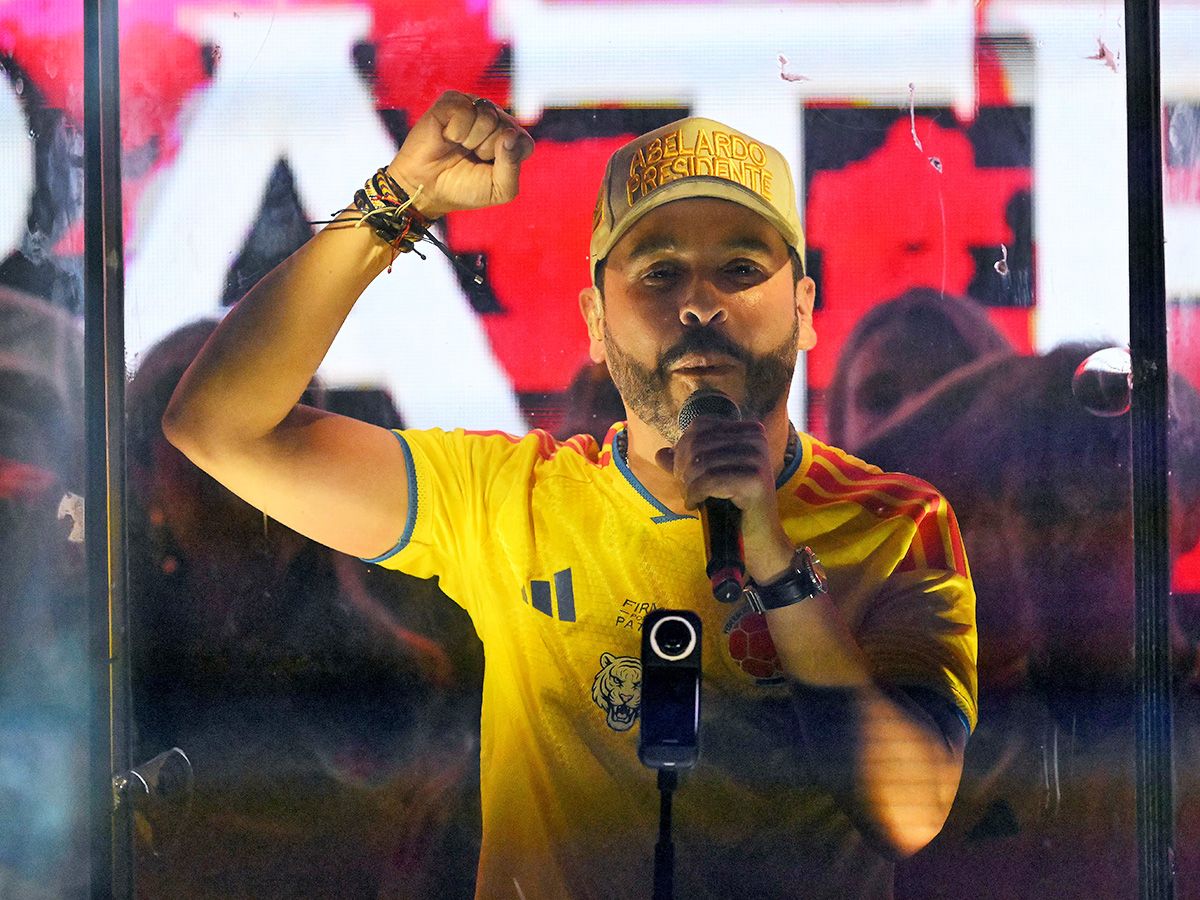
BOGOTA, Colombia — Trump loyalist Abelardo de la Espriella won a surprise victory in the first round of Colombia’s presidential elections, with voters choosing his promised “iron fist” on organized crime in the mould of El Salvador’s wildly popular strongman Nayib Bukele.
De la Espriella, a lawyer and political “outsider,” defeated leftist continuity candidate Senator Iván Cepeda by 43.7 per cent to 40.9 per cent on Sunday. The two candidates face a runoff election on June 21.
The third-place candidate, Senator Paloma Valencia, who was backed by Colombia’s most influential conservative, Álvaro Uribe, took just 6.9 per cent of the vote and immediately backed de la Espriella.
The results, which defied traditional polls , reveal a country deeply polarized. Colombians’ biggest concern in these elections was public security, along with corruption and the economy.
The first quarter of 2026 was the most violent since Colombia negotiated a peace agreement with the now-demobilized Revolutionary Armed Forces of Colombia (FARC) guerrillas in 2016.
Conflict in northeastern Colombia displaced about 80,000 people in 2025, the highest level in a decade.
Javier Florez, from the think tank Fundación Ideas Para la Paz, told National Post that Colombians are “gripped by a fear that the security conditions will continue to deteriorate.”
The candidates have proposed diametrically opposed security fixes.
Cepeda is one of the architects of President Gustavo Petro ‘s “Total Peace” initiative, in which the government sought to simultaneously negotiate with a variety of armed groups.
The program has fallen well short of expectations , with armed groups using the opportunity to expand and strengthen their networks.
Cepeda admitted disappointment but promises to continue negotiations, arguing the conflict cannot be ended through military force alone.
By contrast, de la Espriella has run on an “iron fist” approach to the problem of organized crime, proposing the construction of 10 mega-prisons and the militarization of the territory.
Cepeda and his running mate, Aida Quilcué, placed first in the rural regions of southern and western Colombia experiencing the worst violence, suggesting those most affected by insecurity have not given up on dialogue.
Insofar as the election has been a referendum on the government’s security strategy, the largest group of Colombians have voted for “a rejection of and rupture with the policy of negotiations with armed groups,” according to Florez.
Felipe Botero, from the department of political science and global studies at Universidad de los Andes, told National Post that the details of de la Espriella’s proposed militarization are unclear.
He cautioned that, if the defence lawyer wins, “we will see a hardening of the policy towards illegal groups and that’s going to come with a cost in terms of human rights.”
One thing we know about his security strategy is that de la Espriella, who has donated money to the Republican Party in the U.S., wants closer collaboration with Washington.
Turnout was 57 per cent. Petro and his Historic Pact for Colombia candidate Cepeda have called into question alleged irregularities in electoral pre-count.
With political participation typically increasing in the second round of Colombian elections, there is still everything to play for, according to political analyst Patricia Muñoz.
Muñoz says de la Espriella must decide whether to moderate his message to attract centrist voters, or rely on “the deep tradition of conservative politics in Colombia.”
Botero said, “what voters like about him is his macho posture and his forceful rhetoric, so maybe he will offer some softening in policy, but his performance will not change and that could play to Cepeda’s advantage.”
De la Espriella has already been handed an advantage by Valencia, who threw her “personal” support behind de la Espriella and warned of the threat of “neo-communism” represented by Cepeda. Her running mate, Jaun Daniel Oviedo, however, criticized what he called the “dirty, machista, homophobic” campaign of de la Espriella.
Turnout amongst youth and urban voters in the capital was low. Muñoz suggests that whoever can motivate these groups has an advantage.

Yann Basset, director of the Democracy Studies Group at the Universidad del Rosario, told National Post that de la Espriella is now the undisputed favourite to win the second round.
“It will be very difficult for Cepeda to increase his vote share in the second round because he has run a campaign designed to appeal to voters on the left.”
Cepeda’s campaign will likely focus on the various scandals surrounding de la Espriella’s associations with corrupt individuals, such as his friendship with Maduro ally Alex Saab, jailed in Miami on money laundering charges .
Basset observes that “since these have not been able to stop him so far, it is hard to see how they will now.”
The next three weeks are unlikely to provide more concrete details on the candidates’ proposals, according to Botero. Instead, the candidates will engage in horse-trading behind closed doors.
De la Espriella is likely to win the support of right-wing political establishment figures who rejected him only a few months ago, but “they will not give their support for free. They will expect pork,” said Botero.
Latin America Reports
Our website is the place for the latest breaking news, exclusive scoops, longreads and provocative commentary. Please bookmark nationalpost.com and sign up for our newsletters here.