 BURST
BURST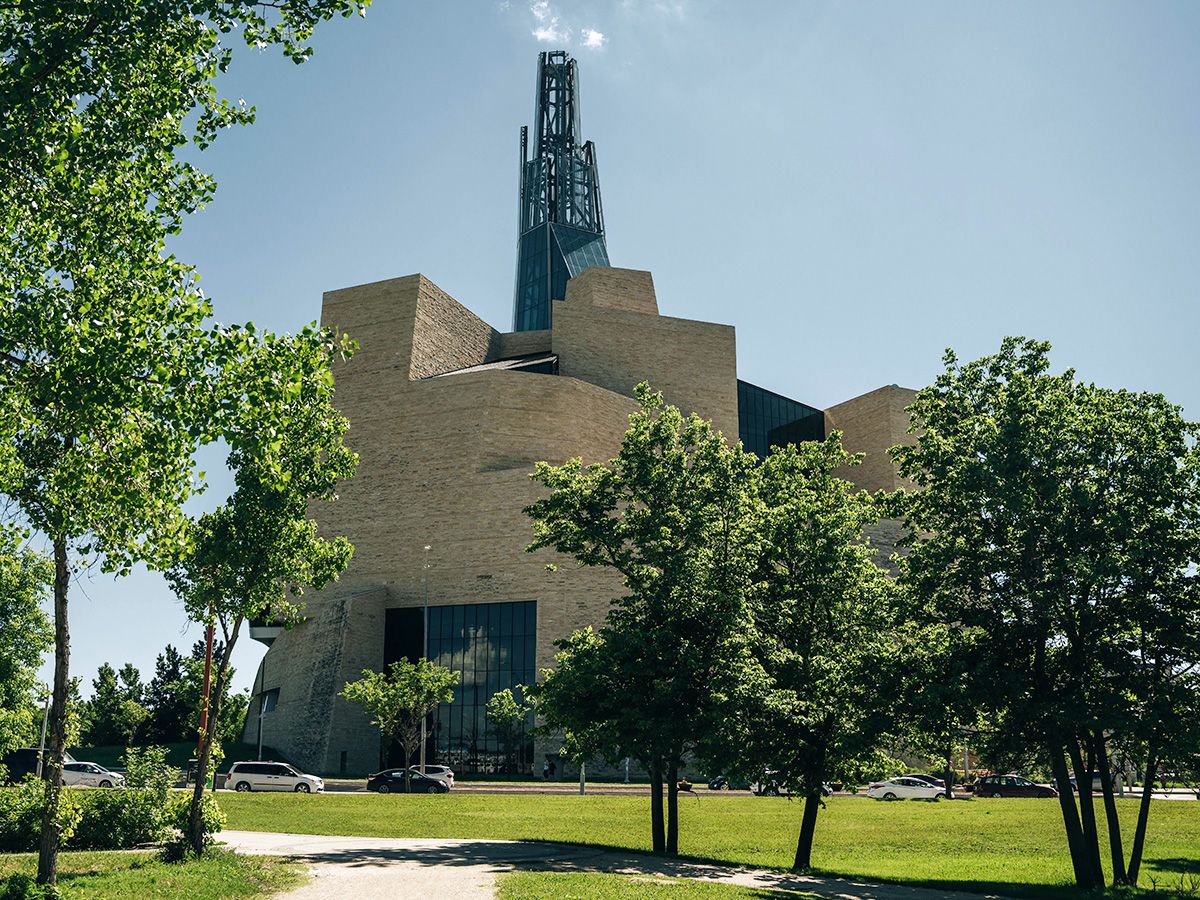
Gail Asper tells me quietly but firmly: “My trust has been absolutely broken.”
She is energized and resolute, but notably not angry.
The 66-year-old daughter of the late Israel (Izzy) Asper — the media titan and Jewish philanthropist who envisioned and heavily funded the Canadian Museum for Human Rights in Winnipeg — has watched with deepening dismay as the institution she helped build appears to sideline the very community that made it possible.
One week ago, “Palestine Uprooted: Nakba Past and Present” opened at this national, federally funded human rights museum. It shares personal stories from Palestinian Canadians about displacement and dispossession, framed as human rights violations.
The concept had first been presented to the museum board several years earlier. That’s when Gail raised her concerns, urging inclusion of full historical context and the parallel story of the roughly 850,000 Jews expelled or forced to flee Arab and Muslim countries in the same 1947–49 period. The idea was mentioned occasionally afterward, but little more was said.
The real surprise came at the museum’s November annual meeting last year, when the exhibit was formally announced — with no prior heads-up or meaningful consultation with the mainstream Jewish community.
Nakba — “catastrophe” in Arabic — is the term Palestinians use to describe events around Israel’s 1948 war of independence, during which roughly 700,000 Arabs fled or were displaced from what became Israel. The exhibit offers limited historical context, with zero coverage of the Jewish refugee parallel, the Arab rejection of the UN partition plan, or the subsequent war.
While she hasn’t visited the physical exhibit, Gail has reviewed all the panels and videos. “Even before the exhibit opened, alarm bells were ringing,” she tells me. The exhibit’s website was “so clearly interested in one narrative at the expense of the other,” and the final version has done nothing to change her mind.
“Our foundation, our family’s trust has been broken,” she says. “And it doesn’t mean it can’t be restored with different leadership and different board members, but right now, that’s why I was able to go out and protest this very museum.”
When Izzy Asper died suddenly of a heart attack in 2003 — just months after publicly announcing the museum vision — it was Gail who stepped up. The museum opened in 2014 after years of her leadership on fundraising and development.
“As a national federal museum,” she says, “there’s a very high standard here. This isn’t a community-centred exhibit. I fought for the designation, for this to be a federal institution with all the imprimatur and gravitas that title entails, because I wanted to show Canadians that this isn’t just the opinion of Izzy Asper or, you know, me or anybody else. This is something that matters to Canadians, that human rights are so important to Canadians, and Stephen Harper was the prime minister that finally delivered this as the national federal museum.
“It feels intentional that the Jewish voice and connection to this museum is deliberately being diminished,” she observes. Her phone and inbox have been “exploding” since the announcement. Supporters who trusted the Aspers to create something intellectually honest feel betrayed.
“The whole point of the museum is to bring people together,” she explains. “The whole point is to have dialogue and debate. So the whole point of this exhibit, as I said to everybody, was that there are hard truths on both sides. Let’s have all the hard truths and let’s have the rational, quiet, respectful debate the museum was intended to inspire.
“But when you obliterate one side of the narrative so egregiously, obviously, and so ideologically and intentionally, you lose that trust from one part of the participants. And that’s where I really am so disappointed in the museum. They didn’t have to do it this way.”
She made repeated efforts to steer things differently, including a presentation to the board six weeks before opening. As an honorary board member, she reminded them of the museum’s mandate and warned about fanning antisemitism at a fraught time. There was no meaningful response.
“I just thought this is heartless,” she says. “There is no compassion for the place that we have now found ourselves in the Jewish community.”
Then, one week before opening, the sole Jewish board member, Mark Berlin, resigned. “I think he was gaslit,” Gail says. Berlin, a respected human rights lawyer who had lived and worked in Ramallah, called her before stepping down. “It was a very sad conversation,” but she understood.
Federal Heritage Minister Marc Miller weighed in this week after visiting the exhibit, calling aspects of the curation regrettable failures — including not identifying Hamas as a terrorist organization or clearly stating its intent on October 7. He said the exhibit “should be rectified.”
Prime Minister Mark Carney has not commented directly, though his June speech on antisemitism and the new advisory council (chaired by Miller) acknowledged that Canada’s “civic compact is failing Jewish Canadians.”
Gail, a corporate/commercial lawyer called to the bar in 1985 and former general counsel to CanWest Global, the former owner of National Post, takes governance seriously. She believes the minister was right to speak up. “I am certain he would have greatly preferred for the board to do its job,” she says.
What would restoration look like? Immediate expert review of the exhibit and additions for context; pausing study guides and materials until balanced; and ensuring docents can present the full history fairly.
In the meantime, new funding from the Asper Foundation has stopped. “I can’t in my heart be funding something that is spreading such dangerous misinformation.”
Yet Gail still believes in the museum’s potential.
“Institutions can get hijacked,” she concludes. “Universities, through bad leadership. A theatre. An art gallery. And then they can be driven into the ground and you think they’re dead.” But you get good leadership, and they can be revived.
“I still absolutely believe in the institution,” she smiles. “There’s a failure in good leadership, but that can be changed.”
Her restraint may be her most persuasive argument yet. Her father would be proud — not of the current misstep, but of the unyielding demand that the museum live up to the vision he entrusted to her: rigorous, contextual truth-telling that brings Canadians together rather than driving them apart.
Special to National Post
Our website is the place for the latest breaking news, exclusive scoops, longreads and provocative commentary. Please bookmark nationalpost.com and sign up for our daily newsletter, Posted, here.