 BURST
BURST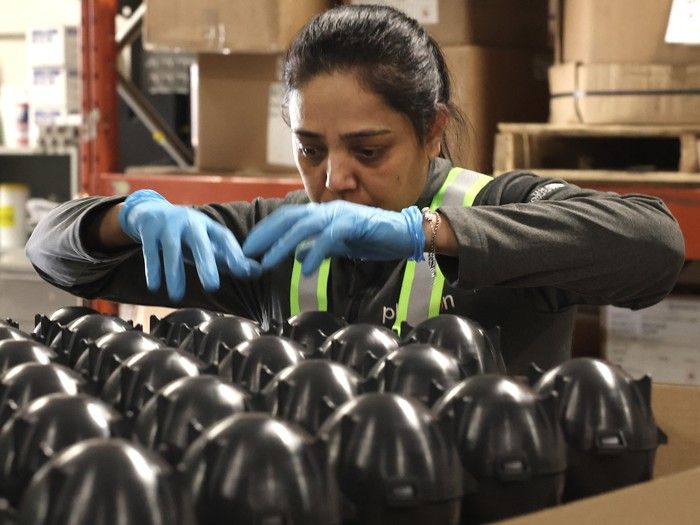
The construction sustainability organization Light House has spent the past 14 months creating a business case for collecting the plastic waste from construction sites that is normally thrown out and turning it into new products.
Light House received $400,000 from the provincial and federal governments to fund a pilot project that collected 38 tonnes of plastic trash from eight Lower Mainland construction sites and turn it into egg-carton shaped forms that can be used to reduce the amount of concrete in slab construction.
In a full-circle moment on Tuesday at a small plastics manufacturing plant on Annacis Island in Delta, Light House, the product’s inventor, Infina, and Plascon Plastics invited the public to see a test run of its production.
“At its core, (the pilot) is about understanding, in real working conditions, what it would actually take to recover these materials and reuse them,” said Gil Yaron, a managing director at Light House and head of the pilot.
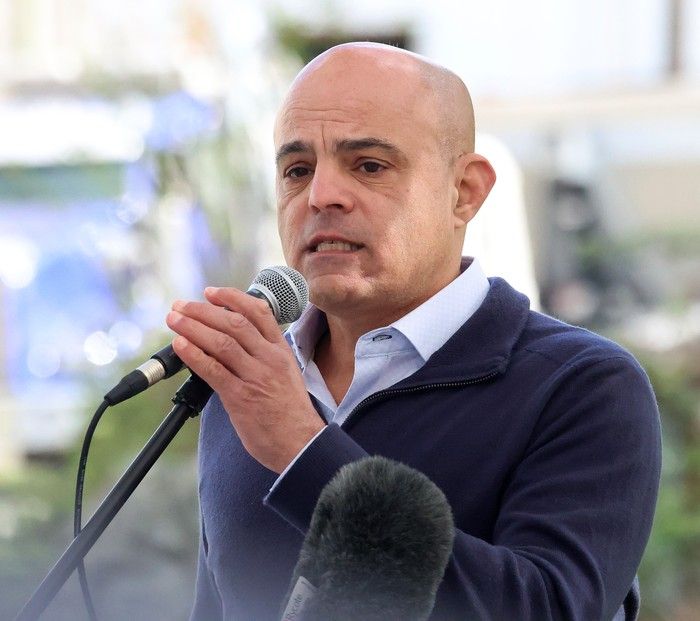
Yaron said he believes the initiative has proven their point: That plastic from construction waste, which is typically either landfilled or incinerated in waste-to-energy facilities, can be recycled.
“Now, we want to scale it,” Yaron said.
Light House and its project partner, Infina, creator of the concrete-displacement product called InfinaNET, need to sell it to the construction sector.
However, both are keen about its potential to reduce both the waste from construction sites and the amount of carbon-intensive concrete in certain types of construction.
“Construction is actually a major and largely overlooked source of plastic waste in Canada,” Yaron said. “It makes up about 30 per cent of all plastic waste generated before a building is even completed.”
Light House’s pilot project, though, showed that about 80 per cent of the plastic they collected, from single-use protective packaging to the cutoff ends of PVC piping, could be recycled.

It was first shipped to a facility in Langley to be ground into pellets, which were in turn transported to Plascon Plastics on Annacis Island and put through extrusion moulds to make InfinaNET.
The base product is made up of four egg-shaped black plastic moulds linked together in a square. Those squares are then knitted together inside the re-bar form for a concrete slab before the concrete is formed.
Infina president Manveer Pattar said InfinaNET “creates little air pockets within that slab,” which reduces the amount of concrete used to pour it by up to 30 per cent.
“So we’re essentially making concrete go a little bit further, 30 per cent further, and then a source for plastic waste that would have normally ended up in landfill now ends up in a building product that’s more sustainable,” Pattar said.
Infina is still in its startup phase, though, and the test this week at Plascon was a “pre-commercial” production run to make material for the company’s own tests.

“We’re working on it,” Pattar said of Infina’s sales pitch to customers. “Right now, we’ve got a couple of different organizations, companies that are interested in piloting (the product), so we’re gearing up for those.”
The InfinaNET coming off the line Tuesday is destined for the prefabricated concrete balcony slabs for new residential buildings.
“Globally, voided slabs are a multi, multi-billion dollar market,” Pattar added. “Voided slabs are used all over Europe and the U.S. and Canada, too.”
However, products already on the market are aimed at thicker slabs and foundations. Pattar said Infina is trying to stake out its own territory in thinner slabs for structures such as patios, balconies and wall panels.

Yaron said Light House paid for its first pilot project with contributions from the province’s CleanBC Plastic Action Fund and Environment and Climate Change in Ottawa.
Now, his circular plastics initiative is working on a new pitch to operate in three cities for a longer period of time “to capture the full life cycle” of construction projects.
“I hope that government and industry see the opportunity here to divert and repurpose wast,” Yaron said. “We need to start treating this material as a resource and we need government and industry to support a transition away from a linear to a circular economy.”