 BURST
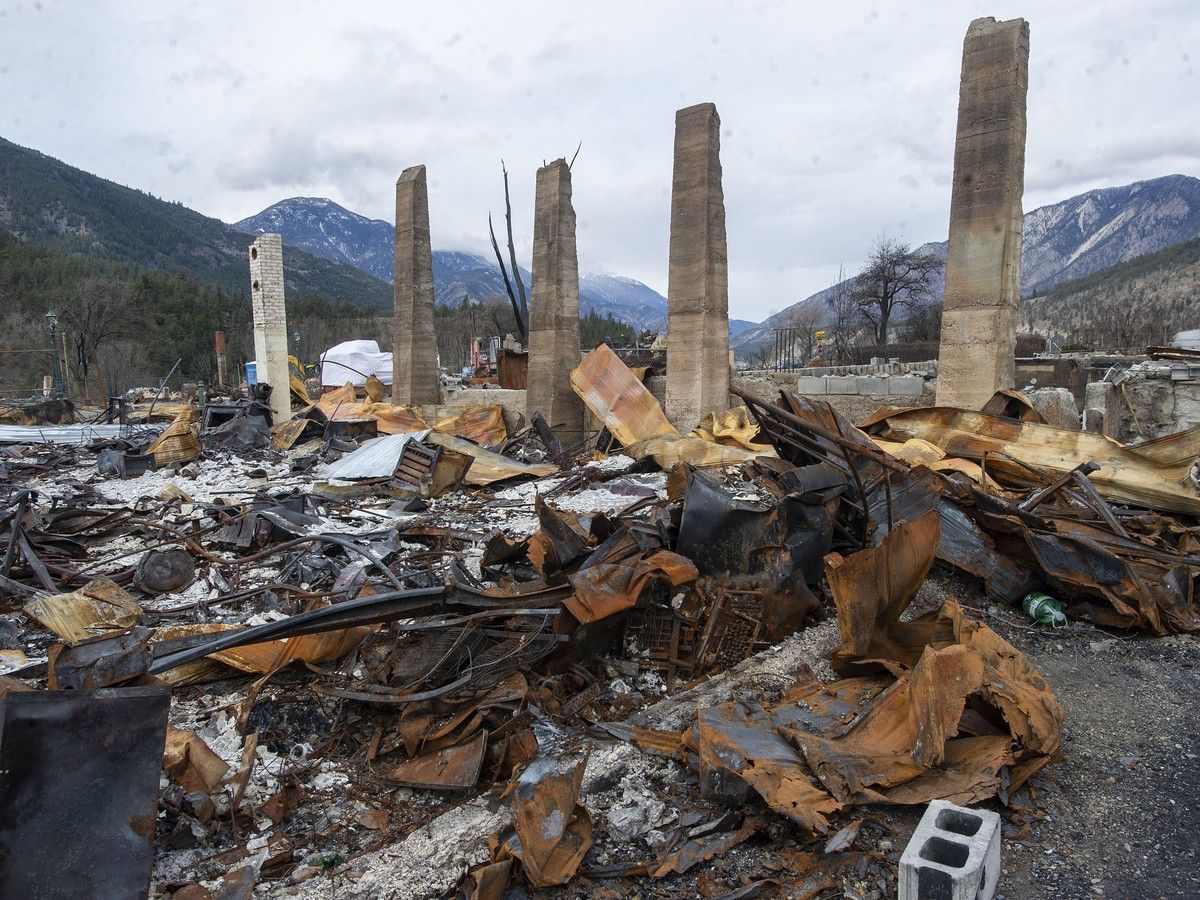
Five years after Lytton was destroyed by fire, its new mayor faces a puzzle: How to pay for regular operations with a tiny tax base?
As the village moves out of its recovery phase, which has been accompanied by provincial and federal grants to pay for staffing and new infrastructure, council must eventually determine how to carry out regular operations with less than 200 taxpayers.
“Our tax base is not able to sustain all the infrastructure planned,” said Mayor Jennifer Thoss. “We need to have a better handle on what those operational costs will be.”
Council, which includes three incumbent councillors and one newcomer, will need to work together to match tax revenue with expenses, while collaborating with regional government and First Nations, Thoss said. Encouraging both residential development and new business will be key.
“I’m positive we have all the elements to be successful. It’s going to take finesse, but we’ll get there.”

Thoss also campaigned on having village staff who actually work in the village, referencing several key positions held by people who live in eastern Canada.
Among them is Halifax-based chief financial and administrative officer Diane Mombourquette, who has received compensation amounting to more than $850,000 over the past three years, according to an article by The Canadian Press. Mombourquette declined an interview request, saying the mayor is the spokesperson for the village.
But former mayor Denise O’Connor defended Mombourquette, recognizing her for building “an exceptional team of employees and contractors” in a farewell letter posted on the village’s website.
In an interview, O’Connor said the village advertised locally to fill the role, but couldn’t find anyone with the expertise for “what is more like a big project-management position.” That includes overseeing the administration and reporting on multimillion-dollar grants, as well as large water, sewer and construction projects.
She said she looks at the work that has been done so far with pride, including the removal of the state of emergency two years after the fire. The village office is nearing completion, which includes two retail spaces that can generate income. The community hub building, which will house the museum, library and a gathering space, will also include several suites. Crews have broken ground on a grocery store. Plans for an outdoor pool are underway.
The village is also in the process of developing an economic development strategy, with public consultation open until Nov. 30.
Asked whether the village’s small tax base will be able to pay the operating costs of public utilities and amenities, O’Connor said it represents a “Catch 22”.
“We can worry all we want about the unknowns. But we have to have a reason for people to come here,” she said.
O’Connor admitted that when she was first elected mayor in the aftermath of the fire, “I was one of many who thought the rebuild could happen quickly.”
“Now I’m not sure I will live to see it. And even then, it won’t be the same community.”
The road to rebuilding Lytton has been bumpy. In the first two years after the fire, the province made lump-sum payments to the village to support municipal operations, debris removal, archeological work and other recovery assistance.
Lytton was supposed to provide a regular accounting for how the money was being used. But with the village government in disarray, reporting was inconsistent and, at times, non-existent, according to an auditor-general’s report on provincial government support for Lytton after the fire.
“Although the management and council were acting in good faith, it appeared that they lacked the leadership and governance capacity to manage such substantive and complex contracts,” said the report.
Provincial disbursements for the years 2022 and 2023 totalled $43.6 million. The province implemented a new funding agreement with Lytton starting in January 2024, requiring the village to submit receipts to receive reimbursement. From then on, there was a full accounting of a further $7.7 million in reimbursements up to the end of March 31, 2025.
O’Connor was elected in the aftermath of the fire when debris removal was beginning and many residents were still living in hotels. She grew up in the village, and although she’s “disappointed” that her time as mayor has ended, she plans to continue to live there.
“When I wake up in the morning and hear the hammers, it’s music to my ears,” she said.
With Postmedia files