 BURST
BURST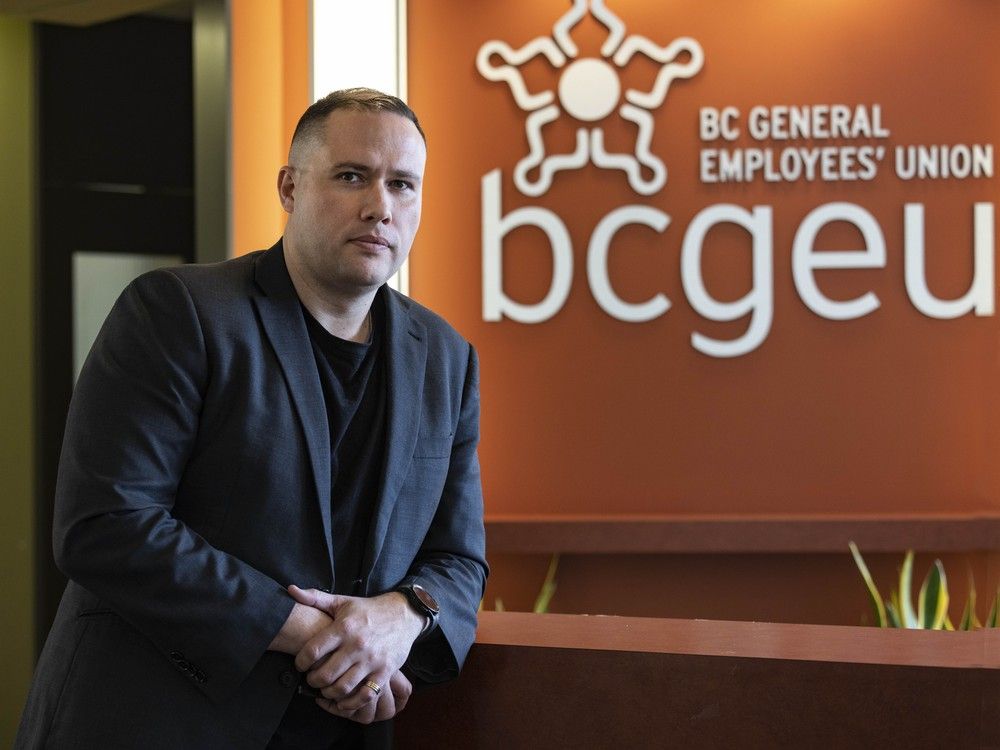
A former vice-president of the B.C. General Employees’ Union is suing the union, saying it forced him out of his $190,000-a-year job.
Douglas Dykens alleges he was treated poorly by union president Paul Finch and that his employment ended in May 2025 because he was “constructively dismissed,” according to a lawsuit filed earlier this month.
A constructive dismissal occurs when an employer has not directly fired an employee but has failed to comply with the contract of employment in a major respect or unilaterally changed the terms of employment, forcing the employee to quit.
Dykens began working full-time with the union in 2006 and rose to be one of its four vice-presidents.
After Finch was elected union president in June 2024, he began taking powers away from Dykens, the lawsuit alleges.
“Following Mr. Finch’s ascension to the presidency, he began centralizing control over several areas, including duties that previously fell within the plaintiff’s role,” the claim states. “Over time, Mr. Finch fundamentally deteriorated the plaintiff’s autonomy and authority.”
It is also alleges that Finch created a toxic workplace, including swearing and raising his voice at Dykens.
“Mr. Finch repeatedly undermined and embarrassed the plaintiff, often in front of other BCGEU staff or external third parties,” the lawsuit alleges.
In a response filed in court, the BCGEU disputes those claims, and says Dykens behaved in a disrespectful manner during some private caucuses of the bargaining committee.
Dykens was part of the bargaining committee working to secure a new contract with the provincial government. It was eventually ratified in November 2025 .
As president, Finch decentralized control over various areas by providing excluded staff, including Dykens, “clear written expectations,” the BCGEU response states.
But the BCGEU “did not modify, alter, or change the duties of the plaintiff or undermine his authority or autonomy as alleged or to a degree indicating the BCGEU no longer intended to be bound by its contract with the plaintiff.”
“Any modification of the plaintiff’s duties, autonomy or authority were consistent with the right of the BCGEU to make changes from time to time for the better representation of its more than 95,000 members.”
The BCGEU response alleges Dykens’s behaviour during private caucuses of the bargaining committee “became increasingly disrespectful and problematic” by late January 2024.
“The plaintiff increasingly became visibly upset and annoyed during private caucus, particularly with the contributions made by Mr. Finch, but also with the overall direction of the committee. The plaintiff frequently retreated from active discussions, pouted and acted like a sullen child when he did not agree with the committee’s direction. Frequently, he would check out mentally from meetings and retreat to his phone.”
It goes on to state that Dykens, on several occasions, made snide comments about Finch or the bargaining committee as a whole that were disrespectful.
“He frequently made glib remarks such as, ‘I don’t know, you guys do whatever you want’ or ‘I’m at your command,’ instead of providing advice to bargaining committee members.”
The union response states that on May 7, 2025, Finch met with Dykens to discuss his behaviour. The union alleges during that meeting, Dykens expressed his belief he was being constructively dismissed and said he would resign in exchange for 27 months of severance pay.
Finch wrote Dykens later that day saying he disagreed with his position but offered to “discuss a mutual voluntary departure package,” according to the union. But Dykens resigned on May 12 after refusing to meet again with Finch to formally outline his complaints.
“The BCGEU denies that the conduct of the BCGEU during the plaintiff’s employment amounted to constructive dismissal,” the union wrote.
The union also noted that after leaving the BCGEU, Dykens took a job with “the same party with whom he had been negotiating a collective agreement, the government of British Columbia.”
“He is currently employed as an executive director within the Ministry of Labour,” the union wrote.
Dykens is asking for unspecified damages, including aggravated and punitive damages.