 BURST
BURST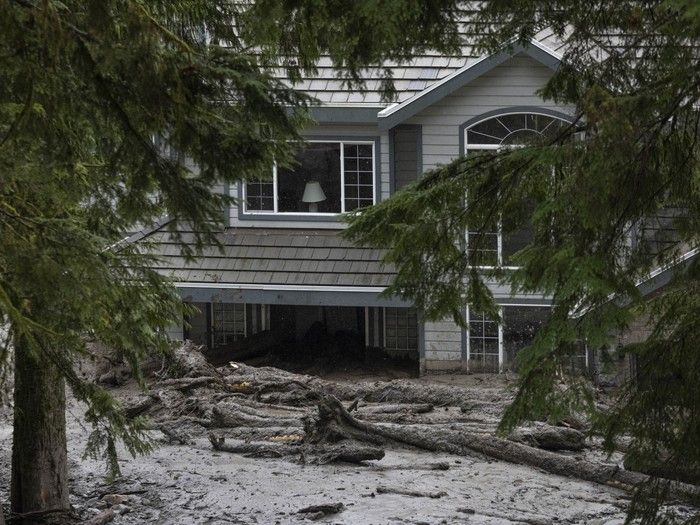
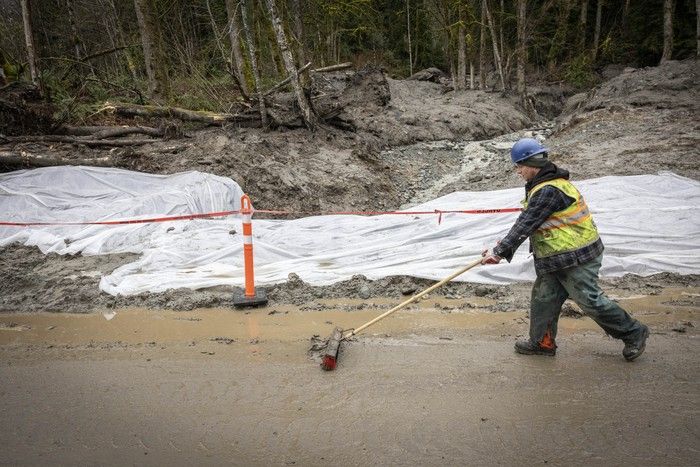
Cleanup crews have cut a passage through a large mudslide that covered a road in north Coquitlam, but access to homes in the area remains restricted pending a geotechnical safety assessment.
Eight people were evacuated last Thursday by helicopter from four homes in the north end of Coquitlam after the mudslide hit at least one home and cut off the only access road.
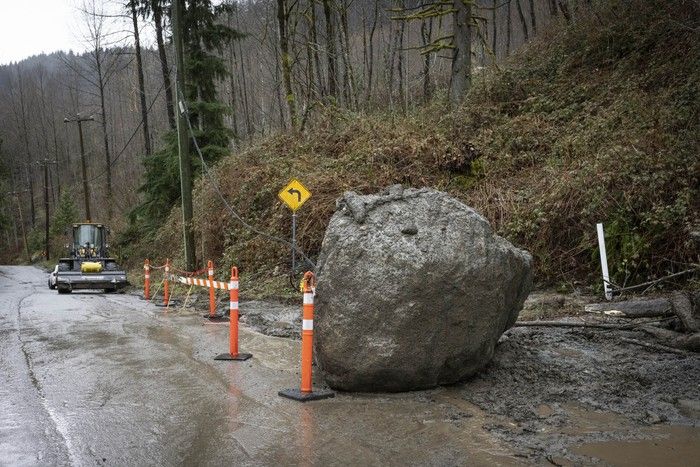
Pipeline Road was covered in debris from the mudslide, including trees and rocks, for about 75 metres, north of the Upper Coquitlam River Park near Metro Vancouver’s Coquitlam water treatment plant.
“We are awaiting geotechnical reports that will allow us to know how safe the area is and whether or not, and when, the public may be able to access the area, including the residents,” said Jaime Boan, Coquitlam’s general manager of engineering and public works.
He is expecting the assessment to be complete in the next couple of days.

Coquitlam Fire and Rescue officials have said that mud and trees reached the back of one of the homes.
Boan said they have made good progress and a passage has been cut through the mud flow, but he said work was halted Tuesday because of renewed rain. He said it was too early to say how long cleanup of all the debris would take, but it would take quite a lot of work.
Boan added the city is hoping to get insight from the geotechnical assessment on the cause of the mudslide, impacts to the homes, risks and potential mitigations, if any.
Boan noted the mudslide came down a creek course where slides have previously taken place, but not of this size.
He added that a significant amount of rain fell before the mudslide, as much as 320 millimetres, but that’s not the most the area had ever had.
In the past several years, B.C. has been hit by a series of atmospheric rivers, large plumes of moisture from tropical storms carried across the Pacific Ocean, including one in 2021 that caused billions of dollars in damage and forced the evacuation of thousands of people. Scientists have forecast they will increase in frequency and severity.
The heavy rains have triggered landslides, and mud and debris flows in the past, including a debris flow that killed a teacher whose home in Coquitlam was swept away in October 2024.
John Clague, a professor emeritus of earth sciences at Simon Fraser University, said this type of debris flow or flood is not unusual in these type of gulleys, especially after heavy rains.
“You always find that water is involved,” said Clague, a leading authority on natural hazards and editor-in-chief of the scientific journal Natural Hazards.
A business just south of the four homes, Bedrock Natural Stone, was not damaged by the slide.
Nathan Raymond, who helps run the family business, said a large, noise-reducing berm, about three to four metres high and six to nine metres wide, kept the mudflow from hitting their manufacturing facility.
He said the berm was not built with mudslide risks in mind.
“We’re pretty lucky … it kept the majority of the water, mud and debris out, or it would have destroyed a good chunk of our property,” he said.
Raymond has been working in the family business for more than 30 years.
He said he’d never seen anything like the mudslide.
Raymond said the area can be rainier than other parts of the Fraser Valley, and has been hit previously by what he called a pineapple express, a more common, earlier, name for atmospheric rivers, but he said he had not seen a deluge of this intensity and duration for possibly 20 years.
“There was a lot of rain the came down in those four days,” he said.
The manufacturing facility, which was just below where the mudslide cut off the road, lost one day of operation.
The water treatment facility above the slide has also kept running.
Crews, which must be on site 24 hours, were allowed through to the facility.
The treatment plant’s two water pipes are buried under Pipeline Road and are operating normally, said Metro Vancouver officials.
“They do not appear to have been affected by the landslide, although there will be further geotechnical assessments in the coming days,” said Jennifer Saltman, a media relations strategist for Metro Vancouver.
B.C. Hydro officials said 15 people in the area remain without power, and they are waiting for clearance to safely begin the work to restore electricity to those customers.
ghoekstra@postmedia.com
x.com/gordon_hoekstra