 BURST
BURST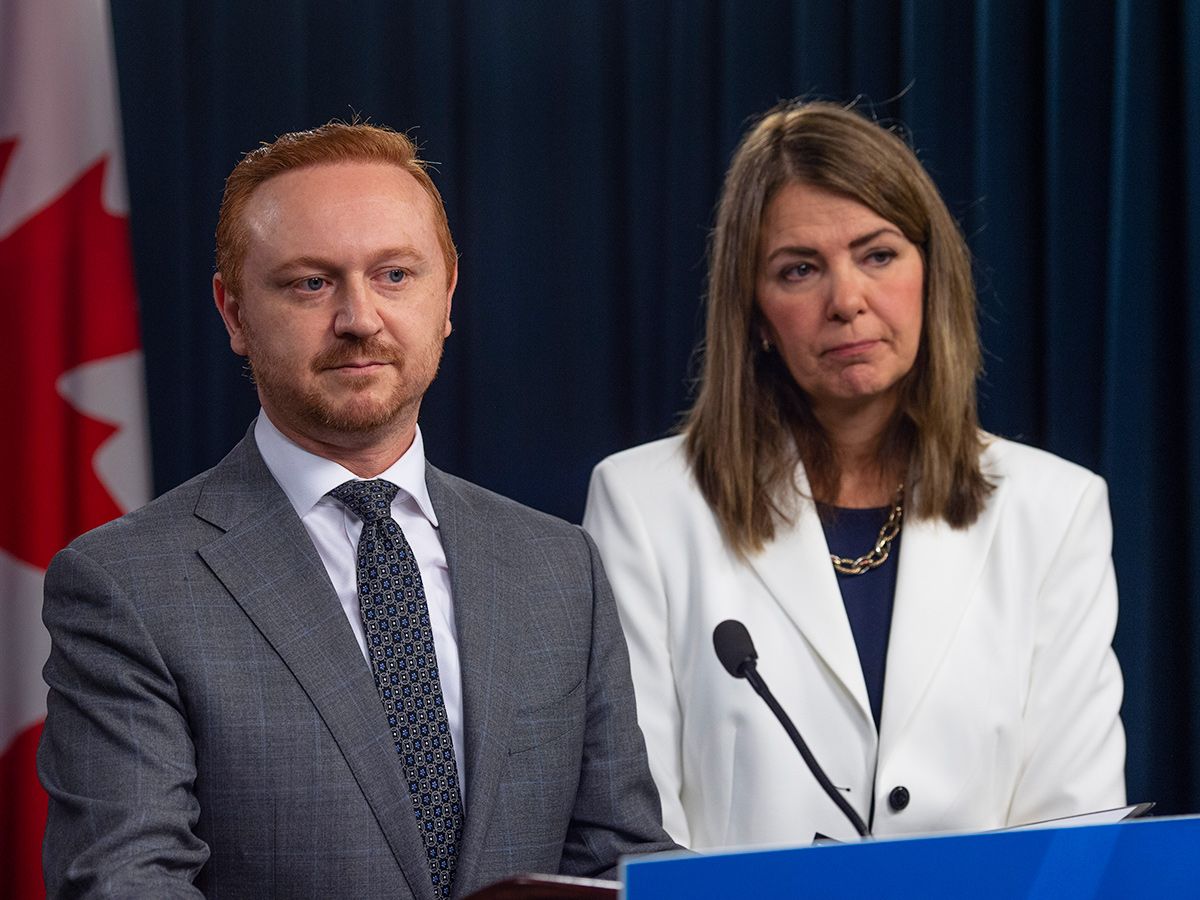
OTTAWA — Alberta is proposing sweeping restrictions to medical assistance in dying (MAID) that would prohibit doctor-assisted suicide in cases where death isn’t reasonably foreseeable, as well for minors.
A government bill tabled in the Alberta legislature on Wednesday would, if passed, end so-called “Track 2” MAID in the province, which would prevent Albertans living with non-terminal medical conditions from accessing euthanasia.
The bill effectively turns back the clock to when MAID was first legalized for terminal conditions in 2016, and would ignore a 2019 Quebec court decision striking down the requirement for a “reasonably foreseeable” natural death to qualify for MAID, which was followed by a subsequent 2021 loosening of federal restrictions.
Alberta Justice Minister Mickey Amery said in a media briefing that the Quebec MAID ruling had no bearing on the province.
“The Quebec challenge was a decision in Quebec. It is not binding on Alberta,” said Amery.
Amery said the bill embodied a made-in-Alberta approach to navigating the moral and ethical dilemmas of MAID.
“We think that this bill finds the appropriate balance between allowing people who are eligible for the original intention of MAID to be able to seek that, but also to find a balance in protecting our vulnerable, as well,” said Amery.
Premier Danielle Smith said the “permanent and irrevocable” consequences of MAID obligated the province to act with the “utmost care and caution.”
“Alberta believes that patient safety is and must always be our first concern,” said Smith.
The bill also prohibits MAID in cases where the sole underlying medical condition is mental illness. That practice is currently prevented only because the federal government has postponed implementing it several times , but the prohibition is scheduled to end in March 2027.
Alberta Government house leader Joseph Schow said in a preview of the spring legislative session last month that the ticking clock of the federal mental-illness moratorium lifted MAID to the top of the government’s list of priorities.
Also prohibited by the proposed legislation are advanced requests for those in the early stages of a degenerative illness and the provision of MAID for individuals under the age of 18, including mature minors . Federal parliamentarians have proposed studying the possibility of letting minors deemed mature enough to qualify for MAID.
The bill would also prohibit physicians and other health-care professionals from initiating unsolicited conversations about MAID with patients, and from referring individuals to receive euthanasia outside the province, and would also ban advertisements for MAID in hospitals.
It also provides protections for physicians and nurse practitioners who refuse to administer MAID, and allows for 150-metre “exclusion zones” prohibiting any advocacy for MAID near medical facilities that don’t allow the practice on their premises.
Amery told reporters that the legislation sets out professional sanctions for medical professionals who violate the new laws, but he also did not rule out the possibility of criminal prosecutions.
“The Criminal Code sets out the basic standards that practitioners need to follow in order to provide services without being criminally prosecuted,” said Amery. “If they exceed those parameters, it will be up to investigators and prosecutors to decide how they are going to proceed,” said Amery.
Amery told National Post that his approach for now will be let prosecutors deal with MAID-related offenses on a “case-by-case basis” but added that he could put forward prosecutorial guidelines in the future.
Krista Carr, CEO of disability rights group Inclusion Canada, said she was “extremely pleased” with the proposed legislation.
“We’re pleased to see the Alberta government take this action on Track 2 MAID, which is clearly discriminatory to persons with disabilities, and the disabled community has been fighting against for years,” said Carr. Disabled advocates have warned that Track 2 can lead to disabled people who might be seen as a burden to some people being pressured to consider assisted dying.
Carr noted that it was almost exactly a year ago that the United Nations Committee on the Rights of Persons with Disabilities called on Canada to repeal Track 2 MAID because of that very danger.
Lola Dandybaeva, a spokesperson for federal Justice Minister Sean Fraser, said Alberta had the constitutional right to limit the practice.
“Provinces and territories are responsible and have jurisdiction over health care delivery, including end of life services, and have the right to develop their own frameworks around MAID,” said Dandybaeva.
In contrast to Alberta’s limits, Quebec has been pushing to expand MAID, including by allowing people diagnosed with degenerative conditions like Alzheimer’s to make advance directives before they lose the capacity to provide informed consent and allowing MAID for people with “serious physical impairment leading to significant and persistent disabilities.”
Yuan Yi Zhu, a Canadian professor of international law at Leiden University in the Netherlands said that, assuming the Alberta bill passes, it’s likely that a MAID case will at some point wind up before the Supreme Court.
“Between Quebec and Alberta, we’re seeing two very different interpretations of the federal framework surrounding MAID, and it’s up to the Supreme Court to resolve that,” said Zhu.
National Post
rmohamed@postmedia.com
Our website is the place for the latest breaking news, exclusive scoops, longreads and provocative commentary. Please bookmark nationalpost.com and sign up for our daily newsletter, Posted, here.