 BURST
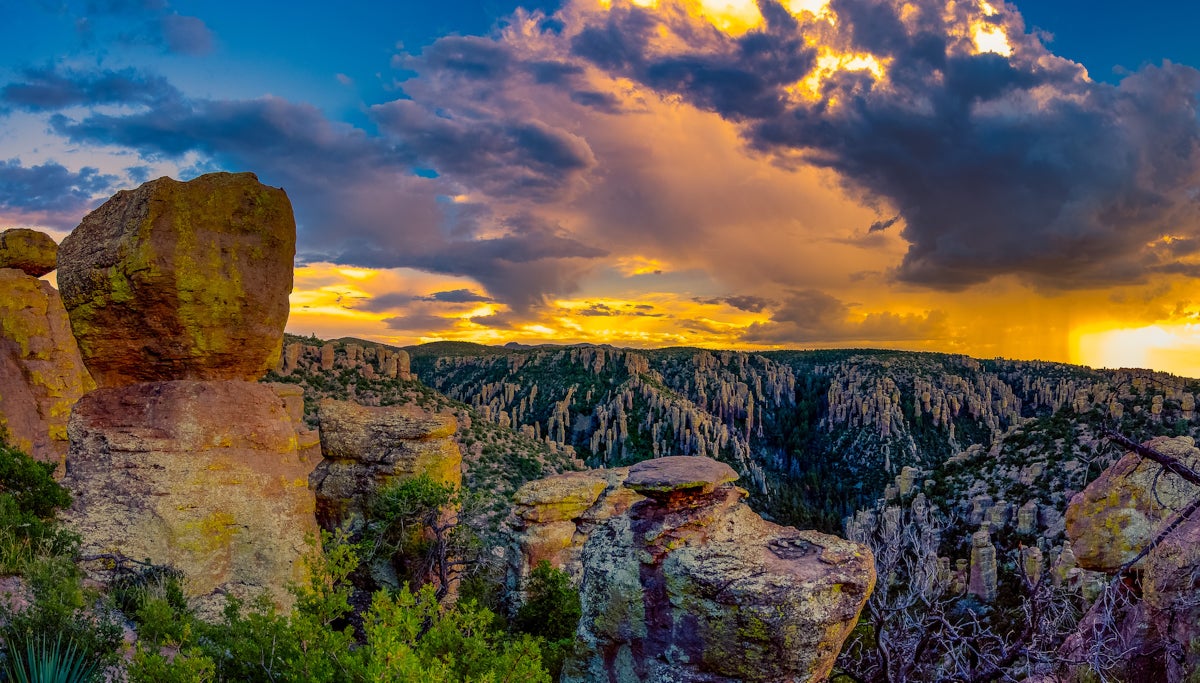
All week, I’ve been studying photos of our country’s newest national park, wondering: Can you climb that?
Rock, after all, defines much of the 12,000-acre Chiricahua National Park in southeastern Arizona. The park’s nickname of “Wonderland of Rocks” says it all. And the local Apache people with roots in the area, refer to it as “The Land of Standing-Up Rocks” for good reason.
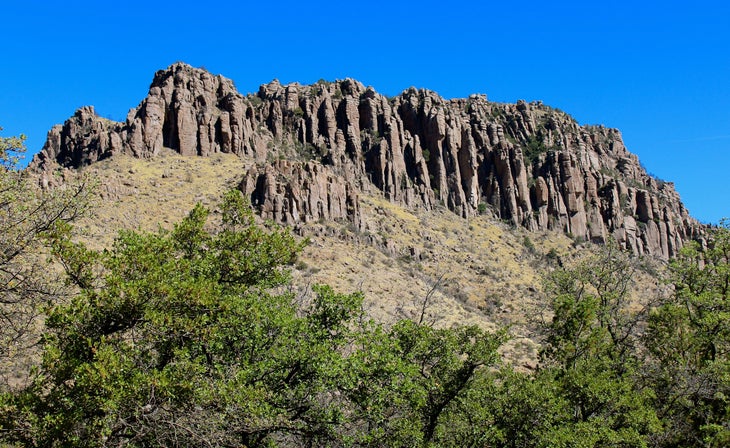
All the rock owes its existence to a massive volcanic eruption that occurred 27 million years ago. Today, hundreds of pinnacles, spires, and balanced rocks intermingle with oak and manzanita trees at around 6,000 feet above sea level.
These rocks are all rhyolite, which forms from lava as it cools, hardens in place, and erodes into the funky formations we see today. Ranger Nowell, a representative of Chiricahua National Park who declined to share his first name, described the rock to Climbing as “ancient ash.”
Yet plenty of routes and boulder problems exist on this igneous rock, from New Mexico to the Lakes District in the United Kingdom.
So can you climb it?
Erik Murdock, the deputy director of programs, policy, and government affairs at Access Fund and a former Arizona resident, recalled visiting the national monument years ago and receiving conflicting information. “I asked a ranger at Chiricahua why climbing was prohibited and was told that only fixed anchors were banned, but that I could climb,” he wrote in an email to Climbing. “I was told something different by someone at the visitor’s center.”
But sadly for climbers, the answer to whether you can climb Chiricahua rock is “no.”
Why you can’t climb in Chiricahua National Park
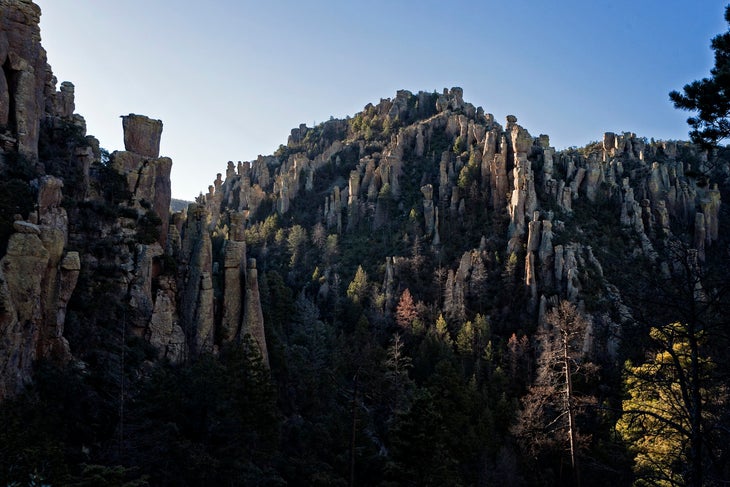
Current park policies state, “Climbing, ascending, or otherwise traversing the rock pinnacles is prohibited” because climbing “causes damage to the natural and cultural resources, including wildlife habitat.”
Chiricahua Ranger Nowell cited rockfall danger and instability as another reason for the ban. “A lot of the rock is volcanic, igneous rock,” Nowell told Climbing. “It’s not sturdy at all.”
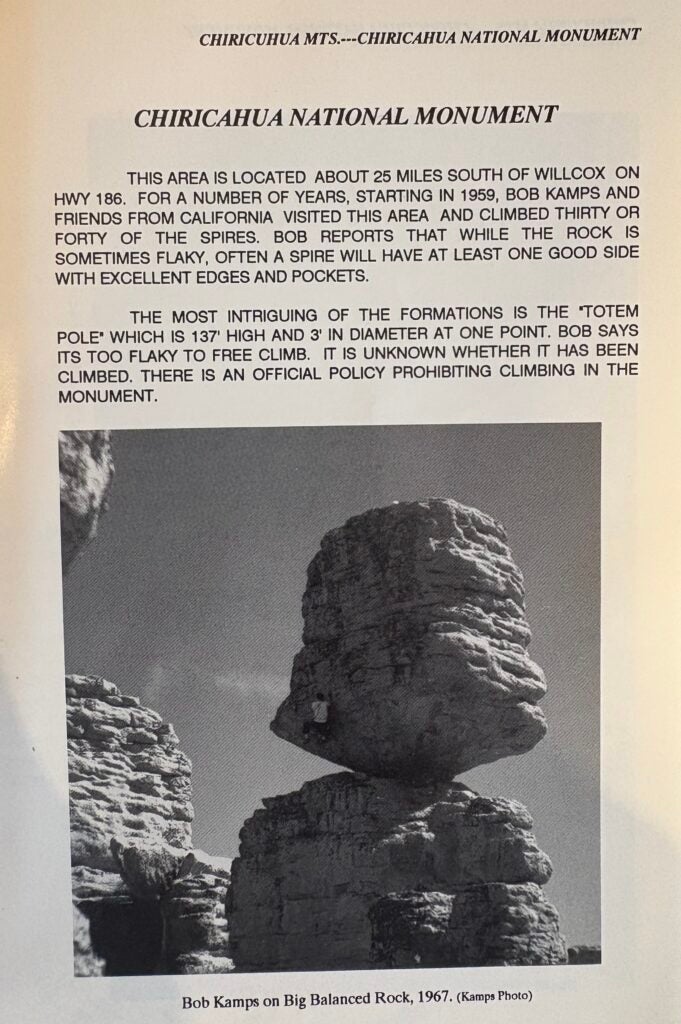
But that hasn’t stopped climbers before. Murdock said that the rock at Chiricahua is “definitely climbable.” He shared that several climbers put up “pretty cool” ascents on some of the volcanic towers and formations in the past. “Bob Kamps did some wild ascents of bulging blobs in the ‘60s and ‘70s,” Murdock said. “The rock is as good as the stuff at Oak Flat and it would be good to gain climbing access to some of the formations that are not on the main trails.”
Climbing in wilderness areas
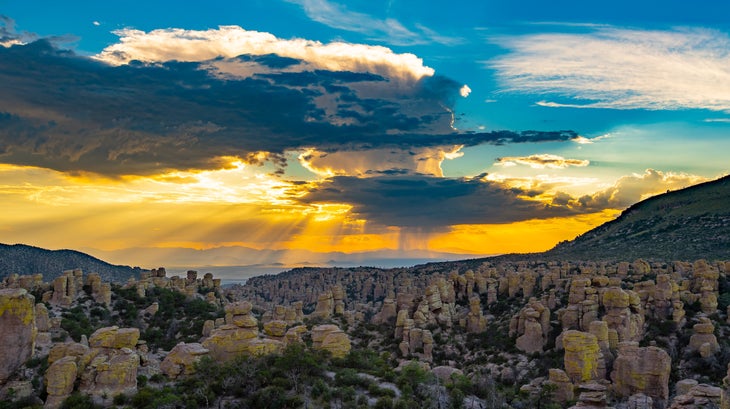
Ranger Nowell said that climbing ban likely dates back to when the area became protected wilderness. The government designated 9,440 acres of Chiricahua National Monument as wilderness on October 20, 1976. An addition 900 acres became wilderness through the Arizona Wilderness Bill in 1984. Currently, the wilderness designation applies to 86% of the park.
Yet climbing has been allowed in wilderness areas across the country, such as on Yosemite’s El Capitan, for many years. Earlier this year, the PARC Act formally protected climbing in wilderness, permitting the occasional placement of bolted anchors. However, allowing climbing does not necessarily mean allowing bolts. For example, Canyonlands National Park in Utah bans the addition of new bolts without a permit, but it’s still a world-class destination for tower climbing.
Ranger Nowell clarified that the ban on climbing in Chiricahua is more about protecting park visitors than the rock itself. “Rocks are coming down pretty much daily,” Nowell explained. “We don’t advise [climbing] and it is prohibited.”
Do determined climbers have any argument for requesting that the national park service revisit the ban? While the PARC Act does protect climbing as an activity in the wilderness, it also says that individual parks can institute their own management plans, require their own permits, and basically set their own rules when it comes to climbing. Climbers continue to await the release of final wilderness climbing management plans following a comment period this summer.
We reached out to the public affairs contact at the National Park Service for comment on whether the ban on climbing at Chiricahua could be reconsidered, but have not yet received a response.
Is there climbing near Chiricahua National Park?
While you can’t legally climb the rhyolite inside the park boundaries, there’s plenty of volcanic rock to get after nearby, and many opportunities for first ascents.
Historic ascents in the Chiricahua area
A 2014 trip report published by the American Alpine Club describes the first ascent of Chiricahua’s Cathedral Tower in the Chiricahua Mountains, outside the boundaries of what was then the national monument. Joanna Coleman, John McComb, and Don Morris climbed the tower’s east ridge in December 1961. About a decade later, Joan Bousman soloed a feature just east of Cathedral Tower and named it Parsonage Peak.
But Cathedral Tower remained unnamed until 2013, when Mark Richey and Mark Wilford climbed a new 800-foot 5.10 route up the formation. “Although the welded rhyolite tuff can be friable and loose in places, the rock on our route was quite solid and featured,” Richey wrote, “with short cracks and deep holes that would accept natural gear and was fun to climb …” He said that the area had “significant potential.”
That’s exactly how active local climber Christian Lopez describes the area. A climber of around four years based in Bisbee, Arizona, Lopez has been busy developing routes and boulder problems across the rhyolite of the Chiricahua Mountains outside the park’s boundaries.
New “questy” routes in the Chiricahua Mountains
Most of this climbing exists about 20 miles or a 90-minute drive southeast of the new national park in the Chiricahua Mountains. Lopez refers to it as the Portal Area, or the east side of the Chiricahuas. “The climbing is all really good there, but nothing has been developed,” Lopez told Climbing of the area’s potential. “There’s still so much to do here. There’s so much out there I want to put up.” His main barrier? Cash for more fixed anchors in bolts.
In the past year or so, Lopez and his friends have established two 5.10 multi-pitch trad climbs and around 10 bouldering problems ranging from V0 to V4 in the Idlewilde area. He describes the climbing as runout and “questy.”
One of his new routes, Yaqui Dance (5.10b/c R), ascends the Yaqui Dome; the name comes from the local Pascua Yaqui Tribe. The climb consists of six pitches, starting with a 5.8+ R following huecos. He says most of the belaying is off chickenheads and trees. “It has a really nice 10c pitch that’s a full crack most of the way,” Lopez says. He describes his favorite bouldering problem in the Chiricahua area as an overhanging arête.
Until Lopez can find the resources and time for more route development, these nascent routes of the Chiricahua Mountains are great options for adventure climbers. But others looking to visit the new Chiricahua National Park without the runouts and choss can look to the nearby areas of Mt. Lemmon in Tucson, or further south in Cochise Stronghold, where Lopez also develops new routes. But while you’re in the Chiricahua park boundaries, you’d better stick to hiking.
As for whether the new national park designation could alter the character of the Portal area and the Chiricahua Mountains beyond, Lopez observes: “It’s definitely getting crowded. It was really low-key before. You would rarely see anyone out there, which I personally like, but it’s good for the park.”
The post Are Climbers Allowed to Scale the Spires in the New Chiricahua National Park? appeared first on Climbing.