 BURST
BURST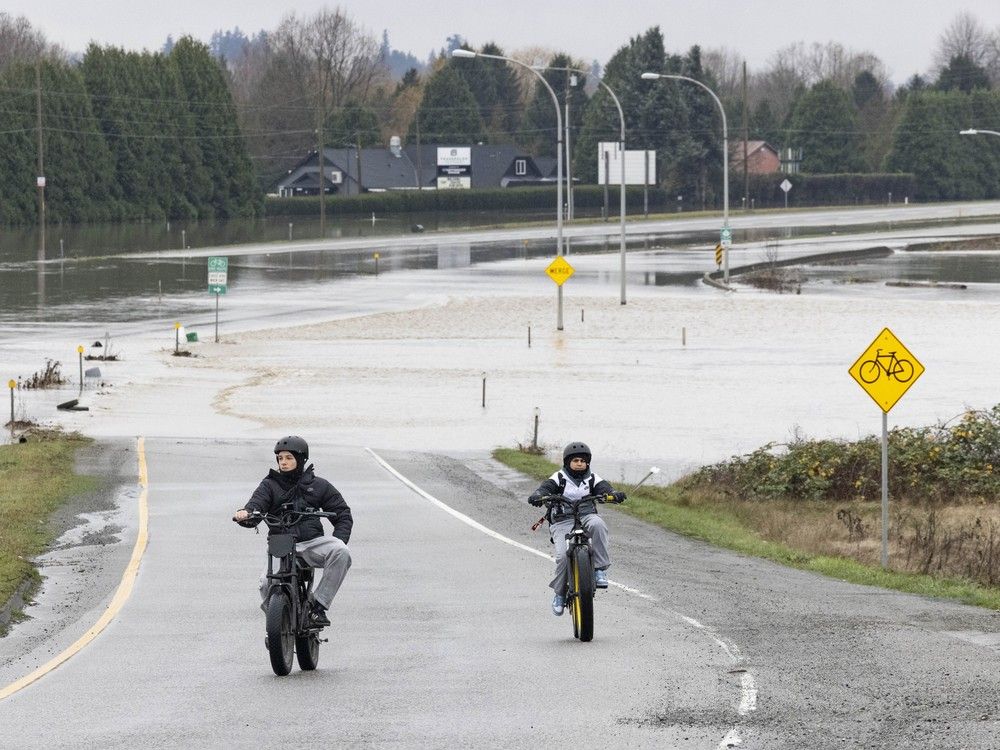
Severe rainstorms that led to flooding in December resulted in $90 million in insured damage, a warning that more funding needs to be invested in climate resiliency, the Insurance Bureau of Canada said Friday.
Record-breaking rains from huge plumes of moisture carried across the Pacific Ocean from tropical storms, called atmospheric rivers, resulted in the evacuation of hundreds of properties, damaged homes and farms , and shut down highways.
“Severe weather and flooding has once again disrupted the lives of residents and business owners across southwestern B.C. and Vancouver Island,” said Aaron Sutherland, vice-president of the Pacific and Western region for the Insurance Bureau of Canada.
“Coming just four years after the devastating 2021 floods, this most recent flood damage is a painful reminder of the need to build B.C.’s resilience and better protect communities from the new weather reality we face,” he said.
In the aftermath of the extreme, deadly flooding in B.C. in 2021, the province developed a flood strategy that included measures to better protect families and communities, but unfortunately, the strategy remains underfunded, warned the insurance bureau.
The trade association, which represents home, auto and business insurance companies in Canada, called on the B.C. government to prioritize funding for the flood strategy. This funding should include investment in flood-risk mapping, protective infrastructure, and incentives to help households and businesses flood-proof their properties, the group said.
“Investing in community resilience and damage prevention is always more cost-effective than paying to rebuild year after year following every disaster,” said Sutherland. “By prioritizing risk reduction and mitigation, the government can increase the number of homeowners that have access to flood insurance, which provides much more robust support than the government disaster assistance that high-risk homeowners are forced to rely on today.”
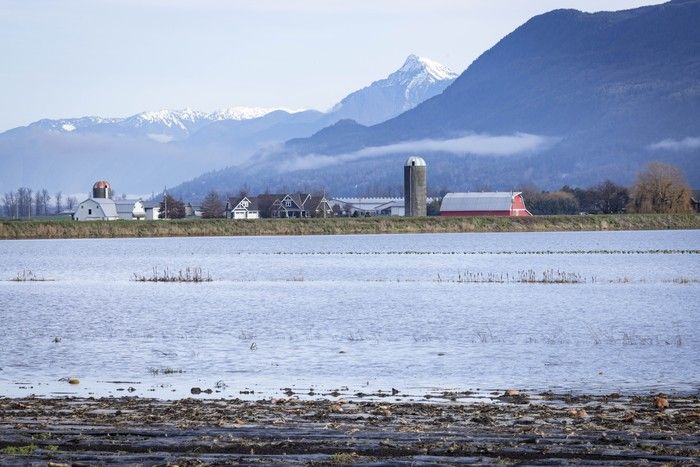
The December insured damage estimates come from Catastrophe Indices and Quantification Inc., a leading provider of data and analytics on natural and human-made disasters.
Insured losses from the 2021 flooding were much higher, at $675 million , but the trend in the past two decades has been increased insured damages from natural disasters.
Insured losses don’t cover all losses, as there are other costs that can run into the billions .
Following this past December flooding, The Vancouver Sun reported that there had been little progress on reducing flood risks .
The B.C. NDP government released a 10-year flood mitigation plan in the spring of 2024, but it had no price tag, no project priorities, and no timelines.
In September, when Metro Vancouver representatives met with Randene Neill, B.C.’s minister of water, land and resource stewardship, and Kelly Greene, the minister of emergency management and climate readiness, they were told there is no new funding for the flood strategy because of the province’s financial woes.
B.C. has a projected deficit this year of $11 billion.
Scientists and climate policy analysts have also warned that more funding is needed because events such as atmospheric rivers are expected to increase in severity and frequency because of climate change.
The atmospheric rivers are also causing other damage, including from debris flows and landslides.
Two Chilliwack River Valley properties that were deemed unsafe to live on due to increased landslide risk from the 2021 atmospheric river storms were ordered evacuated for the same reason in December .
Both homes were under an evacuation order for four weeks, which ended on Friday. A detailed geotechnical survey is being undertaken, according to Fraser Valley Regional District officials.
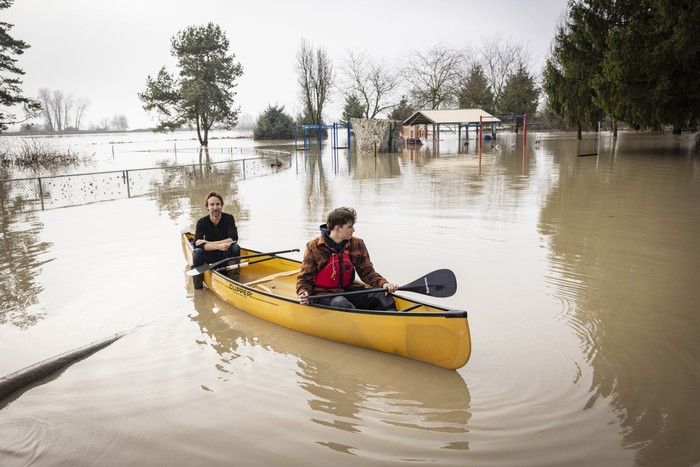
The homeowners continue to suffer from a provincial decision not to provide disaster aid or buy out their homes, which have now been valued at just $2 by the province’s property assessor.
Another two Fraser Valley homes were hit a second time by a mudslide triggered by the heavy rains in December.
Soil and rocks gave way above one of the properties on Dec. 10, covering the road to the home, burying the water supply, and carried on to the neighbour’s property, where it pushed up against the house, got through the garage and into the home.
The houses, in the City of Chilliwack on the slopes below Elk Mountain, had also been hit in 2021.