 BURST
BURST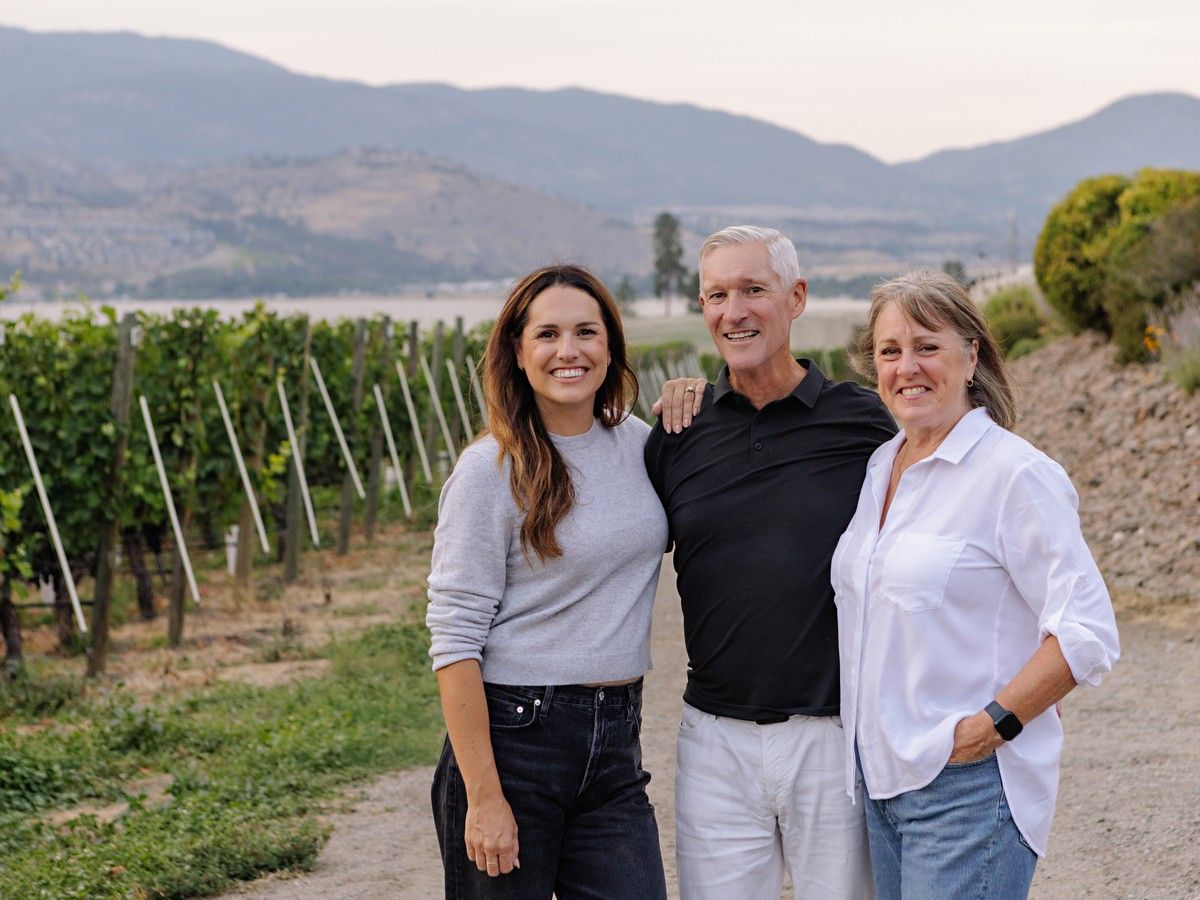
Lauren Skinner expects her American importer to stop buying.
Skinner is the managing director of Painted Rock Estate Winery, the family owned Penticton operation her parents John and Trish Skinner founded. Its bottles reach several U.S. states through a California importer, who told her some time ago that she would stop bringing in Canadian wine if tariffs ever came about.
On Monday, U.S. President Donald Trump signed three proclamations: an additional 50 per cent tariff on Canadian wine, dairy and stationery — about US$20 billion worth of goods — effective Aug. 19. Reaction from B.C. businesses has been more weary than alarmed. Most say they sell too little south of the border for the tariff to matter; the few that do export describe a market closing over a dispute they have no part in.
“There’s no way that our importer will be able to do business with a 50 per cent tariff on Canadian wines,” Skinner said. Nor will anyone risk a large order in the meantime, she said, because no one knows whether the tariff will actually happen or how long it will last.
Painted Rock is unusual. Most B.C. wineries sell nothing at all in the U.S.
“Most B.C. wine is enjoyed by Canadians,” the B.C. government said, putting typical annual exports to the U.S. at between $200,000 and $700,000, and global exports at $1 million to $3 million.
That makes for a strange tariff: one that names an industry that barely sells to Americans.
Jeff Guignard, chief executive of Wine Growers British Columbia, said the reason lies elsewhere. Nearly every province pulled American liquor off store shelves last year, in response to Trump’s earlier tariffs.
“It’s not a 50 per cent tariff on Canadian wine,” he said. “It’s a reaction to our earlier reaction to taking U.S. products off of the shelves.”
What frustrates him is who gets caught in that loop — small rural businesses with no part in a fight between two governments.
For Skinner, the American market was never about volume. It was about building a name, and about customers who had found her wine while travelling. That mattered more than usual this year, after American critic James Suckling toured the Okanagan and praised the wines he tasted.
“That’s a huge opportunity for Canadian producers, and it was something that we were looking forward to capitalizing on,” Skinner said. “And that now is no longer something that we’re going to be able to do anything with.”
Her first reaction to the news was exhaustion.
“I feel like the last six years in the wine industry has just been constant pivots,” she said.
Other wineries expect no effect at all.
Rasoul Salehi, managing partner at Enotecca, which owns Le Vieux Pin and LaStella, said Canadian wine never established itself in the U.S. and that it’s easier to sell into Asia or Europe.
Ben Stewart, co-founder and part-owner of Quails’ Gate Winery in West Kelowna, closed a Sonoma County operation in 2024 because the margins never worked.
And the tariffs reach well beyond wine.
Tia Masic founded Hemlock & Oak, a Coquitlam stationery company, in 2020, and has manufactured in Canada from the start. On Monday, she and her partner read through the lists attached to the proclamations and found the customs code covering bound planners and notebooks.
About 1,300 Americans are waiting on 2027 planners due to ship this fall, and Masic puts the duty on those orders at $100,000. The seven-person company has decided to charge those customers the price they were quoted and pay the duty itself.
“We could allow our existing customers to just eat the tariff, but that would be extreme brand damage,” said Masic.
Whether the company can afford it is another matter — Masic said they can’t absorb $100,000 today and are trying to work out how they might. About half the company’s sales go to the U.S.
She had believed manufacturing at home was the safe choice.
“I really did think, ‘Oh, I’m protected,’ ” Masic said. “We’re being punished for doing our best.”

Dairy, also named in the proclamations, is in much the same position as wine. Canada’s supply management system matches production to domestic demand, so little B.C. milk crosses the border.
Dairy Farmers of Canada said in a statement that it’s still assessing the announcement, and answered the American claim of discrimination by pointing the other way: U.S. dairy exports to Canada rose from $423 million in 2019 to $1.06 billion in 2025.
What B.C. producers want has little to do with Washington, D.C.
“I don’t necessarily want them to do something about the U.S. market,” Skinner said. “I want them to do something about the Canadian market.”
Salehi, Stewart and Guignard each raised the same thing: The barriers that make it hard to sell Canadian wine to other Canadians.
On Tuesday, the premiers of nine provinces signed an agreement to allow direct-to-consumer sales of alcohol between their jurisdictions, letting brewers, distillers and wineries ship straight to customers in other provinces. The change takes effect immediately in the other eight provinces; B.C. has committed to having its system running by February 2027.
There will be no movement on the American product.
“There are no plans to return U.S. alcohol to B.C. liquor store shelves,” the B.C. government said in a statement. “The announcement from Trump is about negotiating leverage, and we’re not going to give up ours.”
The B.C. government said it will keep working with producers to find customers elsewhere, adding that “with Trump attacking Canadian jobs and our economy, it has never been more important to help businesses reach new markets.”
Skinner’s own plan for the next four weeks is narrower. She’ll find out whether anything can ship before the deadline, then talk to her importer about what comes after.
“I want to make sure that (my importer) is still in business by the time these tariffs come to an end,” Skinner said, “and that she’s still there to work with us and to support Canadian wine.”
With files from Alec Lazenby