 BURST
BURST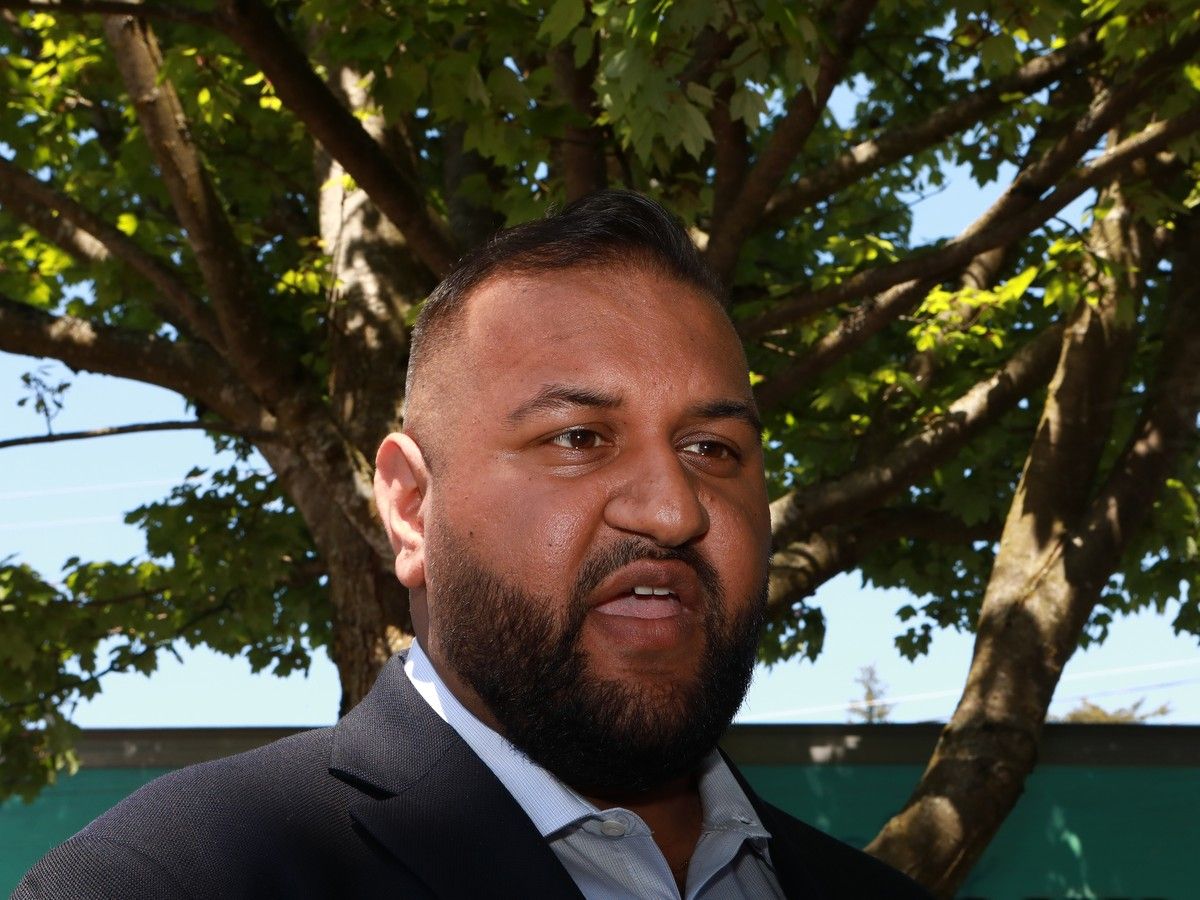
B.C. Forest Minister Ravi Parmar arrived at the Council of Forest Industries’ annual convention in Vancouver on Thursday holding out the promise that policy changes at government-run B.C. Timber Sales will free-up some new timber for an industry that can’t get enough of its raw material.
For the industry, however, changes that Parmar heralded in Bill 14, the legislation he tabled this spring, won’t come quickly enough to help and don’t get at their core problem with a permitting process that takes companies years to navigate before receiving permission to harvest trees.
“It’s now taking two to three years, in many cases, to get a forestry permit,” Council of Forest Industries CEO Kim Haakstad said. “But we’ve seen mines approved in 10 months.”
Haakstad, head of the forest sector’s key B.C. industry group, was referring to results the province achieved in getting Centerra Gold’s Mount Milligan mine expansion project from environmental approval to its final permit to allow construction to proceed in record time.
In January, Mining Minister Jagrup Brar characterized the Mount Milligan permitting work as an effort that broke down silos across ministries.
This week in Vancouver, Haakstad said: “We’d just love to see the same in forestry.”
Haakstad’s organization, which uses the acronym COFI, tried to take an optimistic tone with its 2026 convention, adopting the theme “forestry is a solution,” with a new economic assessment of forestry as one of B.C.’s cornerstone industries .
The economic impact study estimated that forestry supported some 95,000 jobs, including one-in-five of every manufacturing job in the province, and pumped $12.8 billion into B.C.’s GDP, though the figures were from 2024.
As the convention opened at Vancouver’s Parq Conference Centre, however, Haakstad noted that conditions for the industry are more challenging than they were in 2025, a year that was beset by production cuts, mill closures and job losses.
“I think that unless we see some more urgent action from the provincial government, it’s likely that we’ll see more closures this year,” she added.
Parmar, in his speech and during a fireside chat before a COFI audience of almost 600 attendees, said government is continuing on its long-term vision of moving toward forest landscape plans, documents devised jointly between government, First Nations and industry.
The idea will be to adopt area-based management practices, not “permit-by-permit” decision-making, Parmar said, which is intended to “transition forestry from boom-and-bust to predictability and sustainability and stability.”
In the meantime, the minister said he’s working on revamping the Crown’s B.C. Timber Sales agency to make more timber available through its programs and by improving the efficiency in issuing licences for salvaging timber after forest fires.
And Parmar said government is working on resolving issues related to permitting, which he characterized as numerous and arcane. He added that some of the problems boil down to having different forms to fill out for every district B.C. Forest Service office.
Parmar’s deputy minister, Mackenzie Leine, said the ministry has taken input from industry on permitting issues and the costs associated with permitting, and “now we’re in the stages of developing an action plan as we resolve these kinds of things.”
Opposition forestry critic Ward Stamer, the MLA for Kamloops-North Thompson, was also in attendance and said Parmar’s speech was too short on what specific actions government is taking to resolve the issues industry has clearly articulated.
“Instead of streamlining the process, they just keep adding more and more and more to the process,” Stamer said. “So everybody here is like, ‘Enough of adding stuff on, let’s simplify it. Let’s get to work and not just keep adding more to the process.’ ”