 BURST
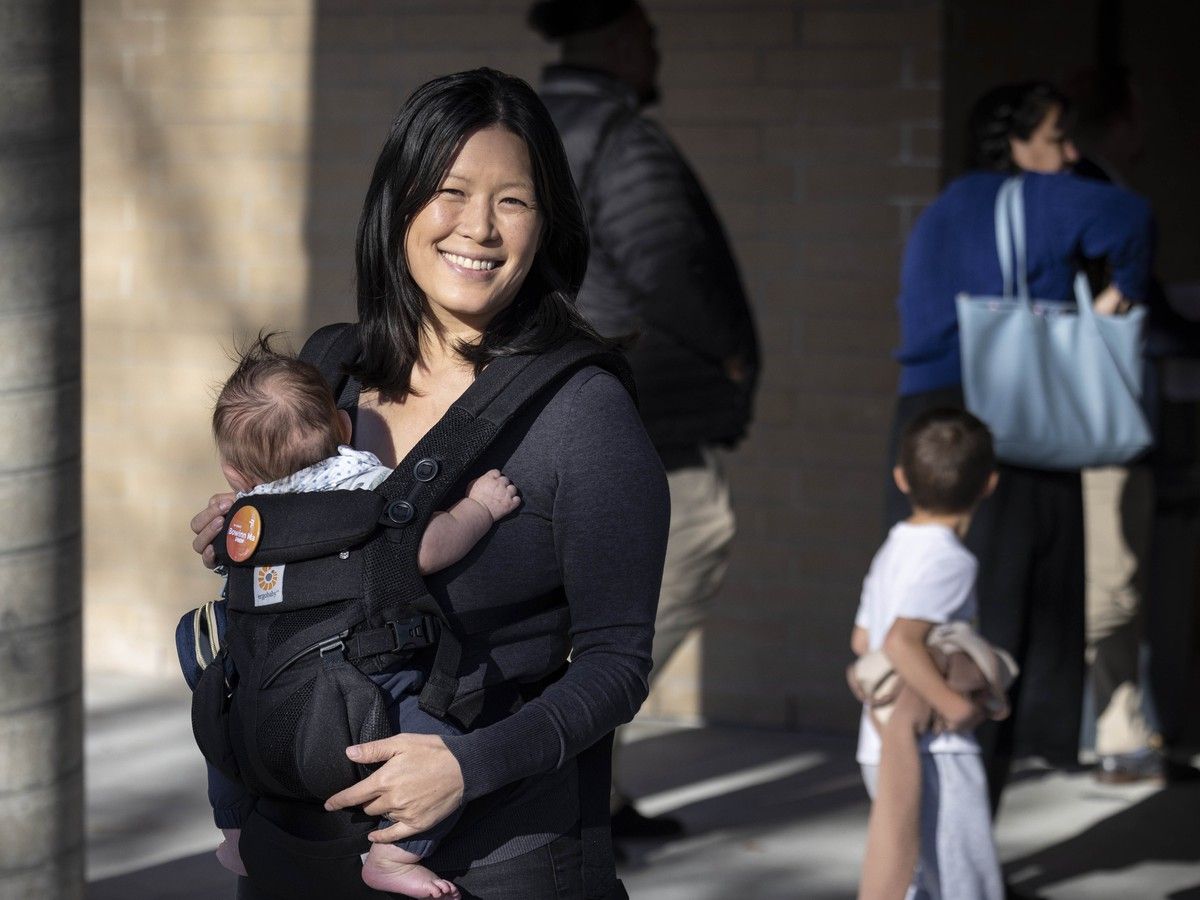
Three-month-old Jack coos as his mother, NDP candidate Bowinn Ma, discusses why more women haven’t put their names forward for Saturday’s provincial election.
One reason may be the “significant barriers” that make it difficult for provincial politicians to take maternity leave, so Ma is campaigning every day in her North Vancouver-Lonsdale riding with an infant who is still breast feeding.
Another is the increasing amount of harassment and toxic social media comments that female politicians say they receive, and in some cases threats to their safety.
In one of B.C.’s most extreme examples of this, an explosive device was detonated outside Ma’s office in June 2025. No one was injured, but it was a frightening experience.
“That day I was scheduled to have (my daughter) with me at the office, and I would be lying if I said that it didn’t create concern,” she said.
“How could an incident like that not give a mother pause when part of her ability to do this work depends on occasionally having her child with her?”
Still, Ma, who was the NDP’s infrastructure minister, is running for her fourth term because she believes the job is important and, “I’m not going to be intimidated away from representing my community.”
A Postmedia analysis of the gender makeup of candidates running for B.C.’s five main parties shows the NDP with 60 per cent women and the Greens with 49 per cent, but the other parties trail with 27 per cent for the Conservatives, 23 per cent for CentreBC, and 36 per cent for OneBC.

The lack of gender balance is concerning, but not surprising, for Kimberly Speers, associate professor in the University of Victoria’s school of public administration.
“There’s always been a challenge to get women to run,” she said.
Traditional reasons include time away from home, caregiving responsibilities, and how parties select their candidates. The biggest deterrent lately, Speers said, is that women “face more threats and harassment and gendered attacks than men.”
She said governments should develop anti-harassment policies, that come with strict enforcement, to convince more women — as well as visible minorities and people with diverse backgrounds — to consider public service.
After last weekend’s municipal election, only five of Metro Vancouver’s 21 mayors will be women.
Less than one-third of federal MPs are women, including only nine of the 43 MPs representing B.C.
The 2024 provincial election brought gender parity to the legislature for the first time, with 53 per cent of the 93 MLAs being women or gender-diverse people. B.C. is the first province to achieve this balance, Speers said.
With public opinion polls showing the NDP and Conservatives in a tight race , and the Greens in distant third, Speers said it is tough to predict if there will still be “representative democracy” in the legislature after the Oct. 24 vote.

Conservative candidate Claire Ratteé, running for re-election in Skeena, said women tend to take longer to decide whether to run for office, so her party may have had more time to balance its roster if the NDP hadn’t called a snap election.
While she argues it is more important for parties to have “good calibre” candidates regardless of their gender, she would ideally like to see more women on the ballot.
But the 34-year-old, who has run in six different types of elections, also understands why women are hesitant.
“Public service is very demanding … and it’s 10 times harder as a woman,” she said.
“There are still systemic barriers that do exist for women getting involved in politics, and I would love to see that change. You only have to take a quick scroll of my Twitter feed to have a pretty good understanding of why many women might be fearful of putting their name forward.”
And she is repeatedly asked how she will do her job “if you get pregnant,” while noting her male colleagues with children don’t get that same question.
Despite this, Ratteé finds the work rewarding. But while she appreciates voters are entitled to criticize policies, she would like to see a societal shift away from vitriolic comments being made about politicians’ appearance, age or weight.
The last NDP government, Ma noted, was the first in B.C. to have a caucus and a cabinet that was majority women. Her party, she said, has worked for years to recruit diverse candidates and mentor them through some of the challenges faced by female politicians.
“The caucus members around me were able to commiserate and support one another,” she said, “and that’s made a huge difference.”
B.C.’s other three main parties all have female leaders: the Greens’ Emily Lowan, CentreBC’s Elenore Sturko, and OneBC’s Dallas Brodie.