 BURST
By the end of its first day of availability, Grand Theft Auto VI sold over 19 million copies, more than doubling the previous one-day sales record held by its predecessor GTA V. Cumulative revenue at the end of launch date has neared $2 billion, a huge event for the largest segment of the entertainment industry and for consumer electronics writ large. Even if you aren’t excited about GTA VI, you probably know someone who is. Employers are lamenting “GTA flu” as employees stay home.
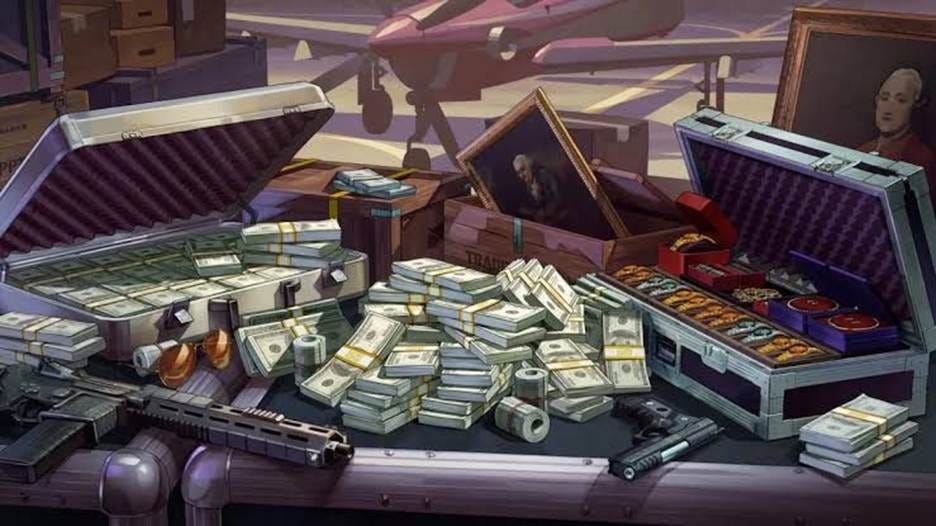
But there was another earth-shaking event in consumer electronics just five days prior to the release of GTA VI, and this one happened in court.
That development relates to another startling data point, which is the 700% price increase since 2022 of a core component of gaming consoles, like the Xbox and PS5 devices running GTA VI, and billions of other consumer electronic devices around the globe. Five days ago, a federal judge in the Northern District of California allowed a price-fixing case to proceed against Micron, Samsung, and SK Hynix, the three dominant trillion dollar memory chip makers, whose collective pricing power in the $130 billion per year memory chip industry has raised the price of consumer electronics, including video games.
The specific product line at issue is called Dynamic Remote Access Memory, or “DRAM,” and the market share of this oligopoly is roughly 90%. And memory goes into pretty much every consumer electronics product now. If you bought a PlayStation 5 since April 2026 or an Xbox after August 2026, you paid more than $150 in additional cost because of the memory-price shock. A few months ago, in June, Microsoft announced that it would be increasing Xbox prices by $100-150 – that’s a 33% increase on the Series S – which it attributed to a 2.5x increase in memory costs. Microsoft anticipates another doubling of its memory costs in 2027. In its 2026 Investor Q&A, Sony said that while it had secured memory to get through 2026, rising memory costs might delay its next-generation PlayStation platform. Like its competitor Microsoft, Sony didn’t foresee conditions improving in 2027.
As for other consumer goods, one estimate suggests increased DRAM prices are responsible for an 8-10% increase in smartphone prices in 2025 alone, and a 5-15% increase to the price of laptops. Based on monthly sales figures, the extra amount consumers paid amounts to about $200 million just in the month of September. Extrapolated across the billions of consumer electronic devices that also run on DRAM yearly, that number reaches into the tens of billions.
There are other factors involved in this pricing change, notably the white hot demand for generative artificial intelligence products to go into data centers, of which memory is a key component. But we shouldn’t overlook price-fixing, because part of the story of why there isn’t enough productive capacity might be a restraint of investment as a result of such a conspiracy.
Once you start delving into the history here, the more eye-raising the behavior in the industry seems to be. After all, two decades ago, the very same major DRAM companies minting money pled guilty to criminal charges for their participation in a global memory-price cartel. And several executives went to jail. But it’s clear they were unchastened by the experience.
In 2006, Sun Woo Lee, Samsung’s then-Senior Manager of DRAM Sales, was one of five Samsung executives sentenced to 8 months in prison in connection with his participation in the early-2000s DRAM cartel. What did Mr. Lee do after serving his debt to society? Well, he went right back to working at Samsung. Not only that, he was promoted to President of Samsung Germany in 2009. In 2014, he was again promoted to President of Samsung Europe.
There are very few jobs that will hire you back after you committed a crime at work. But one of the lessons of the 25-year DRAM cartel is that crime pays.
Who Pays the Price of DRAM Price Hikes?
DRAM is a type of semiconductor capable of temporarily storing information, or “memory.” A single 16-gigabit DRAM chip can store approximately 16 billion “bits” of information and is smaller than a typical adult index fingernail. A high-end smartphone requires about 8 of them. A souped-up desktop computer rigged for gaming might include 32 of them, which corresponds with 64 GB of memory capacity.
DRAM is the backbone of nearly every computational device on earth. The videogame GTA VI is played on either an Xbox or PlayStation console. Well over 100 million of these devices sold since 2022 require DRAM. So do the 7.68 billion smartphones used worldwide, and 1.8 billion computers, another 750 million tablets, and about a half billion smart watches. So does every fancy Nvidia chip powering AI.
When the cost of DRAM goes up, those costs get passed through. Smartphones and notebooks aren’t just consumer products; they are also essential infrastructure for much of the modern economy. Increased unit prices also represent increased operational costs for businesses, reduced access to computers in schools, a drain on taxpayer dollars, delayed government modernization projects, higher manufacturing costs for automobiles, telecom devices, medical equipment, and so on. And that’s not even getting to the AI bubble.
Hawks Don’t Fly In Formation
The antitrust laws were intended to apprehend price-fixing cartels and enhance price competition. For most of the history of American antitrust law, cases against price-fixing were more or less straightforward, if challenging to detect.
Historically, price-fixing conspiracies have been most common in highly-concentrated markets. Algorithmic pricing software has changed that calculus dramatically, but the basic idea is that at the root of every conspiracy is an agreement between participants in the conspiracy. It’s easier to arrive at such an agreement when there are fewer players in the market, and its also easier to make sure everyone is sticking to the plan. The DRAM market is a classic example.
In June of this year, a group of 17 consumers and small business brought a class action lawsuit against Micron, SK Hynix and Samsung alleging they had cut production of DRAM, coordinated a pivot toward “high bandwidth memory,” and locked up DRAM supply – all contrary to sound economic and business logic.
The alleged cartel emerged in the middle of the “DRAM Winter” of 2022-2023, when demand was weak and prices were falling. Samsung, Hynix and Micron each reported multibillion-dollar losses at the fiscal year ending in 2023.
In late 2022 and early 2023, each of the companies announced that they would be reducing their production in DRAM, in response to the weak demand for DRAM across the board. But then came 2023, and with it, the AI boom.
Now, I’m going to lay out the allegations in a little bit of detail, because I think it’s useful for understanding how a cartel might be inferred from circumstance. After all, people don’t typically make illegal agreements out in the open.
According to the allegations in the case, here’s what happened:
As the AI boom hit, all three companies redirected their manufacturing capacity from “commodity DRAM” to “High Bandwidth Memory,” a high-margin DRAM product sold exclusively to AI accelerators.
As each company cut DRAM production, DRAM prices started going up. By January 2024, a global DRAM shortage began to materialize, and by mid-2025, DRAM prices had increased 171.8% in one year.
Despite the shortage and rapidly increasing prices, for some reason, the three companies committed to restraints on DRAM output lasting beyond 2026.
In 2024, all three companies announced in succession that they would wind down “DDR4,” a generation of DRAM chip that was still widely being used, causing DDR4 prices to surge amid “panic buying” by major customers.
As prices for conventional DRAM continued to soar, by 697% over an 18-month period according to one estimate, not one of the three companies announced plans to expand DRAM production capacity, even after DRAM profitability had overtaken that of the accelerator chips.
In October 2025, Samsung and SK Hynix locked up 40% of total worldwide DRAM output for a single customer, OpenAI, again with no plans to expand DRAM output to meet the strongest supply signal in the market’s history.
In December 2025, Micron announced it would close its multibillion-dollar direct-to-consumer DRAM brand, Crucial, again foregoing any expansion of DRAM output.
Then, in January 2026, all three companies introduced eerily similar customer vetting procedures for DRAM orders, allowing each of the companies to exchange customer information and monitor their agreed-upon restrictions.
Considered holistically, the allegations depict three companies not acting in their own self-interests, but a series of “perilous decisions that locked away” DRAM, a collective “refusal to cash-in on a nearly 700% price increase,” near-identical customer-vetting practices – and all of it performed by three companies with a decades-long history of conspiratorial behavior.
It’s possible that this behavior was purely coincidental. One famous quote from a Chicago School judge is that “competitors in concentrated markets watch each other like hawks.” That does not mean they are price-fixing, even if it results in closely-timed parallel moves, but that they are closely monitoring the competition and adjusting to market trends.
According to the judge in this case, the above allegations had “gone beyond hawks watching each other; their contentions are more akin to hawks flying in formation – an activity that hawks ordinarily do not do.”
DRAM Price-Fixing 2.0
What’s fascinating about this particular case is that the judge let the case proceed. But in 2018, a similar class action lawsuit was filed against Samsung, SK Hynix and Micron alleging industry price-fixing. That case was dismissed, even though you’d have to parse hairs to distinguish it from the current case that was just allowed to proceed. Had the 2018 case moved along to completion, it’s unlikely we would see the current crisis in DRAM pricing. Indeed, the fact this collusive arrangement has existed for more than 25 years is suggestive of a structural problem with the enforcement of antitrust laws.
Today’s DRAM oligopoly was already coming into focus by the end of the late 1990s, when the dot-com boom produced an enormous wave of business investment in computers and telecommunications infrastructure. One of the themes of the DRAM oligopoly is its orientation around boom-bust cycles of capital investment in the broader tech industry, which drives the demand for DRAM in good times, then causes the bottom of the industry to fall out in bad times, leading to consolidation. (Intel was once a memory chip maker, but pulled out because of this pricing dynamic.)
By 2002, the dot com bust fostered a standard pricing collapse in memory chips. Amid U.S. trade disputes with South Korea, government restructuring of failing firms, and other fallout, rumors began to circulate that the U.S. Justice Department was pursuing an antitrust investigation of all four leading DRAM producers – Micron, Samsung, Hynix, and Infineon. Of the Big Four, Micron was the only American company, and is still based out of Boise, Idaho.
Why Idaho? Here’s a fun detour: Micron’s principal early financier was one J.R. “Jack” Simplot. Simplot wasn’t a technologist, but an agribusiness entrepreneur who had built a food processing empire that ended up providing McDonald’s with its french fries. A real potato man, in 1980, his $1 million investment at 40% equity in Micron made him one of the richest men in America.

Another curiosity, the J.R. Simplot Company is itself defending against allegations of another illegal price-fixing scheme among frozen potato processors involving the data-sharing system “PotatoTrack.” It became a bit of an inside joke last year during committee hearings on algorithmic price-fixing when someone would list off industries rattled by price-fixing and conclude with, “even frozen potatoes!”
Jack Simplot was in his mid-90s back in 2004, when then-Micron CEO Steve Appleton offered a public admission:
“Although a recent Electronics Weekly article suggested that I believe it is not possible to control prices in this industry and that the DOJ’s investigation is theoretical, neither is the case. The DOJ’s investigation revealed evidence of price fixing by Micron employees and its competitors on DRAM sold to certain computer and server manufacturers.”
Micron agreed to cooperate with the Justice Department under its Corporate Leniency Policy, and by 2007, each of the other major DRAM manufacturers had entered guilty pleas. In total, 18 executives were charged, and 15 agreed to serve actual prison sentences ranging from four to 14 months. Total criminal fines were $730 million, against an industry that was pulling in $34 billion per year at its then-peak.
What we know about this earlier DRAM price-fixing scheme is gleaned from high-level fact summaries in various plea deals. The Defendant DRAM producers had participated in a conspiracy to fix the price of DRAM sold to equipment manufacturers, like Dell, Hewlett-Packard, IBM, and Apple. They’d done so by communicating with their competitors about the price of DRAM, agreeing to charge prices for DRAM at certain levels, issuing price quotes consistent with those agreements, and exchanging information about DRAM sales to certain customers to monitor and enforce adherence to the agreements.
In other words, more or less the same conduct the same companies are accused of today. Normally, this criminal arrangement would have led to successful civil suits and scrutiny on the industry. There was in fact one follow-on case brought by California and a coalition of states, which settled, but then the Supreme Court intervened.
A Cartel Economy
In 2007, the law of price-fixing fundamentally changed with the Supreme Court opinion in Bell Atlantic Corp. v. Twombly, or just “Twombly.” For decades, courts had sought to distinguish between, on the one hand, competing companies responding in the same rational manner to the same market pressures and, on the other hand, two competitors agreeing with each other to rig the market.
But where that dispute was mostly left to a judge or jury after all of the evidence had been presented, Twombly forced that dispute to occur at the outset of the case. Today, if a plaintiff doesn’t have evidence of an agreement on day 1, they get kicked out of court.
Twombly is the reason why a 25-year price-fixing scandal in the market for DRAM still exists today. When plaintiffs can hardly get their foot in the door, markets are rigged with near impunity. From RealPage to Rainmaker, and for a cottage industry of “cartel management services,” we have Twombly to thank.
To make an even finer point of it, the 2018 class action case against the memory cartel was dismissed because of Twombly. Reasonable minds can disagree, but the overarching problem is that judges have too much discretion and end up making line calls based on incomplete evidence that result in inconsistent policing of rigged markets. It’s a vibes-based approach to enforcement.
There’s a bill in Congress to fix this legal problem foisted on us by the Supreme Court. It’s called the Competitive Prices Act. The point of that law is to put the burden on competitors to avoid engaging in conduct that stacks the marketplace against consumers, rather than on outgunned consumers.
There’s a lot of anger among gamers about the high price of DRAM; people understand they are getting ripped off, and they get who is doing it. What is a bit more difficult is to show that the way around it is to fix the pleading standards for antitrust conspiracy cases. But if just a fraction of the 20 million people who are playing GTA VI this weekend understand this is the fix to their higher console prices, well, that would be a strong start.
To put it differently, what if I told you with this one little trick, Sony might release its next-gen PlayStation next year, after all?
Thanks for reading! My name is Lee Hepner, I’m a guest-writer for BIG while Matt is out on paternity leave. Your tips make this newsletter what it is, so please send tips on weird monopolies, stories I’ve missed, or other thoughts. And if you liked this issue of BIG, you can sign up here for more issues, a newsletter on how to restore fair commerce, innovation, and democracy. Consider becoming a paying subscriber to support this work, or if you are a paying subscriber, giving a gift subscription to a friend, colleague, or family member.
cheers,
Lee Hepner