 BURST
BURSTFire erupted in the morning skies over Siberia on June 30, 1908, as an atmospheric explosion occurred that remains unmatched by any similar event in modern history.
That day, at approximately 7:15 a.m. local time, observers in Siberia's remote Tunguska region became witnesses to the entry of a brilliant fireball into Earth's atmosphere, trailing smoke across the dawn sky and culminating in a flash brighter than the sun itself. Within seconds, the explosion and resulting shock waves that followed reportedly knocked some members of the nearby Indigenous Evenki population off their feet, and caused damage to dwellings and livestock, while seismic instruments hundreds of miles away logged tremors caused by the blast.
The blast produced enough energy to flatten a significant stretch of the Siberian wilderness, marking an event that still serves as a cautionary tale — and a major point of reference — for modern planetary defense efforts. Yet some questions remain about exactly what happened, and what the implications are for future potential Tunguska-scale events. For many years after the events of that day, the cause of the blast — known today as the Tunguska event — remained unknown. With time, a likely culprit emerged: scientists now believe a small asteroid, estimated to have been just 130 feet (40 meters) in diameter, exploded after entering Earth's atmosphere.
What do we know?
Unraveling the Tunguska Event mystery
Remarkably, scientists wouldn't get a firsthand look at the destruction caused by the Tunguska blast for almost two decades, due primarily to the extreme remoteness of the blast location. Further complicating scientific investigations were the First World War, the Russian Revolution, and the ensuing civil war.
One of the earliest attempts to reach the blast site was initiated in 1921 by Soviet geologist Leonid Kulik, who failed in his first effort, but did eventually make his way to Tunguska six years later. Upon arriving, the devastation caused by the event was unmistakable even after nearly two decades.
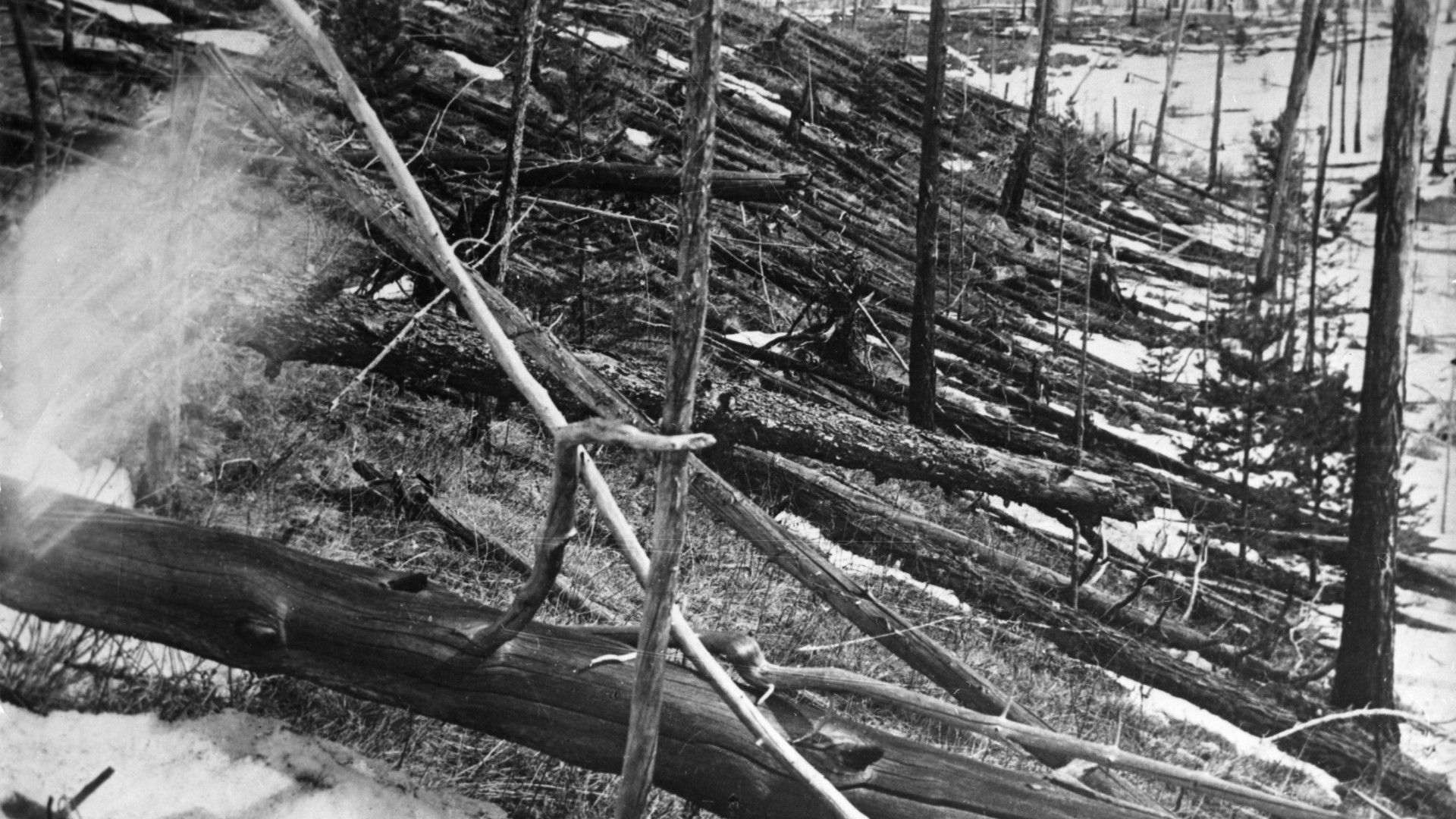
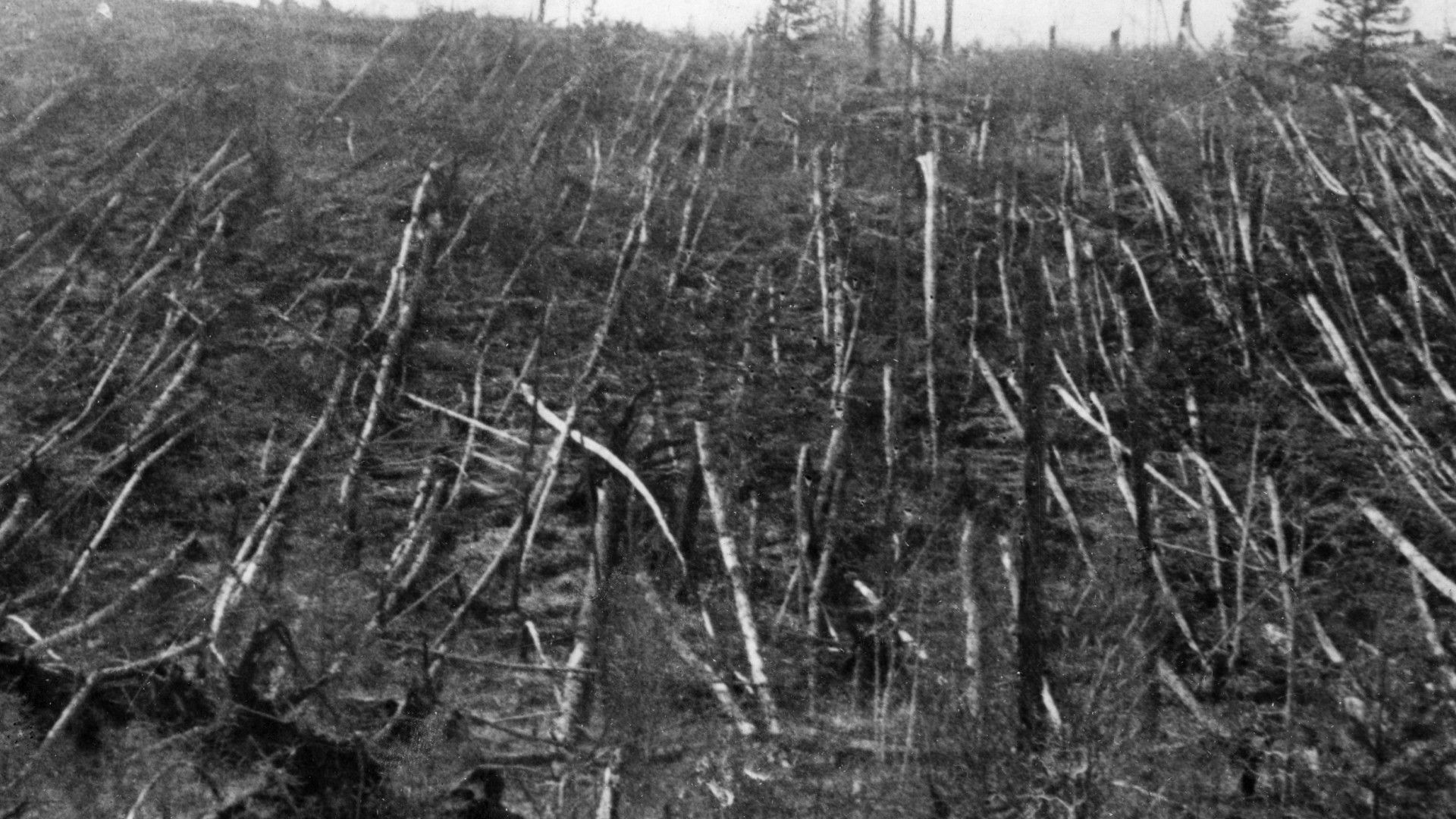
Curiously, at the blast site's presumed epicenter, a small area of unaffected trees remained standing, albeit stripped of some of their bark and branches. The surrounding countryside, by comparison, was littered with large numbers of trees that were toppled as the shock waves produced by the exploding asteroid high above radiated downward.
In the decades that followed, additional assessment of the site that included expeditions and aerial surveys, primarily during the 1950s and 1960s, revealed another curious feature: a distinctive hourglass- or butterfly-shaped destruction zone spanning well over 800 square miles (2,070 square kilometers), with millions of trees estimated to have been flattened. Yet most curious of all had been what investigators did not find; despite a blast zone of this size, there was no evidence of an impact crater at Tunguska.

An airburst over Siberia
What the evidence seemed to suggest was that an explosion had occurred not on the surface following a massive impact, but instead high in Earth's atmosphere — probably as much as several miles above the Earth — as tremendous aerodynamic stresses caused the object to fragment and release its energy before reaching the ground.
A longstanding debate about the Tunguska object has centered on whether it was more likely an asteroid or a comet, although today, most evidence appears to favor an asteroid. Among the clues supporting an asteroid origin are mineral and chemical signatures identified in material collected from the region that researchers have argued are consistent with a stony or carbonaceous asteroid. However, identifying physical remnants definitively associated with the Tunguska object has remained challenging.
What remains unknown?
A warning from the sky?
While the Tunguska event remains an enigma in some ways, it also offers modern researchers an opportunity to study one of the rare recent examples in Earth's geological history of a large-scale cosmic airburst.
Deeper in Earth's past — around 66 million years ago — a six-mile-wide (10 km) asteroid struck what is now Mexico's Yucatán Peninsula. The impact created the 120-mile-wide (190 km) Chicxulub crater in a cataclysmic event that drove mass extinctions across the planet, eliminating nearly three-quarters of the species that thrived on Earth until that time.
Of course, even objects orders of magnitude smaller than the object that created the Chicxulub crater can pose a danger to Earth. Although the object that struck Earth 66 million years ago is believed to have been as much as 200 times wider and millions of times more massive than the suspected asteroid that exploded over Siberia in 1908, estimates indicate that a Tunguska-scale event would be capable of killing millions if it occurred today over a city the size of New York.
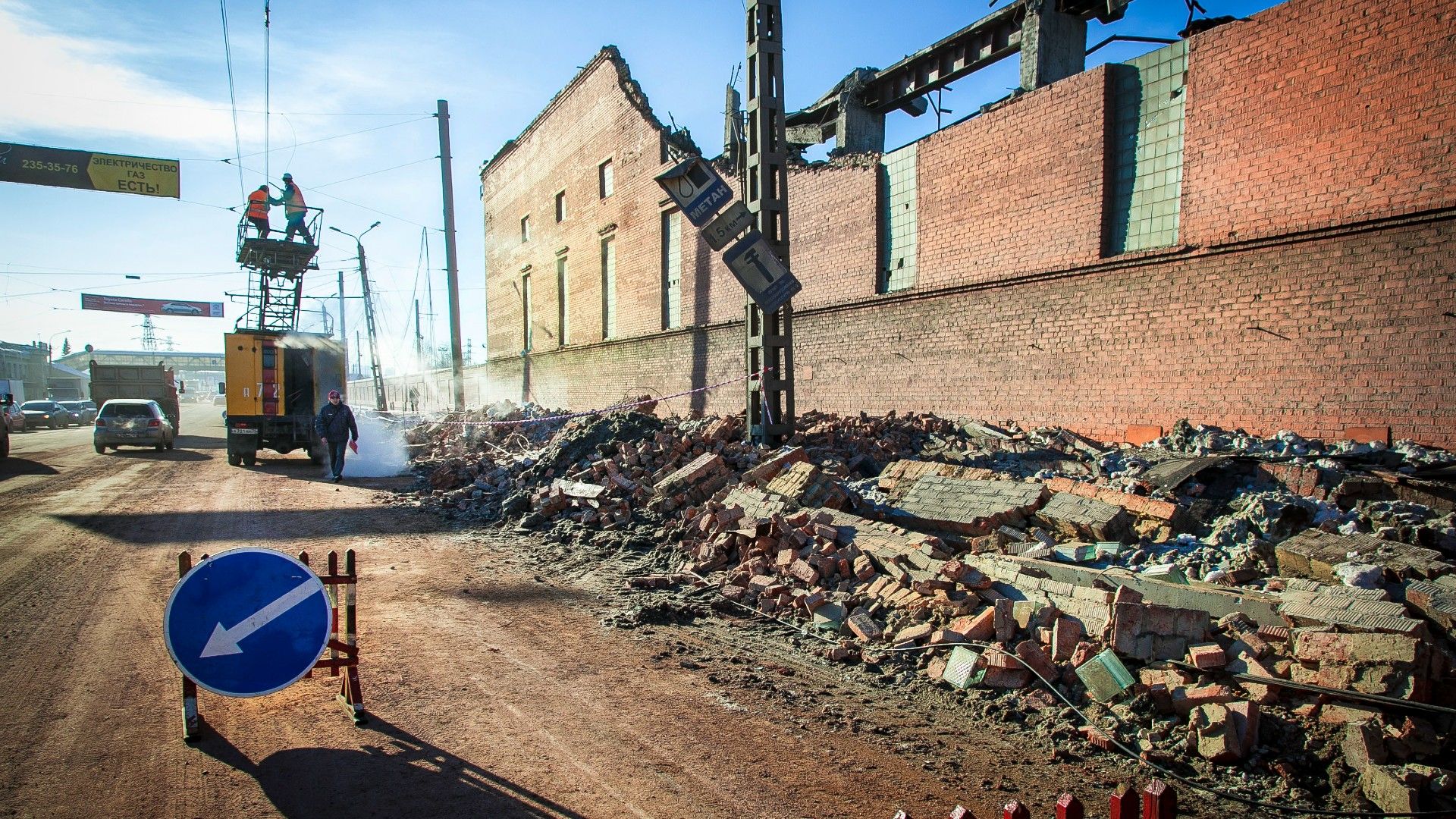
Such estimates aren't based entirely on theory, either. In February 2013, planetary scientists were given a dramatic opportunity to gauge the effects of such an event when a previously undetected 60-foot-wide (20 meters) asteroid exploded after entering Earth's atmosphere over Chelyabinsk, Russia.
The resulting blast, which released energy equivalent to an estimated 500 kilotons of TNT, was captured on cameras throughout the region as it damaged buildings and caused injuries to more than 1,000 people, mostly due to flying glass from windows that were shattered by the blast wave.
A wake-up call for planetary defense
Because of events like Chelyabinsk and Tunguska, planetary scientists have worked to expand initiatives that detect and monitor potentially hazardous near-Earth objects (NEOs) that could become a concern in the decades ahead.
Still, despite such efforts having been in effect at the time, the Chelyabinsk event represented an example of a potentially dangerous NEO that effectively managed to sneak up on us. Fortunately, despite the damage that was caused, things could have been far worse. But will we be so lucky next time?
To help mitigate such concerns, in 2016 NASA established the Planetary Defense Coordination Office to help align its efforts with those of its international partners and develop more advanced methods of identifying and tracking any NEOs that could pose an impact threat.
Then in 2022, NASA's Double Asteroid Redirection Test (DART) demonstrated the use of a spacecraft as a kinetic impactor, which was intentionally sent on a collision course with Dimorphos, the small moon of the asteroid Didymos, which altered Dimorphos' orbital period around its companion by approximately 33 minutes. Such technology could one day prove to be vital if another potential Tunguska-type object were found to be on a collision course with Earth.
The mystery continues
Fact, fiction, and planning for the future
Given the questions that remain about Tunguska, as well as the misrepresentations and persistent myths surrounding it, several scientists have also worked in recent years to combat misinformation about the 1908 event.
In a paper published in March 2026 in the journal Meteoritics & Planetary Science, authors Mark Boslough and colleagues noted that future planning for evacuation plans and other mitigation efforts "depend critically on our ability to model these events, which depends on our understanding of the governing physics, which in turn is validated by sparse data on real events such as Tunguska."
"If people do not have confidence in the models on which evacuation plans are based, they could lose their lives," the study's authors warned.
More than a century after it occurred, June 30 is now recognized as International Asteroid Day, commemorating not only the blast's anniversary, but also the need for awareness of the dangerous potential future similar events could present.
Tunguska therefore remains a source of fascination for scientists, as well as an opportunity to better understand — and to prepare for — any potential future threats posed by similar objects, should one eventually be found on a collision course with Earth.