 BURST
BURST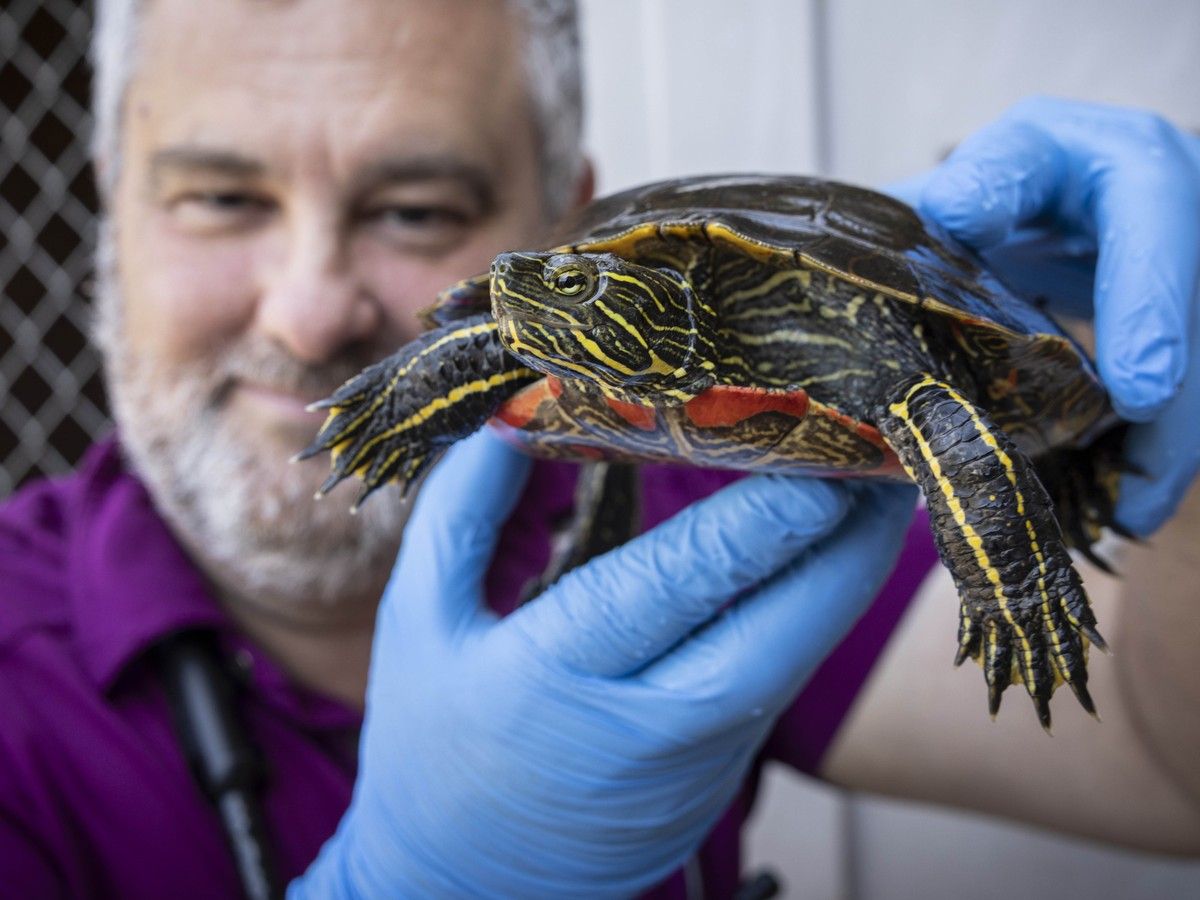
At a Maple Ridge vet clinic, saving an endangered B.C. turtle sometimes resembles a high-stakes craft project.
The western painted turtle with a cracked shell arrived at the Dewdney Animal Hospital in early July, after being found by a rescue group on the Gulf Islands. An X-ray revealed her spine was still intact despite the shell damage — and she was carrying 14 eggs.
After inducing the turtle to save the eggs, Dr. Adrian Walton patched her shell together with zip ties and glue.
“A little like Humpty Dumpty,” he said.
The vet is asking drivers to stop aiming at turtles when driving near wetlands after he’s had to repair several turtle shells over the last five years, including two in the last month.
Turtles often cross roads to get to ponds or nesting sites, where they can be unintentionally — or intentionally — struck by vehicles.
Walton cited a 2007 study by researchers in Ontario that found 2.7 per cent of drivers intentionally swerved to hit a turtle or other reptile when a decoy was placed on the road between the dashed centre lines, where vehicles normally don’t travel. In 2012, an American study involving a rubber turtle placed on the centre line recorded the same percentage of intentional hits.
Rescue groups often bring in turtles with damaged shells for assessment, Walton said. If an X-ray shows a crack that goes over the shell’s centre line, it means the reptile’s spine is damaged. In that case, he will anaesthetize the turtle and try to retrieve any eggs she may be carrying before euthanizing her. In a similar situation last year, he was able to retrieve 14 eggs, all of which hatched and could be released on the Sunshine Coast.
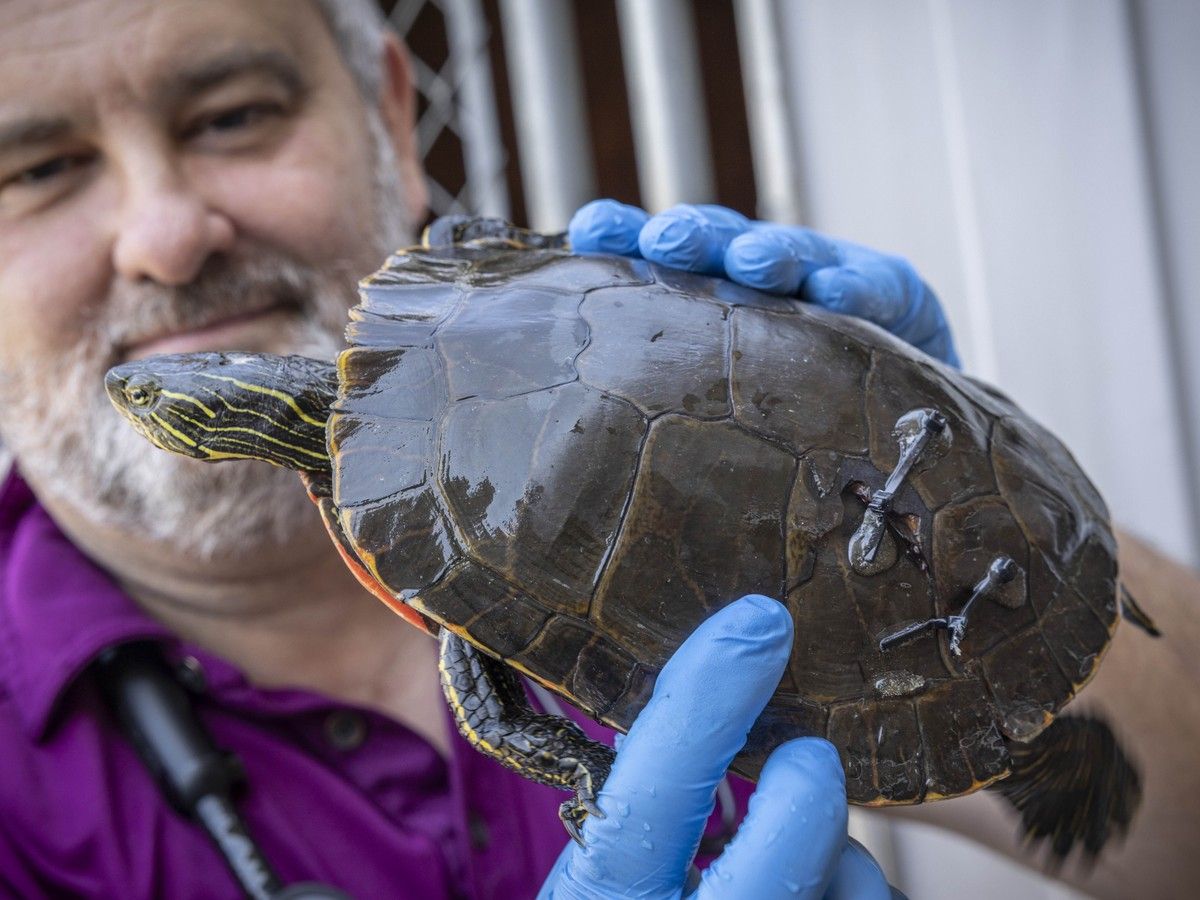
If a turtle can be saved, Walton will induce those that are carrying eggs before trying to repair their shells. In the past, he used bra clips to pull the shells together, but now finds zip ties work just as well and are easier to find. He gets his epoxy from the hardware store.
Walton warned people against trying to fix a turtle themselves. At his vet clinic, the reptile is given pain medication goes under anesthesia for the procedure. It also requires a course of antibiotics and rehabilitation afterwards.
“We don’t want to keep the turtles in captivity,” he said. “The goal is to release them and to see their offspring survive.”
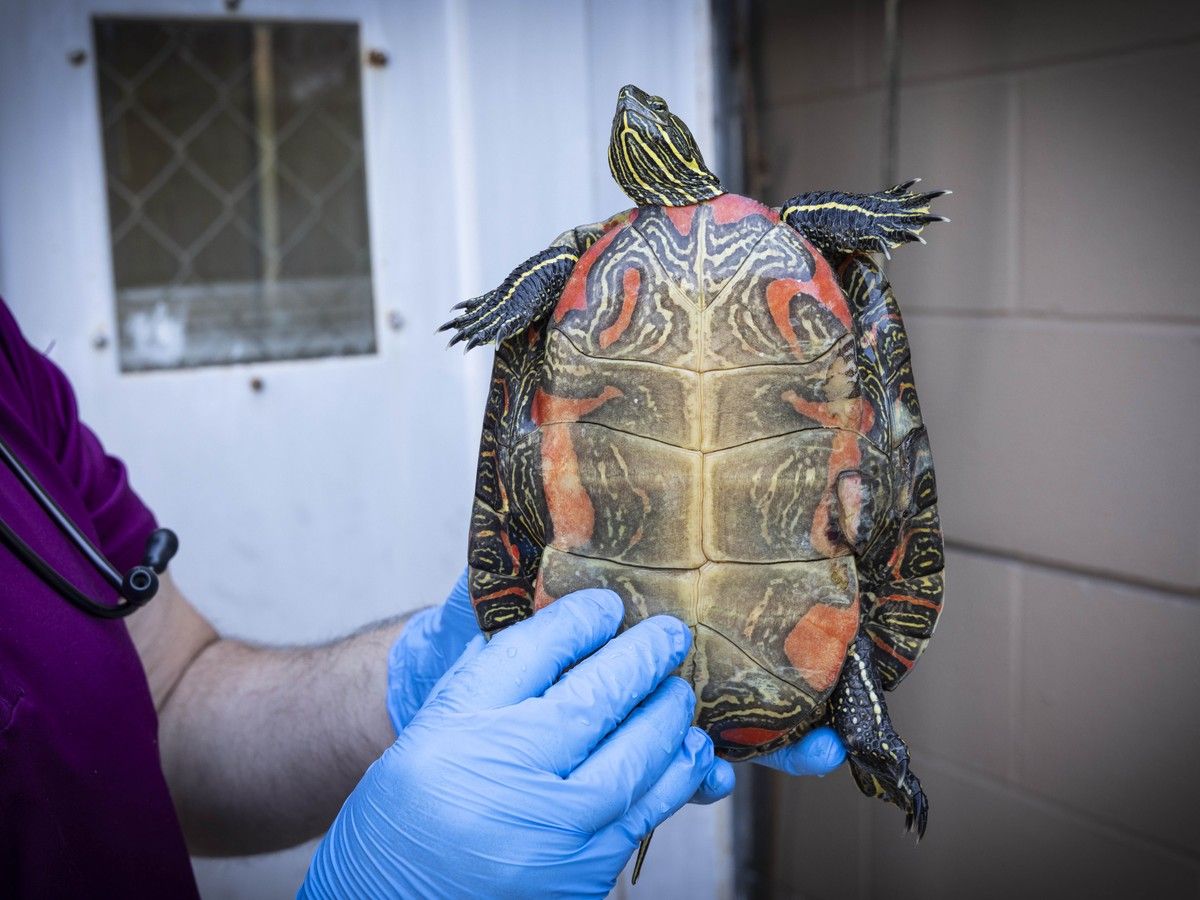
That’s particularly important in the case of the western painted turtle. The endangered species, B.C.’s only native freshwater turtle, is under threat from wetland habitat loss and invasive red-eared sliders, which were introduced into the ecosystem as unwanted pets. Western painted turtles have a smooth, olive green or black carapace that may have red and yellow swirls on it. They have yellow stripes on their neck and legs.
“As western painted turtles are long-lived and have low reproductive output, even low rates of road mortality can result in population decline,” according to the B.C. Reptiles and Amphibians website , which was created by the B.C. government and Thompson Rivers University.
The Nature Conservancy of Canada previously told Postmedia News that the best way to help a turtle cross a road is to pick it up with both hands, like a hamburger. Carry it close to the ground and gently set it down when you get across the road. Back away to avoid causing it undue stress.
“Don’t use a hockey stick or push it across with your feet, or pull it by its tail, (as) their undersides are quite soft and rough pavement can do a lot of damage,” Andrew Holland, the NCC’s media relations director, said in 2020.
Walton said he’s encouraged by the response from non-profit groups to help the endangered turtles. Citing the same 2007 study that found some drivers swerving to hit the turtle, he said about 3.3 per cent of drivers stopped and attempted to rescue the decoy turtle instead of driving past.
In June, after a Salt Spring Island rescue group found a turtle that had been run over, Harbour Air flew the reptile to Richmond, where the vet was able to pick it up and work on it. The turtle laid 11 eggs that were eventually sent to the Coastal Painted Turtle Project for rehabilitation and release. The turtle was returned to the island.
In the case of the turtle rescued earlier this month, she and her eggs will also be sent to the Coastal Painted Turtle Project before they are released back in the wild.
“There are a lot of people working to do everything they can to help bring this species back,” said Walton.