 BURST
BURSTA restless Earth-facing sunspot unleashed a powerful X-class solar flare on June 30, triggering radio blackouts across parts of North America.
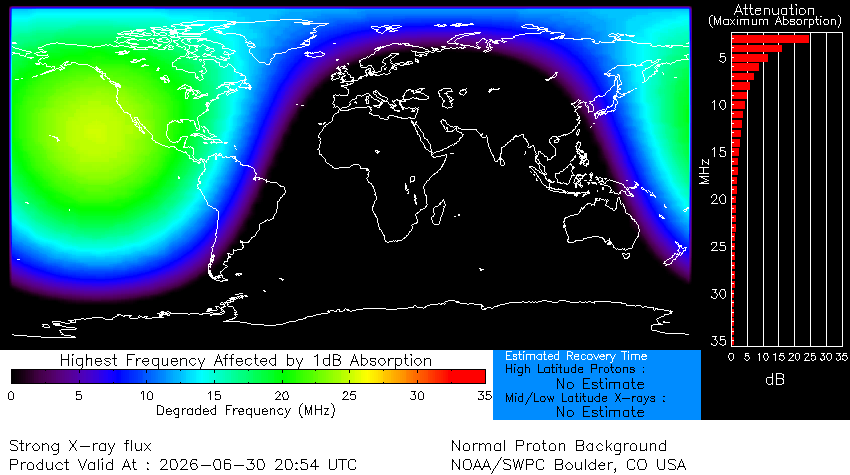
The X1.1 solar flare erupted from sunspot region AR4479, peaking at 4:50 p.m. EDT (2050 GMT) according to NOAA's Space Weather Prediction Center.
The intense burst of X-rays released during the eruption reached Earth in just over 8 minutes, triggering strong (R3) radio blackouts across the daylight side of Earth. This mainly affected high-frequency radio users across parts of North America who may have experienced temporary signal degradation or brief communication outages while the flare was at its strongest.
The eruption also launched a coronal mass ejection (CME) — a huge cloud of magnetized solar plasma hurled into space. When Earth-directed, CMEs can collide with our planet's magnetic field and spark geomagnetic storms, which subsequently can produce dazzling northern lights displays.
This one, however, appears unlikely to pack much of a punch.
Early observations suggest the CME is traveling mostly northward, with only limited Earth-directed material. We may experience a glancing blow around July 3.
While forecasters will continue analysing imagery and models over the coming days, the eruption isn't currently expected to produce a significant geomagnetic storm or widespread aurora display.
What are solar flares?
Solar flares are sudden bursts of energy released when magnetic fields around sunspots become twisted and reconnect. They are ranked using five classes — A, B, C, M and X — with X-class flares representing the most powerful eruptions.
What are CMEs?
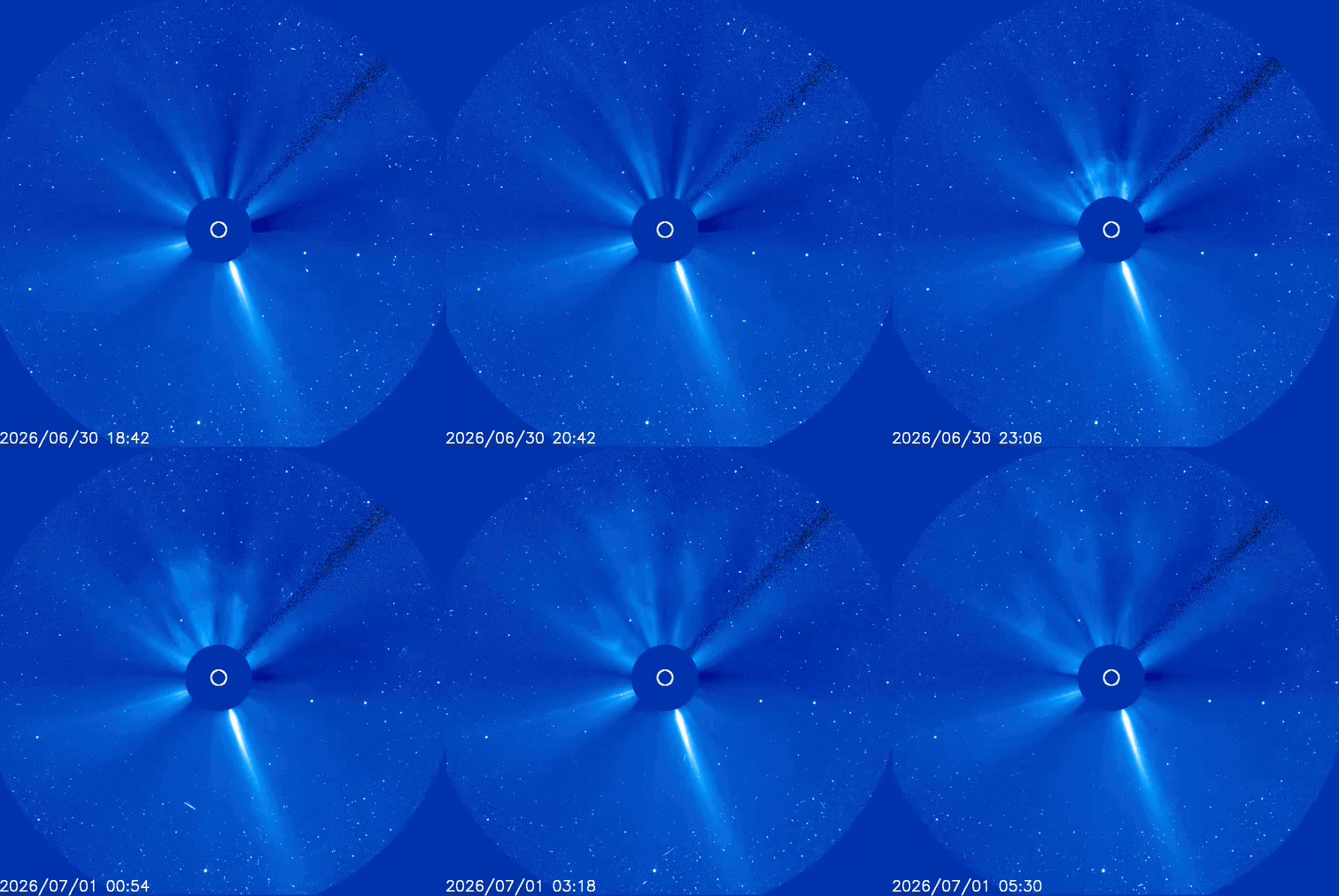
CMEs behave a little differently. Unlike the radiation from a solar flare, which reaches Earth at the speed of light, these clouds of charged particles typically take one to three days to reach us. If they arrive in the right magnetic orientation, they can disturb Earth's magnetic field and trigger geomagnetic storm conditions.
Will we see the northern lights?
With the Fourth of July just days away, an Earth-directed CME could have set the stage for a different kind of fireworks display. Instead, early observations suggest this eruption will deliver little more than a glancing blow to Earth around July 3, if that.
As things stand, significant geomagnetic storm conditions are unlikely to develop, meaning the chances of widespread northern lights are low.
The good news for aurora chasers is that AR4479 is still facing Earth. If the restless sunspot unleashes another flare and a better-aimed CME over the next few days, the outlook could rapidly change. Space weather forecasters are keeping a close eye on the region!