 BURST
BURST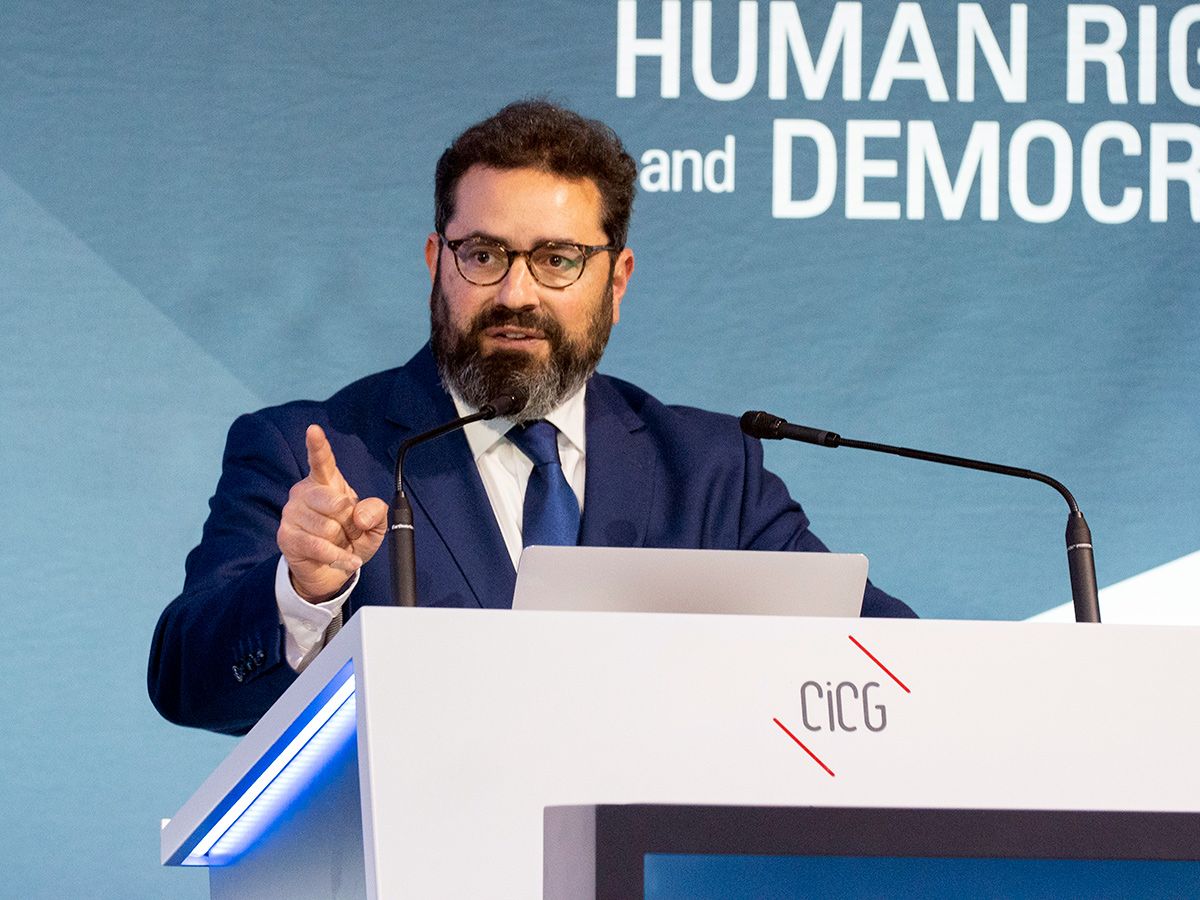
Hillel Neuer is executive director of UN Watch, a Geneva-based NGO that holds the United Nations accountable to its founding principles. A Montreal-raised lawyer, Neuer has spent two decades confronting dictatorships, double standards, and moral inversion at the highest levels of international diplomacy. He spoke recently with Neil Seeman outside the University of Toronto, reflecting on what inspires him, and on how students can spot distortion and stand their ground. The conversation comes as UN Watch leads a high-stakes campaign to block former human rights chief Michelle Bachelet’s bid for UN secretary-general, with Neuer calling for a leader “willing to confront dictators, not shield them”:
What do you say to students who fear losing their friend group by taking an unpopular stand?
It is easier said than done, but if you have friends who are going to ostracize you because you told the truth — because you contested the manufactured blood libel that Israel commits genocide, and that whoever supports Israel is somehow a supporter of baby-killing — then they are not really your friends and you are better off without them.
Certainly, in my own experience, I have been in a hostile atmosphere for two decades. But with the contempt and hatred I get from those who have become apologists for the Islamic regime in Iran, I also get support, encouragement, and admiration from amazing people around the world. It may be difficult at first to be ostracized, but you will earn respect from morally principled, good people. They may be fewer — but better to have a few good people than a majority of fake friends.
How would you coach a student to spot antisemitism in the classroom?
Natan Sharansky, the former Soviet dissident, came up with a useful three-D test: Double standards, Discrimination, and Demonization.
Some signals are obvious — I have seen demonstrators in Toronto recently lifting up 1930s-style Nazi caricatures that dehumanize Jews. But today’s antisemites are often more clever. They mask antisemitism in the cloak of virtue — and antisemitism has always done that. When society was religious, Jews were accused of having killed God. When science was the reigning virtue in Nazi Germany, Jews were declared the inferior race under racial science. In Soviet Russia, Jews were accused of being fascists, nationalists, and capitalists. In our time the great virtues are human rights and anti-racism, so it is in their name that people demand the elimination of the Jewish state.
An easy tell is the double standard: if an activist has not lifted a finger when tens of thousands were killed in Sudan, when a million Uyghurs were placed in camps in China, when thousands were massacred in the span of two days in other conflicts — but the only issue they speak about is Israel — then you have a basis to ask whether they are truly motivated by human rights or by something much darker being masked in the name of virtue.
What questions should a student ask to push back on a professor who presents those distortions?
Let’s be realistic — in many cases this is psychological and emotional, and it may be very difficult to persuade people on the basis of facts alone. But you have to try. Everything I do is to speak rationally, bring facts, and make arguments.
On Israel specifically: ensure there is a balanced discussion. Israel can and should be criticized — it is a robust democracy that encourages debate and critical inquiry. The prime minister is pilloried every day in demonstrations of hundreds of thousands in central squares. But if the professor is presenting a caricature — omitting that Israel was attacked by Hamas in the most brutal fashion, that over a thousand people were killed, that Hamas has sworn to do it again, that Hamas deliberately hides its population under hospitals and schools, that it has built hundreds of kilometres of tunnels without building a single bomb shelter for its own people — then it is a one-sided distortion.
If you say Israel killed civilians but you do not mention that, according to Colonel Richard Kemp, Israel has taken more measures to avoid harming civilians in a war zone than any other military in history — then you are deliberately distorting the truth. Try to make sure the essential countervailing facts are brought into the mix.
What can anchor a student who keeps encountering those omissions, especially without a faith tradition?
We do have a serious crisis in the West where our universities and our society seem directionless. Canada is a country that fought in World War I and World War II. We have In Flanders Fields — a tribute to those who fought courageously, calling on their successors to carry the “torch.” Each November on Remembrance Day we see the poppies. That is a tradition of moral clarity.
If you have no moorings, you are lost at sea. Students need to go back to the origins of Western civilization — the Bible, Greek philosophy. Jordan Peterson reached millions of people trying to educate them in that direction, and I hope he will be well because he had a very important message for people who felt lost. People should also be reading Douglas Murray, a great contemporary writer trying to make sense of some of the madness of our time. We have been through very mad cultural revolutions in the past five to 10 years, and social media has made us a little crazy. We need to go back to our origins.
Should a university ever take a position on a global conflict?
Generally not. I don’t think universities need to be in the business of taking positions — at some point it is endless. There are many ongoing conflicts with far more casualties than Gaza, and these same institutions never felt compelled to weigh in on them.
After October 7th there was a bizarre mass hysteria where almost every institution felt it had to say something about Gaza and accuse Israel of genocide. Teachers’ unions that had never taken a position on China, Sudan, Syria, Russia, or the Democratic Republic of Congo, the Tigray, or dozens of other conflicts, suddenly found it necessary to condemn Israel. That was pathological.
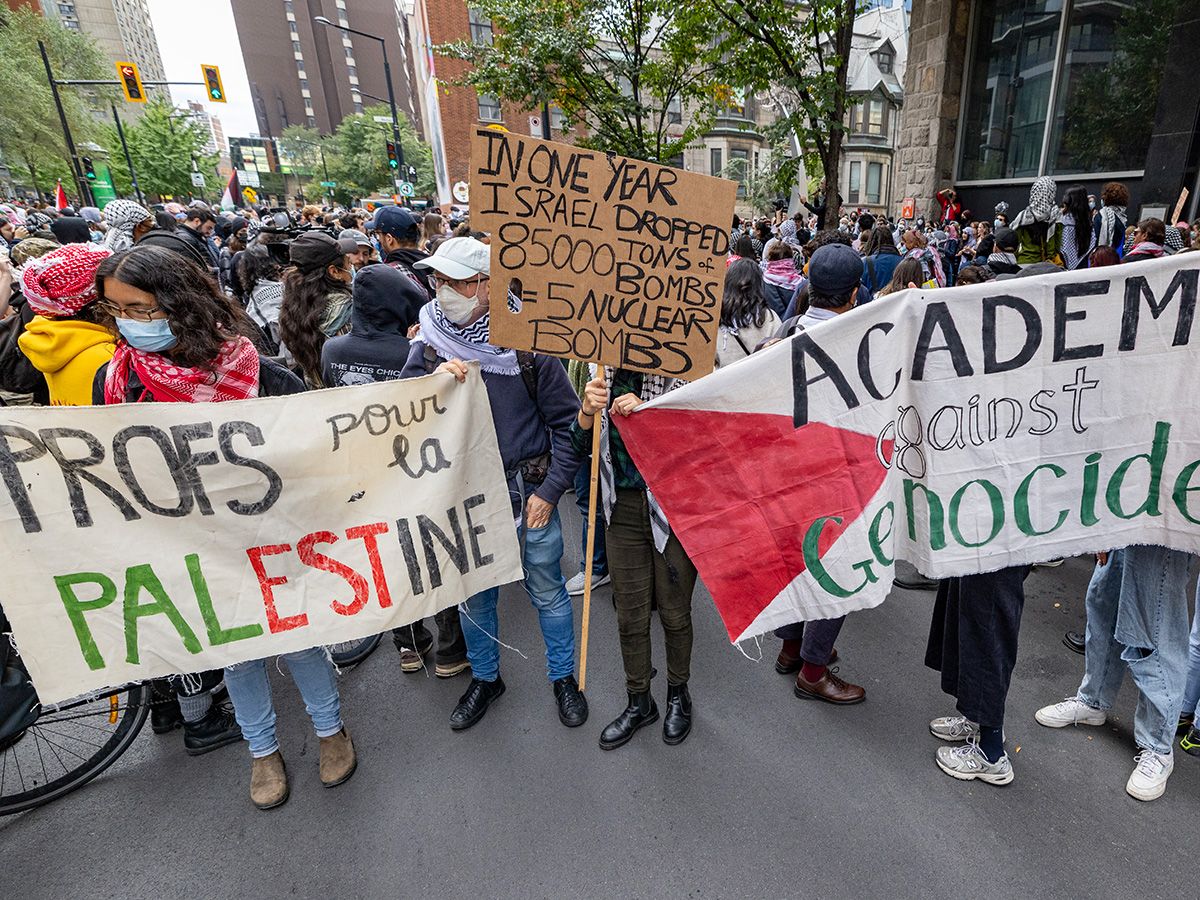
That said, if a university sees that its own spaces are being hijacked by violent agitators — that its very function is at risk — then it does behoove the institution to push back. Many did not do so initially. In the past year, partly with the Trump administration’s pressure and some efforts in Canada, universities have started to see that they are losing their institutions and must act to protect them. I spent seven years at Concordia and McGill. To see those institutions taken over by agitators and hysteria was deeply distressing. I hope universities push back.
When people try to silence you, do you see it as a legal fight or as bearing lonely witness to justice?
When I came to the UN I had just come from practising law for a few years at a large law firm in Manhattan. I came from a world where if you had the facts and the arguments, the other party would recognize they needed to settle because you had a good case — a world governed by the strength of facts and argument.
Then I entered a world that was upside down. You could prepare the best case, have the facts and the law on your side, and it didn’t matter a whit. When I am interrupted at the UN it has nothing to do with law. I am often interrupted on the basis of a “point of order” — by Cuba, China, Pakistan, Egypt, North Korea, Venezuela, Libya under Qaddafi. Procedurally they had no basis to interrupt; they should have used a right of reply at the end of debate. But they wanted to show on video that they interrupted and could push back. Rarely would a chair tell them they were out of order, because the chair is calculating: who is going to pressure me more — a small NGO like UN Watch that has no tanks and no economic leverage, or China?
So it has very little to do with the law, and much more to do with cynical politics.
What is your favourite book?
One of the books I turn to often is A Dangerous Place — a memoir by Daniel Patrick Moynihan, one of the great ambassadors to the United Nations. He was there in 1975 when the infamous “Zionism is Racism” resolution was adopted by the UN General Assembly, and he saw that not only as an antisemitic act but as an assault on the very language and idea of human rights. He famously stood up and said: “The United States rises to declare before the General Assembly of the United Nations and before the world that it does not acknowledge it, will not abide by it, will never acquiesce in this infamous act.” It was one of the greatest speeches ever delivered at the United Nations. His book is an intellectual analysis of the new anti-Western alliance — and of their apologists in the West. That is very powerful for me.
Does Moynihan’s bipartisan legacy still inspire you?
Yes, and that is something sorely missing today. Just the other day I saw a tweet from a former U.S. ambassador to Moscow — an Obama-era appointee — responding to news that the U.S. was the only country to object when the UN Economic and Social Council voted to nominate Iran to a committee dealing with women’s rights and counterterrorism. The same body elected Cuba, Nicaragua, Sudan, and Saudi Arabia to the UN committee that oversees human rights NGOs. Canada and other Western allies went along with it. The ambassador’s tweet blamed U.S. non-engagement — when in fact the U.S. was the only country that stood on principle.
Standing up to Iran is fighting terrorism, and on that should be bipartisan. When Obama killed bin Laden, many Republicans saluted him. When I first started in 2004, we were invited to Congress by Tom Lantos and others who were Democrats. It was still bipartisan to fight the pathologies of the UN — antisemitism, anti-Israel prejudice, anti-Western bias. In the past ten to 15 years it has become horribly polarized. So yes, we are nostalgic for that era.
– Neil Seeman is a book publisher, essayist, entrepreneur, author, lawyer, and academic based at the University of Toronto.
Our website is the place for the latest breaking news, exclusive scoops, longreads and provocative commentary. Please bookmark nationalpost.com and sign up for our newsletters here.