 BURST
BURST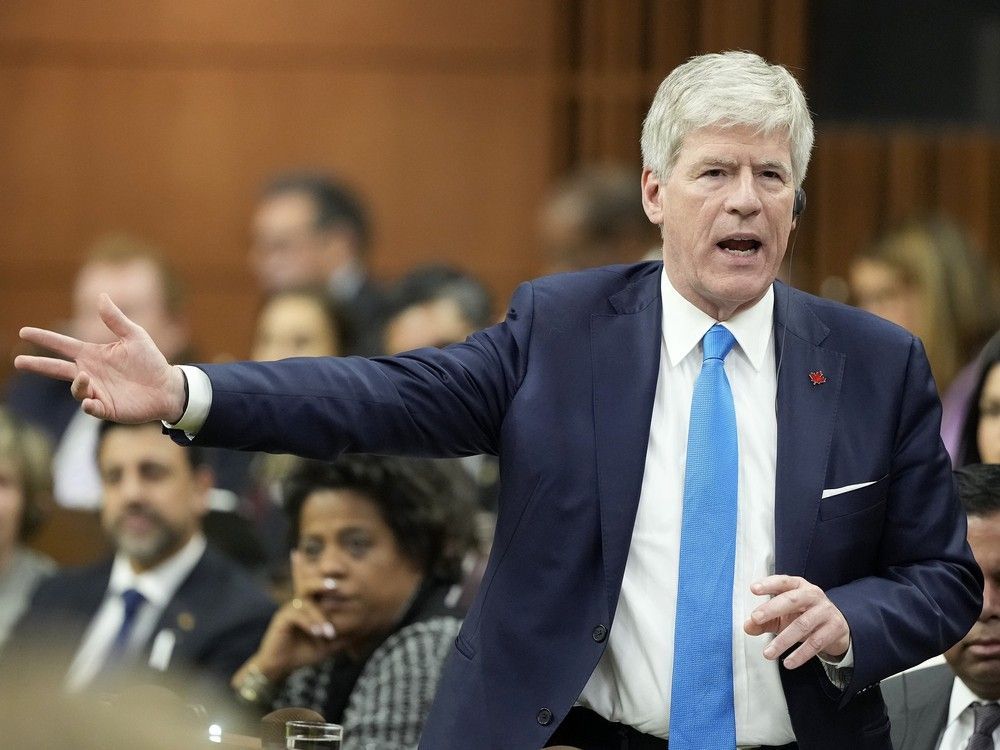
Premier David Eby’s vehement opposition to the idea of a new oil pipeline across B.C.’s central Interior appears to be out of step with the sentiments of a slim majority of British Columbians, according to recent polling by the Angus Reid Institute.
Polling data, released just as Eby repeated his government’s sentiments Thursday, shows that 53 per cent of residents lean in favour of the idea of building a new oil pipeline from Alberta to B.C.’s north coast, although the backing comes with conditions, according to Angus Reid president Shachi Kurl.
Regardless of support generally, Kurl said polling showed no clear consensus on lifting Canada’s moratorium on oil tanker traffic off B.C.’s North Coast, although 47 per cent would be OK with cutting an exception to the rule, with 21 per cent in favour of outright repeal.
“The fact that we’re living in a moment where half of British Columbians, a slim majority, say ‘Yes, I’d be OK with that, I’m open to that, I support the idea of this,’ I think it does speak to a remarkable sea change in public opinion in B.C.,” Kurl said.
Especially considering “how vociferous the opposition was (to pipeline proposals) even a decade ago,” Kurl added. In 2016, Angus Reid polling tapped opposition to the Trans Mountain Pipeline expansion as high as 60 per cent in B.C.
The Angus Reid Institute survey, conducted online Nov. 26-27, sought the opinions of a randomized sample of 1,851 Canadian adults who are members of its Angus Reid Forum. Its results carry a margin of error of plus or minus 1.5 percentage points 19 times out of 20.
Kurl said this week’s results are in keeping with polling his firm conducted in October that showed 56 per cent support from British Columbians. Kurl characterized the difference in numbers as “within the margin of error.”
However, this is also a moment driven by the sense of insecurity that Canadians have developed over the country’s relationship with the U.S., the trade war being waged by President Donald Trump, and his toying with the idea of annexing Canada.
“This has been a big head shake, wake-up moment where it has reframed priorities,” Kurl said.

Those “reframed priorities” were on the mind of federal Natural Resources Minister Tim Hodgson, who was in Vancouver on Friday, in part to smooth over some of the furor brought about by the announcement of a deal between Ottawa and Alberta over a possible new pipeline.
Hodgson acknowledged that members of the federal Liberal caucus have been on the opposition side of pipeline debates in the past, but “caucus understands we were elected because Canadians recognize we’re in a hinge moment.”
“Canadians recognize, intuitively, that we are at a point of economic rupture and they understand there are some hard conversations and hard work that need to happen,” he added.
In an economic reset though, Hodgson said “some of the most powerful cards we have are energy and natural resources.”
And if Canadians agree the country is at a “hinge point,” then “it is worth having the conversation around: ‘Can we develop those in an environmentally responsible way, and can we do that in partnership with First Nations?'”
B.C. Indigenous groups, including the Coastal First Nations organization, have restated their opposition to a renewed pipeline proposal, and that lifting Canada’s oil tanker moratorium will be a non-starter for its members.
Hodgson noted that Alberta still has to spell out an official proposal within the terms of the new agreement.
“So there’s no project yet,” Hodgson said. “It’s premature to say people have been stepped over. There’s hard work before us, and what is clear from the MOU (deal) is that our proponent needs to work with and get the support of First Nations.”