 BURST
BURST
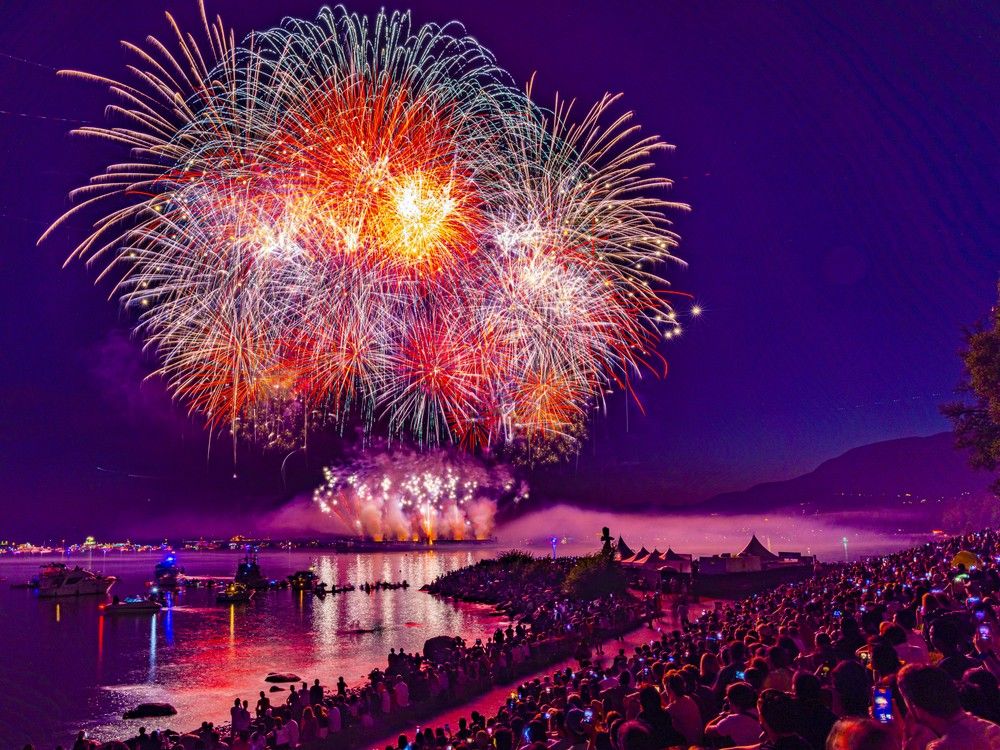
For Lisa Arthurs, the three nights each summer of Vancouver’s Celebration of Light were about more than fireworks — they were make-or-break for her small business.
“Those two Saturdays are the busiest of the year,” said the owner of The Quick Nickel, a West End clothing store. “People are buying everything from bikinis to sweatshirts, all in a few hours.”
Arthurs joined hospitality and tourism leaders on Wednesday in expressing dismay over the cancellation of B.C.’s largest public event. Organizers blamed soaring costs and declining government and corporate funding. Local businesses warn that losing the festival — which drew hundreds of thousands of visitors each year — could deliver a crippling blow to the West End’s tourist economy.
“How many more years can our small businesses survive without these summer draws?” asked Arthurs.
Celebration of Light organizers sounded the alarm last summer, warning that the long-running festival, which began in 1992 as the Symphony of Fire, could be in jeopardy without stable funding. On Wednesday, the news was made official.
Declining government and corporate funding, along with rising costs, forced its indefinite cancellation. Organizers warned that the demise of the fireworks, which drew an estimated 1.3 million people each year — including 200,000 out-of-town visitors — will have a major impact on the provincial economy.
The Celebration of Light generated an average $214 million in economic activity annually during the last five years, organizers said. A key driver for tourism, it raised about $6 million in annual tax revenue from hotel stays.
“It’s going to be a very sad summer,” said Teri Smith, executive-director of the West End Business Improvement Association.
“The cancellation is going to have a devastating impact on the West End,” Smith added. “This event marks a peak season for many businesses — a critical window that helps them stay afloat in an already challenging operating environment.”
On fireworks nights, crowds usually snake down Denman and Davie streets, spilling out of shops and restaurants and onto the sidewalks of Vancouver’s West End. At Babylon Cafe, customers line up for shawarma plates piled high with chicken, lamb, or beef, with rice, potatoes, salad and pita bread — an easy to-go meal for the beach.
“We will lose a lot of money,” shop owner Salwan Fadhooli said bluntly in response to news of the event’s end.

The downtown spectacle brings in similar numbers for Nat’s New York Pizzeria, just two blocks away. When the festival is in town, the eatery usually gets a mad rush from 6 p.m. to 9 p.m., almost quadrupling the number of orders, said owner John Sofikitis.
“It’s a bummer for the city, a bummer for the area,” Sofikitis said. “It’ll have an economic effect on businesses for sure.”
Given the Celebration of Lights’ immense popularity, Sofikitis was surprised nobody had stepped up to save the event. “I think someone’s gotta knock on bigger doors, you know?” he joked, wondering if B.C. billionaire Jim Pattison might be interested.
The festival is clearly beloved: A Leger poll conducted earlier this year found most Metro Vancouver residents consider the Celebration of Light an iconic part of the city, with nearly three-quarters of respondents supporting government funding for the event.
But that funding never came.
As operating costs for the $3 million festival soared last year, federal funding was eliminated, and provincial and corporate support dropped sharply.
Ottawa’s contributions for the festival fell from $450,000 in 2023 to $250,000 in 2024, and were cut entirely this year and for 2026. Provincial funding has stayed steady at $250,000 for the last 15 years — unchanged in absolute dollars, but eroded by inflation. That budget was to be slashed to $100,000 next year.
At the same time, Paul Runnals, executive-producer of the festival, said every line item in the event’s budget has gone up, including labour, supplies, materials and insurance costs. Its annual budget has jumped by about $700,000 in the last four years, a 35-per-cent increase from before the pandemic.
Free events are difficult to monetize, he noted. In recent years, the production company that produces the event for the non-profit Vancouver Fireworks Festival Society, BrandLive, has introduced several revenue-generating initiatives, including ticketed seating, viewing lounges and VIP hosting areas. In 2011, it cut the festival’s four-night run to three, partially as a cost-cutting measure.
“Taking us out is going to have a bigger hit to the provincial government’s tax base than them continuing to fund us,” said Runnals.
The lack of government intervention has sparked frustration among local tourism leaders.
“Where we are disappointed is the lack of government funding,” said Royce Chwin, CEO of Destination Vancouver.
“Organizers were not asking for millions of dollars for this event, which drums up millions of dollars in annual economic revenue for the province.”
Last year, three organizations, including Destination Vancouver and the West End and Downtown Vancouver business improvement associations, stepped in with stopgap funding to help bridge the shortfall.
“It’s a sad state of affairs when the smallest non-profits are the ones helping to prop up an event that is a destination event for Vancouver,” Chwin said.
Arts and culture events in Vancouver have long faced financial challenges, he noted. “Unlike some parts of Europe, where community events and festivals are consistently supported by senior levels of government.”
“I get affordable housing, I get safety issues, but it can’t be just that. There’s a balance between the government investing in those things and events like the fireworks, which are the fabric of the city.”
Chwin is concerned that the festival’s cancellation could be a bellwether for other events facing similar gaps in government and private-sector support.
“Events like this, and other cultural festivals that bring our city and community to life, need to be considered worthy public investments.”
The City of Vancouver has continued to cover police overtime, traffic control, and sanitation, an in-kind contribution valued at nearly $1 million a year.
Speaking at Vancouver City Hall on Wednesday, Mayor Ken Sim said: “I think Vancouverites are disappointed. … I know senior levels of government have stepped away from supporting, and I know they’re having some challenges with corporate sponsorship as well.”
Asked if he hopes the festival can be resurrected at some point in the future, Sim said: “The celebration lights are absolutely incredible. We’ve been working with the producers of the event, and we’ve been in conversation. And it’s just one of those situations that’s pretty fluid right now.”
With files from Dan Fumano, Cheryl Chan