 BURST
BURST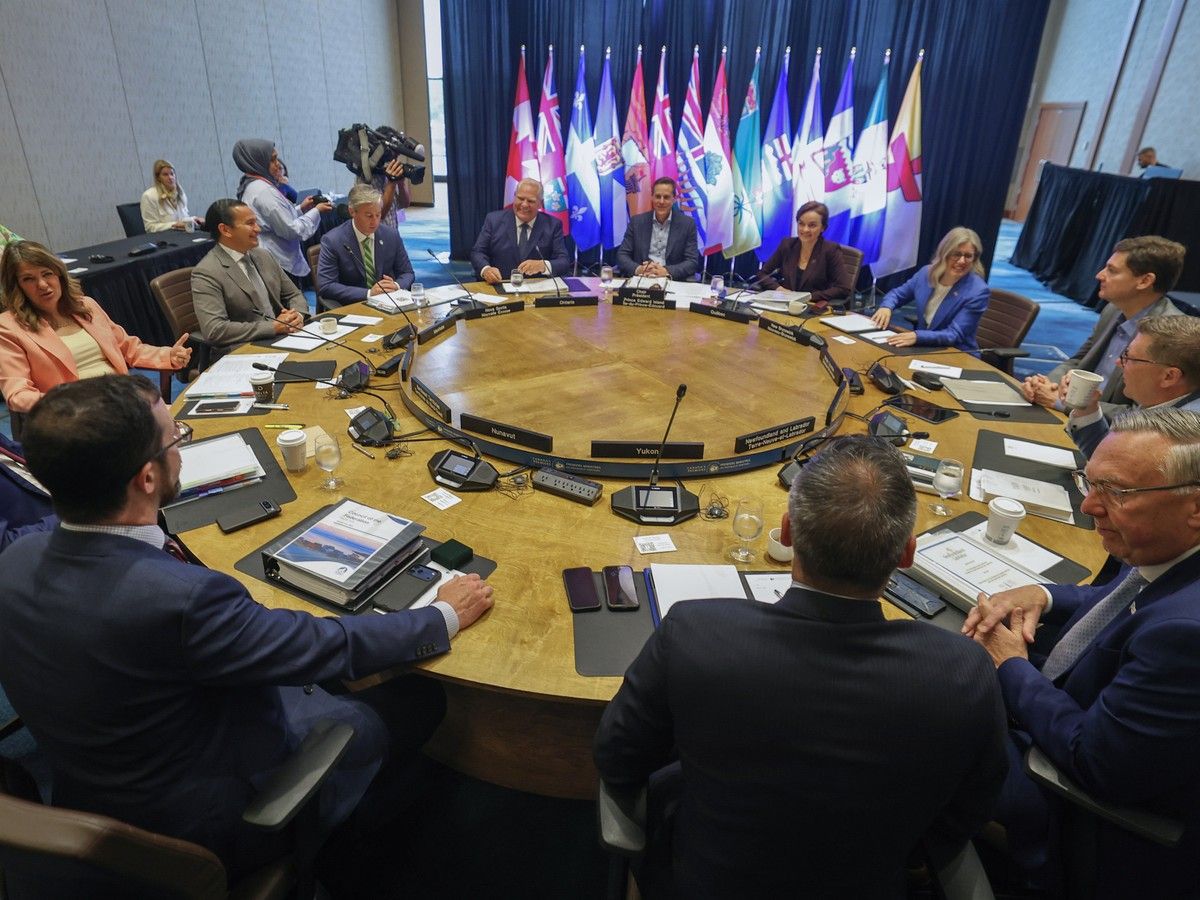
CHARLOTTETOWN — Ottawa has to step up its share of Canadian health-care funding, several Canadian premiers insisted on Wednesday.
The premiers of P.E.I., New Brunswick and Manitoba said they want to see the federal government return to splitting health-care funding 50/50 with the provinces, a formula that stood until the 1970s when it was lowered in exchange for tax points and block funding. Today, the federal government’s share of funding is roughly 22 per cent through the Canadian Health Transfer.
“Our health-care system… is a nation-building project,” said P.E.I. Premier Rob Lantz, at the premiers conference in Charlottetown.
For residents of his own province, he said, “health care, improving access to primary care here, workforce retention, recruitment and retention are very important.”

Ottawa’s contribution to health care has been a longtime sticking point for the premiers. At the 2022 premiers meeting, they launched an awareness campaign about the need for “sustainable health-care funding” from Ottawa. The issue hinges on the Canada Health Transfer, which is the mechanism Ottawa uses to distribute health-care funding to the provinces. Health care is generally the biggest expense for provinces, comprising 30 to 40 per cent of provincial budgets.
In 2022, the premiers’ ask was 35 per cent. Now, it’s more.

“Well, I think aspirationally, the ask is always to get back to 50/50,” said Manitoba Premier Wab Kinew, who tied the discussion to the ongoing tensions with the U.S. under President Donald Trump.
“This is one of the things that sets us apart from Americans. This is one of the reasons Canadians live longer than Americans. And this is one of the reasons why businesses should realize that their investment in Canada is more competitive than putting those dollars to work in the States, because they would be paying less towards the health-care costs of their employees and would be in their country.”
New Brunswick Premier Susan Holt agreed.
“We need to see (Ottawa’s share) come back up, because the needs are greater. We know we have a population that has more serious health concerns, certainly in New Brunswick. We have a population that is older than the rest of the country and experiences higher levels of chronic disease…”
Holt also ties health-care funding to the economy. “We think the Health Transfer Act needs to recognize the needs, because we cannot grow our economy and invest in our defence sector and improve all of our energy offerings without that healthy workforce, and that requires the federal government to contribute the same levels as the provinces.”
National Post
slewis@postmedia.com
Our website is the place for the latest breaking news, exclusive scoops, longreads and provocative commentary. Please bookmark nationalpost.com and sign up for our daily newsletter, Posted, here.