 BURST
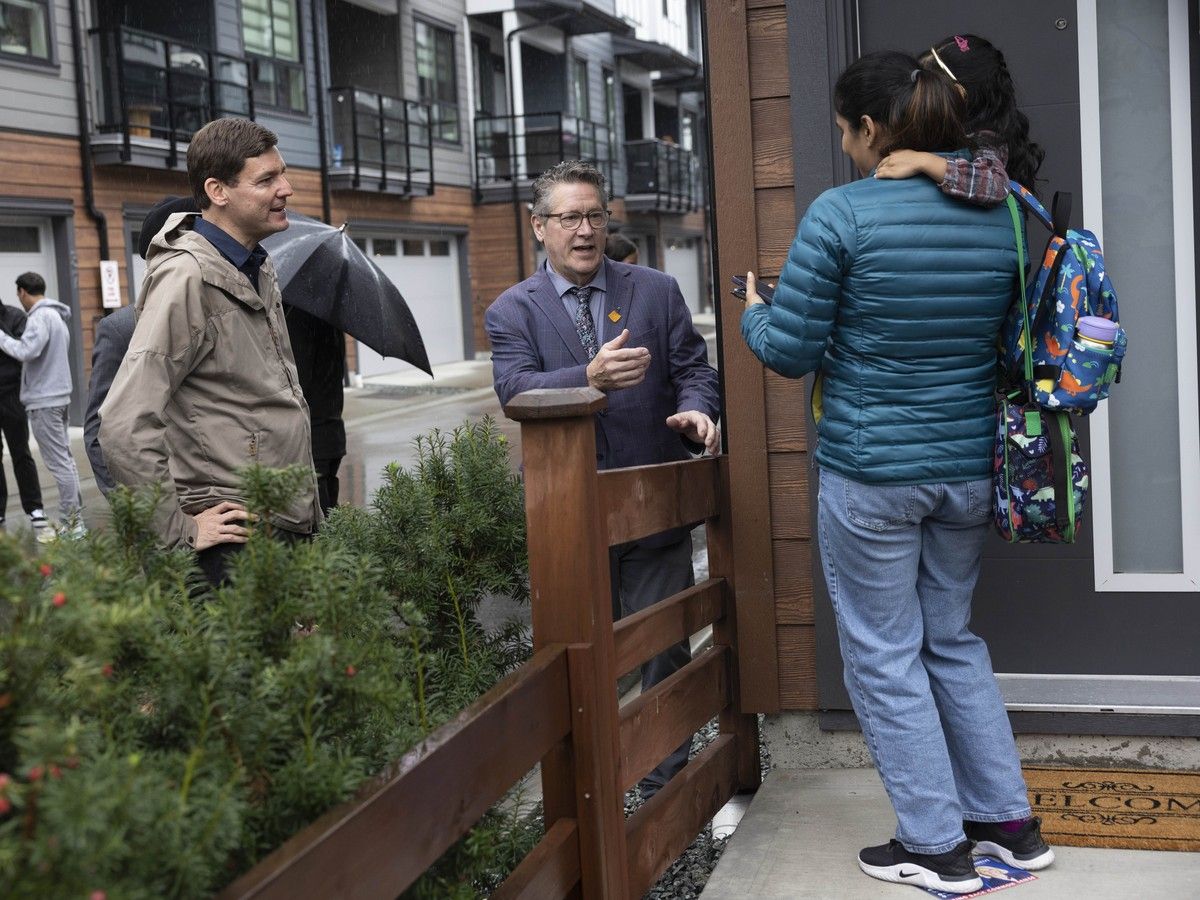
“Our plan to make housing more affordable is working,” NDP leader David Eby has been repeating.
“In terms of rental housing, the fastest and most consistent decline in rents we’ve seen across the entire country is here in British Columbia,” he said.
“The average asking rent in our province, because of the interventions by our government, has driven rents down by 13 per cent in the last three years.” He placed extra emphasis on the word “because.”
Eby, who called himself a “housing nerd” in Wednesday’s TV debate, did not cite any statistics to back up how he reduced house-buying costs. But he often says he’s deterring speculators and stopping dwellings from remaining empty.
What’s the reality? The short answer is Eby may be able to take credit for housing policies of more than six years ago but, beyond that, other factors brought about the downward shift in prices.
Why have rents eased for many of the two million British Columbians who are tenants?
Our housing action plan is helping British Columbians — rents are down almost 13% across BC.
— David Eby (@Dave_Eby) June 3, 2026
British Columbians are saving thousands of dollars every year, and there is more to do — so we’re continuing to build homes and bring down rents. pic.twitter.com/ffXuL2PQNj
This is where Ottawa’s migration policy is key.
Demand for rental units is down for the most part because population growth has flattened, says Wendy Waters, a B.C. real-estate analyst.
“That’s largely due to federal policies to reduce international students and non-permanent residents. Now that the pressure is off from a tsunami of new arrivals to B.C., rents are returning to more appropriate levels.”
An average B.C. rent has dropped to $2,403 a month, but it’s still the highest in Canada, according to Rentals.ca. The cross-country average is $2,034.
On top of declining international migration, Waters says B.C.’s poor economy and weak job offerings have pushed 57,000 young would-be renters to leave the province in the past two years.
“Therefore, for Eby to take direct credit for the falling rents, he would also be suggesting he is proud of the weak economy and job losses. If I were managing his campaign messaging, I would be careful there.”
In addition, Waters said Eby can’t claim responsibility for the 14,000 new purpose-built rental units and new condos that have been built and rented since the beginning of 2024.
“Most rental and condo construction decisions predate Eby’s tenure as premier by several years,” said Waters, noting he became leader in 2022.
A typical new residential building, she said, takes three to eight years “to go from concept to occupancy.”
To explain decreasing prices for rents and housing, David Williams, vice-president of economics for the Business Council of B.C., also points to the winding down of Canada’s recent migration boom, especially in temporary residents.
“Previously, rapid population growth was the centre piece of the federal government’s economic growth strategy. Net total immigration reached around 1.3 million people per annum. That’s like adding another B.C. to Canada every 4.5 years!” Williams said by email.
In 2024 B.C.’s population jumped by an unprecedented 144,000 new people, mostly through international migration, according to Statistics Canada.
“That policy is what drove rental inflation in Canada to its highest since the 1980s — as newcomers gradually added to demand for entry-level housing rentals and jobs. The federal government has now reversed course.”
As a result, in the 12-month period up to this spring, B.C. lost 53,000 residents.
Williams said another significant reason housing prices are falling is that global mortgage rates have risen and people are therefore reducing their buying. “A 25-year boom in mortgage credit growth has come to an end.”

Nevertheless, Williams said, Eby can arguably take credit for some policies he instituted six to nine years ago, when he was attorney-general, which modestly slowed out-of-control hikes.
The rate of increase in Greater Vancouver resale home values peaked in 2016, Williams said, particularly because high-migration policies had turned Vancouver into a “gateway city” for foreign buyers and investors.
After the NDP strengthened the B.C. Liberals’ 2016 foreign-buyers tax and later brought in the speculation and vacancy tax, Greater Vancouver home prices were still the most unaffordable in the country. But, Williams said, at least they “did not rise as much as the rest of Canada.”
In the past four years the region’s prices have fallen 13 per cent.
When it comes to rents, Waters predicts they will likely decline in B.C. over the next year. They could start increasing as typical population flows return, especially if — and it’s a big if — more jobs are created and more young people begin to rent their own places.
How much can Eby take credit for B.C. rents and prices that remain stubbornly high, but are somewhat softening? The answer may be humbling for him, but it is: not much.