 BURST
BURST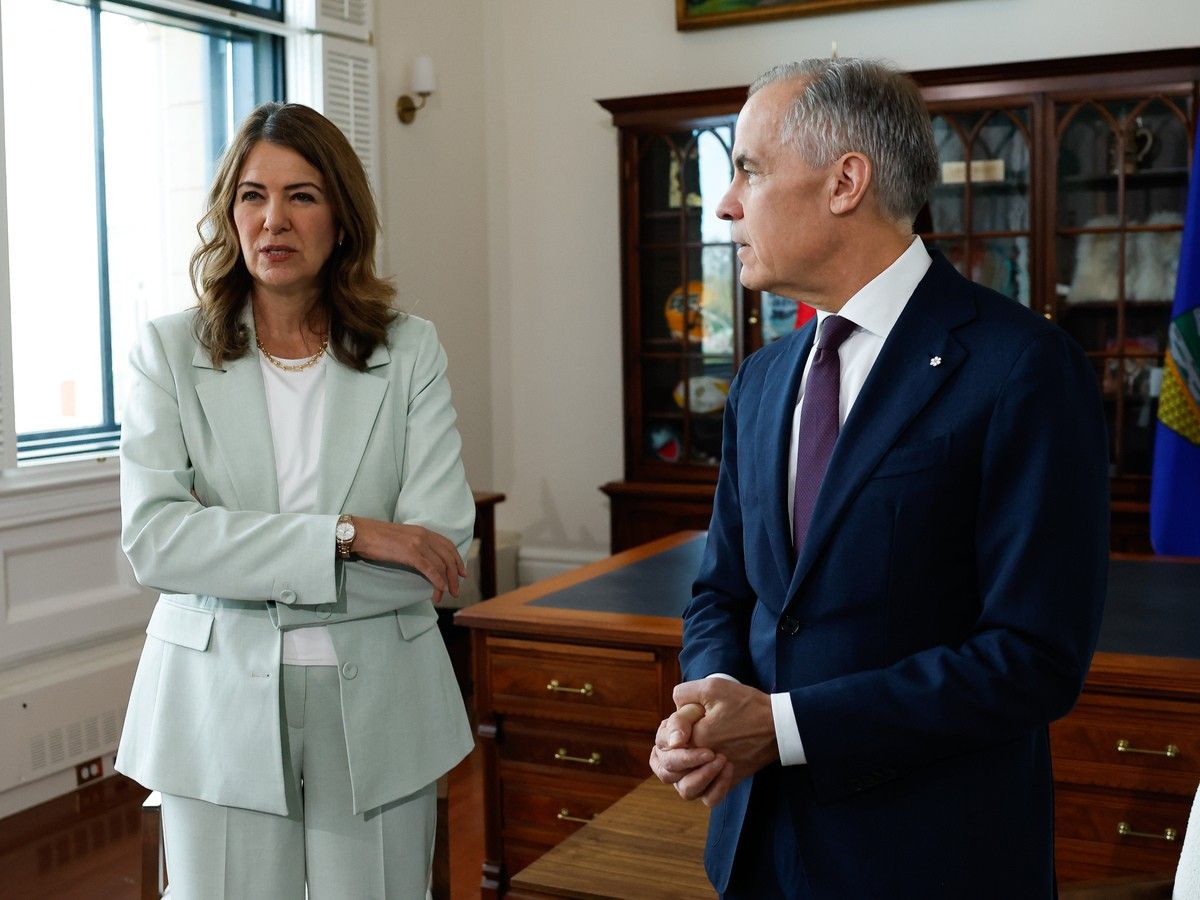
OTTAWA — After weeks of negotiations, Prime Minister Mark Carney and Alberta Premier Danielle Smith are set to announce today the next phase of its agreement to pave the way for the construction of a new oil pipeline to the West Coast, in exchange for Alberta increasing its industrial carbon tax.
Sources have confirmed that both sides are expected to announce an agreement that will see Alberta increase its industrial carbon tax on heavy emitters to an effective rate of $130 per tonne by 2040.
That’s 10 years later than what federal law currently stipulates, which is a rate of $170 per tonne by 2030.
Carney and Smith will participate in a signing ceremony, to be followed by a closed-door meeting.
He is expected to speak to reporters later Friday afternoon.
Alberta agreeing to increase its industrial carbon tax to $130 per tonne was part of a memorandum of understanding Carney and Smith signed last November, meant to usher in a new era of relations between Ottawa and Alberta, which grew increasingly tense under former prime minister Justin Trudeau.
Deciding when that would happen has been the subject of negotiations between senior officials on both sides, with Carney and Smith meeting in Ottawa last week to resolve outstanding issues.
It came as industry leaders in the energy sector warn that raising the industrial carbon tax risks undermining the country’s competitiveness.
Smith said last week that Albertans and industry were growing “impatient” to see a finalized deal. She has argued that the tax needed to be set at a rate that “industry can afford,” and signalled from the outset that deciding on that timeline would be one of the main sticking points.
As part of their initial deal, Carney’s government agreed to forgo plans to implement a planned cap on oil and gas emissions and exempt Alberta from a federal set of clean energy regulations in exchange for the oil-producing province unfreezing the rate of its industrial carbon tax from its current $95 per tonne, to $130 per tonne.
It is expected that the rate in Alberta would increase by $5 to $100 in 2027 and then increase by $3 every year after 2029 to hit $130 per tonne by 2040.
What Smith’s government wants out of the deal with Ottawa is a path to build a new million-barrel-a-day bitumen pipeline through British Columbia’s West Coast, arguing that route is best suited to open access to Asian markets.
Her United Conservative Party government plans to submit a proposal to the federal Major Projects Office, established by Carney to help proponents streamline the approvals process, no later than the end of June.
An Alberta government source, speaking on the condition of background, confirmed this week that an agreement is also in the works to see the province’s pipeline proposal receive a designation as being deemed in the national interest sometime this fall.
That would happen under a process Carney ushered in last year, which gives cabinet the power to grant approvals upfront, subject to fulfilling a list of conditions.
Speaking on Thursday, Carney said there are “multiple preconditions” that exist for that pipeline project to move ahead, including “strengthening the carbon market.”
“Obviously you can’t designate something which has not yet been fully proposed. So that’s why I chose carefully the word advancing, as opposed to concluding.”
Smith has said while her United Conservative Party government is spending $14 million to put together a proposal, examining five different routes and tapping major oilsands companies to act in an advisory capacity, the goal is for a private sector proponent to build it.
The agreement between Ottawa and Alberta specifically spells out that it would advance “one or more private sector constructed and financed pipelines.”
Smith has said she wants the review of her pipeline proposal from the federal projects office to be completed by the fall.
That office bears the responsibility of recommending to the government which projects ought to receive a designation of being in the national interest.
British Columbia Premier David Eby has panned the project for lacking a private sector backer and on Wednesday suggested the federal government was giving Alberta an unfair advantage by requiring the province to have a lower industrial carbon tax compared to other jurisdictions that are required to hit $170 per tonne by 2030.
Smith has argued that industry needs more certainty before being willing to step forward to build such a project.
Carney arrives in Alberta as the province also faces a possible question of separating from Canada this fall.
A leak of the provincial electors list to separatist group, the Centurion Project, has sparked separate investigations and concerns from political leaders, including former Alberta premier Jason Kenney and Carney himself.
Smith has linked seeing a new pipeline built to showing those expressing frustration in the province that the country can work in a way that allows more of their resources to get to market.
National Post
Our website is the place for the latest breaking news, exclusive scoops, longreads and provocative commentary. Please bookmark nationalpost.com and sign up for our politics newsletter, First Reading, here.