 BURST
BURST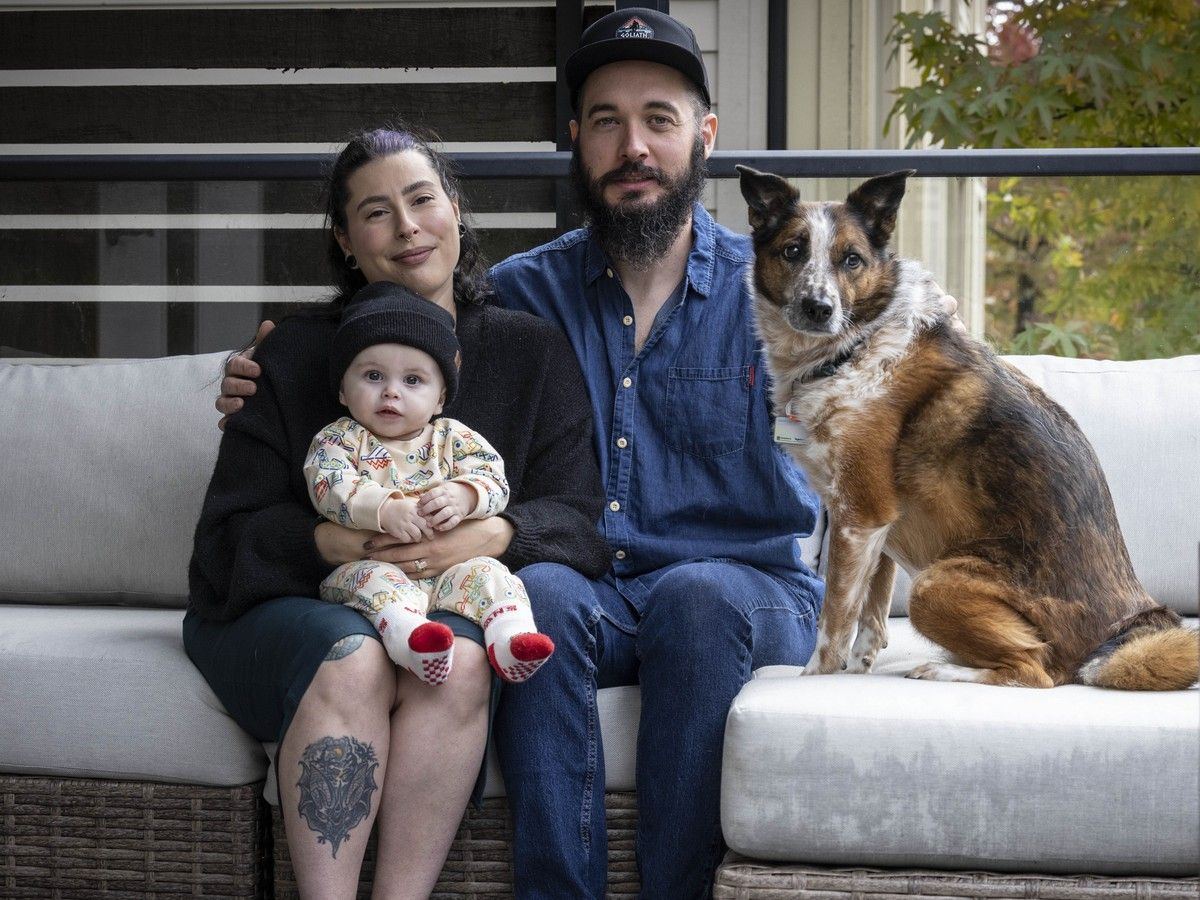
Zander Machan’s birthday is on Oct. 24, but the provincial election that day won’t be one of his favourite gifts.
The new father and small-business owner from Burnaby didn’t agree with the NDP’s decision to call an early election. But now that it’s on, his top issue is affordability and how that affects his quality of life.
“It’s whether working hard still gives you a realistic path to build a better life. And right now, we’re kind of stuck in the loop of work, raise our son, sleep, repeat,” said Machan, 32.
He is not alone. Two recent public opinion polls show affordability is a key issue for B.C. voters this election.
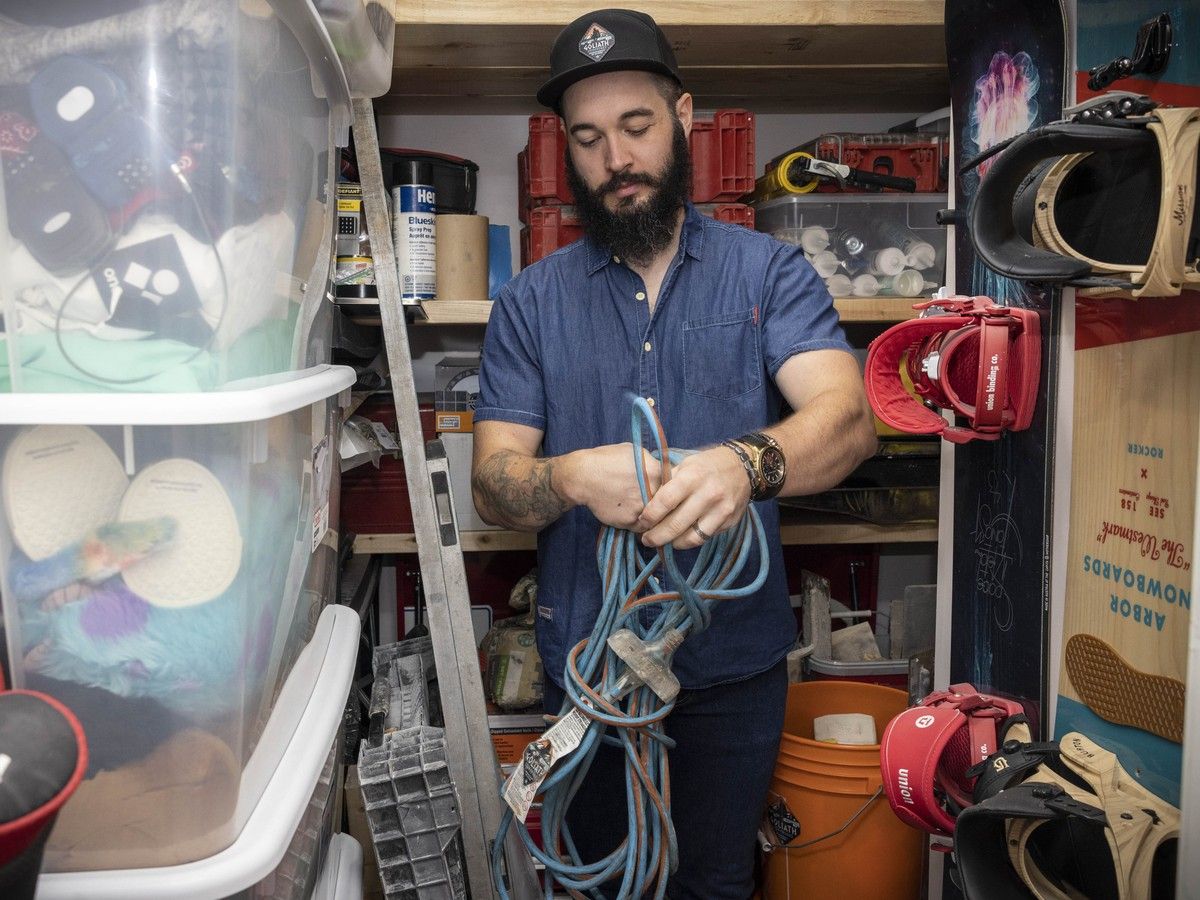
Machan, who owns a masonry business , lives with his wife, Kayla, their baby son, Hawthorne, and their dog, Artemis, in a townhouse, where the only space for his extra tools is in the bedroom closet. He’d love to buy a bigger home, and wants to hear politicians explain how they will address affordability before determining how he will vote.
“I honestly am waiting until I get all the promises, and then I’m going to decide,” he said. “I’ve never voted for one party. I’ve always voted for whoever has the best policies.”
By which he means the best policies and a realistic chance at forming government. So Machan is mainly watching the NDP and Conservatives, who are far ahead of the three other main parties — Greens, CentreBC and OneBC — in the polls.
Conservative Leader Lorne Doerkson has vowed to “make the affordability crisis a top priority” if elected, and his first campaign promise was to “ never raise taxes” over his four years in government.
NDP Leader David Eby said he called a snap election to protect the province from U.S. President Donald Trump’s geopolitical attacks “by freeing B.C.’s economy from the United States (and) lowering costs.”
The NDP has pledged more taxes on vacant homes to try to boost the housing supply, to reduce gas prices, and to stabilize prices of essential groceries. Both parties promise to boost the economy by expanding resource production and exportation.
But Steeve Mongrain, a Simon Fraser University economics professor, said the leading candidates have discussed few bread-and-butter affordability issues that might help a voter struggling with housing or daycare costs.
“It’s a tough situation that both parties are in, in terms of delivering their traditional messaging.”
One reason for this, Mongrain said, could be hesitation to announce expensive programs given the province’s ballooning deficit and debt.
Economist Iglika Ivanova, co-executive director of the progressive think-tank B.C. Policy Solutions, said the No. 1 talking point in the 2024 election was affordability, but in this campaign that’s fighting for attention with other issues such as the trade war with the U.S. She worries less-well-off people could be hurt by the long-term impact of some economic campaign promises.
“If we freeze taxes and want to balance the budget,” she said, “we have no ability to expand services for people who need them, like transit or affordable housing.”
In a Sept. 24-to-28 Leger survey of 1,003 British Columbians, health care, the economy, and housing prices and affordability were essentially tied as the “most important” election issues.
Taxes, the main talking point for Conservatives so far, and U.S. tariffs and Trump, Eby’s central focus, were of lesser importance to Leger respondents.
A slightly earlier Angus Reid poll of 801 British Columbians identified cost of living as their top election concern, far ahead of health care, the economy and housing affordability.
NDP backers worried more about cost of living than did Conservative supporters, and the concern was highest among voters ages 18 to 54.
Most of the parties have not yet released full platforms, but many have made campaign promises that purport to address affordability.
Taxes
Eby has vowed to tackle housing affordability by cracking down harder on speculators and developers who leave condominiums vacant or unsold.
If re-elected, the NDP says it would double the speculation and vacancy tax to two per cent for domestic owners, upping it to five per cent for foreigners, with a goal of getting “more empty units into the long-term market.” Any additional revenue would go into building more affordable homes,” the NDP says .
The party also promises an “unsold condo tax” on finished units left empty for more than a year, starting at two per cent of the condo’s value and rising by an additional one per cent for every vacant year. This move could force up to 5,000 units onto the market, the NDP says.
By comparison, the Conservatives vowed to “ never raise taxes, ” so voters can keep more money in their pockets.
“Tax is not the answer to our problems right now. Generating revenue in this province is,” Doerkson said.
When asked how he would maintain public services during potential economic downturns if he can’t ever boost taxes, Doerkson replied that he is more worried about “the damage the NDP is doing to our (resource) industries.”
Ivanova, though, argued that keeping taxes flat would disproportionately benefit higher income people who pay the most taxes, and will not be as beneficial to lower- and middle-income people struggling with cost of living.
And freezing taxes won’t address the true drivers of the affordability crisis, she argued, such as housing and rental prices that remain high, despite falling slightly this year.
Ivanova agreed with the NDP’s premise of getting more homes into the market by taxing developers sitting on empty condos, but she said many of those are likely luxury units and what people really need is more government investment in affordable housing.
The most important step the next provincial government can take to bolster B.C.’s economic prosperity, argued SFU’s Mongrain, is to tackle the deficit.
“There’s definitely a need for whichever party would be in power to correct that situation. And both parties right now are not talking about how they will do it. They’re just saying it will solve it by itself if the economic growth is robust,” said Mongrain, who is also associate dean of SFU’s faculty of arts and social sciences.
He is unsure whether the NDP’s increased taxes on empty homes will make a big difference in the housing crisis, but he said they’re unlikely to generate enough money to put a dent in the deficit.
If the Conservatives’ plan to tackle the deficit without raising taxes, then it appears the only option available to them is to cut services, said Mongrain, who noted the two biggest line items in the provincial budget are health care and education.
Doerkson, though, insisted Thursday he would not slash health care, although he didn’t say where he’d find the money to improve a medical system that he said has “collapsed” under the NDP.
The Conservative leader was also asked how he would tackle the $13.8-billion deficit if he has ruled out tax hikes. He answered he will focus on reopening closed resource businesses, such as mills, and those employees will spend money again to boost the economy.
The Conservatives also announced this week they’d remove the PST from Canadian beer, wine and spirits for the duration of Trump’s trade war.
The B.C. Green party vows to “build a fair economy ” by boosting taxes for “mega-corporations and the ultra-wealthy,” and using that funding to improve housing costs, health care, and quality of life.
OneBC lists ending Indigenous reconciliation efforts as its first priority, followed by the economy and public finances, promising 25 per cent tax cuts and a two point PST reduction.
CentreBC’s website doesn’t include a tax policy, but generally says the party will support economic growth, small businesses, and spending on green technology.
Resource industries, pipelines
B.C.’s two largest political parties made similar promises this week to boost the economy and create well-paying jobs through the resource sector: The NDP pledged to double critical mineral production, while the Conservatives vowed to triple natural gas production by 2035.
Eby promised to accelerate approvals for major mines and fast-track B.C. Hydro’s North Coast transmission line to expand electricity delivery. He said every new job on a mine site creates nearly one more related job elsewhere in the province.
Doerkson vowed to make B.C. an “energy superpower” by expanding liquefied natural gas production through faster approval processes. The plan, he said, would generate new government revenue and include First Nations partnerships.
The development of the LNG industry has lagged in B.C., but there are now five terminals either under construction or waiting for final investment decisions.
Last year, LNG Canada began shipping product from Kitimat to Asia. On Tuesday, Eby stood beside Prime Minister Mark Carney as the company announced final approval for its Phase 2 project .
Eby has taken credit for “securing” the project by working with Ottawa and the company, and said it will create up to 4,000 construction jobs and generate billions of dollars in economic benefits.
After it’s constructed, the Phase 2 project will employ a few hundred people in Kitimat, which B.C. Greens Leader Emily Lowan argued isn’t worth the risk of expanding the oil-and-gas sector at a time of record wildfires.
Estimated federal and provincial government revenue over the lifespan of the projects is $23 billion for Phase 1 and $50 billion for Phase 2.
B.C.’s two largest political parties, Mongrain notes, are largely “echoing” the prime minister by suggesting the province can “solve all our problems” with the production of more energy and critical minerals. The reality, though, is more complicated because governments can’t control long-term prices and are reliant on the private sector to do this work.
“There’s a lot of uncertainty about the impact this will have down the road,” he said.
Ivanova believes B.C.’s future lies with clean energy and the knowledge economy, not doubling down on fossil fuels.
“I’m very disappointed that the main economic announcements are about digging stuff out of the ground,” she said. “It’s backwards. This is not the economy of the future.”
On Thursday, Doerkson said he supports the federal government’s move to fast-track the Pacific Link pipeline, which would carry crude from Alberta to the B.C. coast. He estimated it would generate thousands of jobs and significant government revenue.
“British Columbia’s economy desperately needs a boost,” he said.
Lowan, though, challenged the benefit of the project considering tankers will have to go through American waters at a time of cross-border tensions. She is also worried about environmental impacts, saying a spill could jeopardize the jobs of thousands of people who work on the water.
Doerkson responded that, if elected, he would establish a “working group” with Alberta, Ottawa and First Nations to ensure the pipeline “is built safely and responsibly.”
CentreBC Leader Elenore Sturko backs the pipeline and, if elected, would boost skilled-trades training by $60 million to prepare for the estimated 70,000 jobs she said the project will bring.
Gas, grocery prices
On Thursday, Eby promised a re-elected NDP government would slash gasoline prices by 10 cents a litre and change provincial regulations to stop companies from neutralizing this saving by simply upping the cost at the pump.
The gas price reduction would be temporary, Eby said, blaming the need for it on geopolitical actions taken by the U.S. president that have led to higher fuel costs.
The NDP estimates the lower gas prices will save car drivers up to $20 on a tank of gas and reduce the cost to fill up transport trucks, noting higher shipping costs are typically passed along to consumers.
“Families are seeing not just higher prices at the pump, but also higher prices in the stores,” Eby said, claiming his campaign pledge will reverse that.
But Doerkson dismissed this promise, saying voters “don’t trust” Eby because he failed to deliver on a 2024 election pledge to send British Columbians a $1,000 grocery rebate.
On Friday, Eby made another grocery promise — this time to enact “price guards” at major grocery chains that will cap profit margins on staples such as milk, eggs, cheese, butter and chicken. He said the lower costs on these foods, plus additional measures the NDP says it would take to address grocery “price gouging,” could save shoppers up to $700 a year.
When asked why voters should trust this promise when he reneged on the 2024 grocery rebate, Eby said his government “made a difficult decision in changing circumstances” to eliminate the carbon tax instead.
Meanwhile, the B.C. Greens promise new policies to keep farmland in the hands of farmers so they can afford to produce local food at a time when “food security is becoming increasingly vulnerable.”
The Greens, which had two MLAs in the last government, have also campaigned on expanding $10-a-day child care and better supports for renters .
While Ivanova said lowering B.C.’s deficit is an important long-term goal, she cautioned that the economic promises being made by some of the parties will directly impact voters’ lives in the short-term: “We are in a time where things are challenging for everyone, and there aren’t really any easy answers. You can’t just say, ‘Oh, I’ll do this and everything will get better.'”
Machan, who grew up with parents who discussed politics and ensured he voted once he turned 18, has created an election scoreboard on his social media that analyzes economic issues, including affordability.
The small-business owner is unsure, so far, what to make of some of the campaign promises, including the Conservatives’ pledge to freeze taxes or the NDP’s vow to clamp down on empty homes.
“It’s hard to say what would actually be a good promise,” he said.
“Even if they make some promises to change this stuff, is that actually going to help in the future?”