 BURST
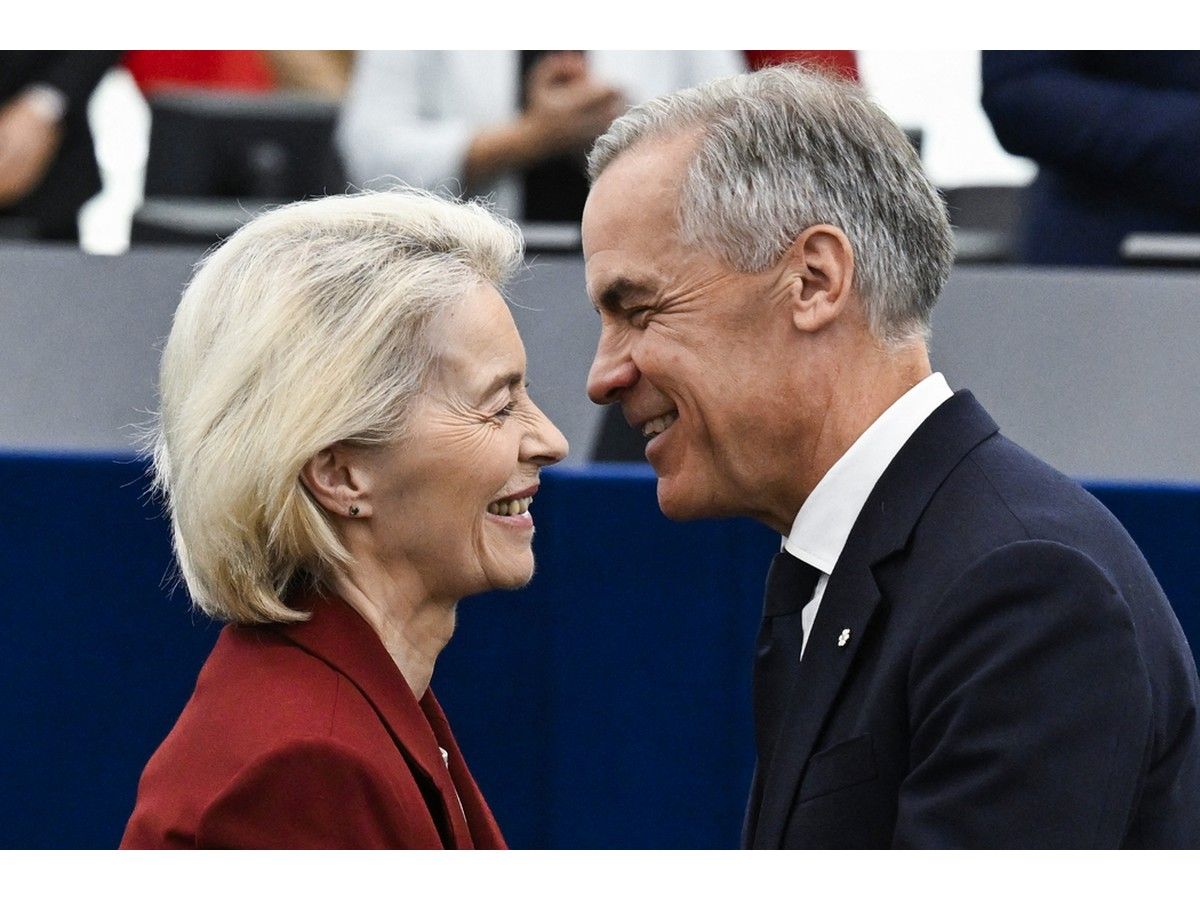
OTTAWA — Canada and the European Union have given themselves until next year to define a new, “ever-closer association” that will no longer make Canada an “associate member” of the European bloc, according to a new draft joint statement.
The new draft document was circulated to the 27 member states of the EU and Canada on Wednesday, the eve of a trilateral meeting between the heads of the European Commission, the European Council and Prime Minister Mark Carney in Montreal.
It confirms that the EU has stepped away from naming Canada an “associate member” of the union as proposed by European Commissioner President Ursula von der Leyen last month. European outlets such as Rapporteur reported that Germany had led the push by roughly a half-dozen countries against the new, undefined term.
The meeting aims to kick off continue ongoing negotiations for a new “alliance for the future” between Canada and the EU that European officials recently described as making Canada the closest non-member ally in union history.
Canada and the EU will “work to define by the 2027 EU-Canada Summit the concept of an ever-closer association of Canada to the EU, short of full membership itself,” reads the draft joint statement obtained by National Post.
The draft agreement — which sources stress could still change — reveals that both parties have concluded “substantive negotiations” on a new Digital Trade Agreement (DTA) that will supplement the existing free-trade deal between Canada and the EU. The DTA “will improve legal certainty and predictability, facilitate cross-border data flows, and enhance confidence in the digital economy for businesses and consumers.”
During a background briefing with reporters, senior European officials explained that the deal would harmonize rules on digital commerce and specifics like e-contracts and duties on electronic transmissions.
The final agreement is expected to be signed by Carney, von der Leyen and European Council President Antonio Costa on Friday after a trilateral meeting in Montreal.
The Oct. 28 document also promises to look into faster money transfer solutions between Europe and Canada.
“We will also support work toward connecting instant payment systems to facilitate faster, lower cost and more seamless cross-border transactions, making it easier for Canadians and Europeans to conduct business, invest and transfer funds across the two economies.”
The draft agreement also states that Canada has reached an agreement with the European Investment Bank that will facilitate bloc members’ investments in Canadian critical minerals.
The document also confirms Canada’s intent to join the Ukraine Support Loan, a 90 billion Euro program designed to help the country defend itself in the face of Russia’s military invasion. But it does not specify how much Carney’s government is ready to put into the program.
The EU has been increasingly looking to non-European countries to boost financial support for Ukraine, which faces a 70 billion Euro financial shortfall in coming years.
The draft agreement also commits to building new sub-sea cable infrastructure between Canada, Europe and Asia. Canada in particular has very few wired connections with Europe amid growing fears of sabotage by China or Russia of such critical connectivity infrastructure.
While Carney has spoken of wanting to boost labour, research and student mobility between the EU and Canada, there are no firm commitments in the deal.
“Canada and the EU will launch discussions on cooperating on skills development and enhancing labour and researcher mobility, and talent attraction, with a focus on reducing barriers for young people and facilitating mobility for highly skilled workers and researchers and promoting greater recognition of professional qualifications,” reads the draft document.
During a background briefing on the meeting, senior government officials said much work is being done to boost Canada’s participation in two key EU programs: Horizon and Erasmus+.
Horizon is a flagship EU research and innovation funding program. Canada joined an earlier iteration of the program in 2024 and Carney is keen on integrating the next version of the fund.
Erasmus+ is a 26.2 billion Euro program student mobility and exchange program.
“I think we all feel a sense of importance of trying to move quickly with respect to these issues,” said one official. “I think it is of importance for us that we encourage as much collaboration as possible with respect to our research communities.”
National Post
Our website is the place for the latest breaking news, exclusive scoops, longreads and provocative commentary. Please bookmark nationalpost.com and sign up for our newsletters here.