 BURST
BURST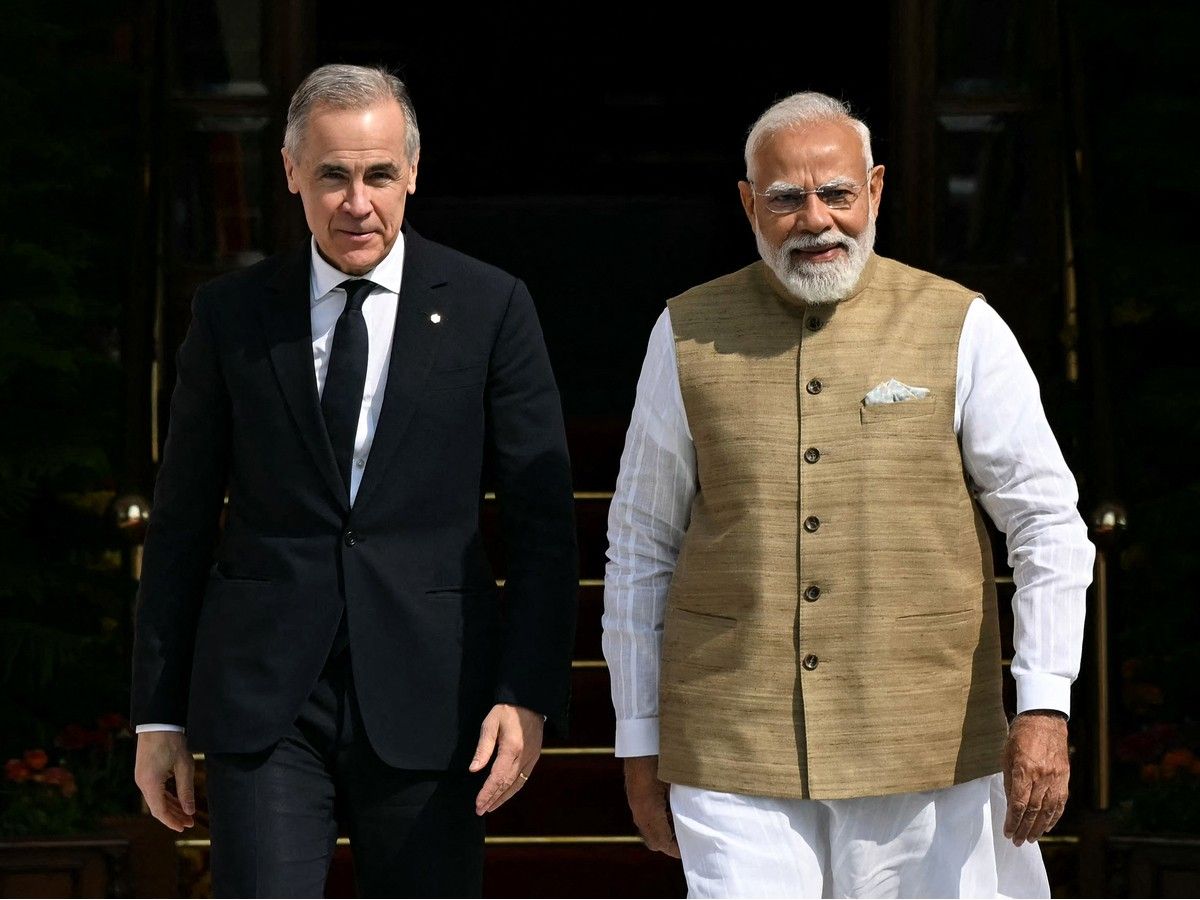
OTTAWA — Despite increased diplomatic, trade and security ties with India, Prime Minister Mark Carney says that he cannot guarantee the Indian government will not be behind crimes committed in Canada.
In an interview with the New York Times last week, the prime minister said there was “some evidence” that the renewed relationship he’s charting with Indian Prime Minister Narendra Modi has led to “progress” on improving the security of Canadians.
But when asked if he could assure Canadians that the Indian government would no longer be linked to crimes such as arson, extortion, blackmail, harassment and even murder, he said no.
“Can I guarantee that no crime will occur in Canada? I can’t guarantee that no crime will occur in Canada,” Carney told NYT reporters according to a transcript released this weekend .
Canada’s security apparatus has for years pegged India as one of the main perpetrators of foreign interference and espionage in Canada . Just a few years ago, then prime minister Justin Trudeau stood in the House of Commons and said Canada has intelligence that linked Indian government agents to the murder of Sikh-Canadian Hardeep Singh Nijjar in 2023.
Then on Thanksgiving in 2024, RCMP top brass held an exceptional press conference to link the Indian government to a series of violent crimes in Canada such as murder, arson, extortion and threats.
On Monday, the FBI announced it was offering US$1 million for any information leading to the arrest of Satinderjeet Singh, whom they suspect of being the North American leader of international crime syndicate Lawrence Bishnoi gang. He is also known by the name Goldie Brar.
“Goldy Brar and his network have wreaked devastating havoc on countless lives—through high-profile murders, shootings, death threats, extortion, arson, and drug trafficking,” the RCMP’s Lisa Moreland said in the FBI statement.
For some, Carney’s pronouncement to the New York Times was a recognition that Canada cannot claim to control the actions of a foreign government at all times, even on Canadian soil.
But Amarnath Amarasingam, an academic who researches radicalization and transnational repression, said that Carney’s comments come off as “a little bit dismissive.”
Various minority ethnic groups in Canada — such as Sikhs, Tibetans, Uyghurs, Taiwanese, Chinese and Iranian dissidents — have long complained that the government doesn’t do enough protect them from foreign threats, said Amarasingam, an assistant professor at Queen’s University.
A comment like Carney’s reinforces the feeling that Ottawa views the threats against them as a foreign issue, not domestic, said Amarasingam, who is set to publish a book about transnational repression towards diaspora communities in Canada.
“One of the take-home messages is that Canada isn’t treating this as a kind of Canadian problem, right? It’s treating it almost as this diaspora problem or as a problem of ‘imported conflict’ or as a problem of ‘people not leaving their politics back home’,” he said. “And it’s not being treated with the seriousness it deserves.”
The Indian government, including the Indian High Commissioner to Canada, has repeatedly described any links to criminal activity in Canada as “absurd.”
Indian government involvement in transnational repression will almost certainly be discussed when India’s Prime Minister Narendra Modi visits Canada before the end of the year, reportedly to sign his name on a new bilateral trade deal.
The new expected deal is part of Carney’s attempts to build back bridges with India after years of diplomatic freeze with Modi’s government under Trudeau due to the allegations of foreign interference.
Carney travelled to India in March and met with Modi as part of his bid to restart the relationship. Speaking to the NYT last week, the prime minister security issues can be worked out better if both parties are talking.
“The security cooperation that’s part of the relationship, which obviously could not take place in a rupture, we think is helpful and good,” Carney said.
“I’m a believer that, regardless of the relationship, it’s important to have a relationship so you can deliver messages directly, as opposed to preach from afar, and to limited effect.
But for many Sikh activists and targets of India’s scorn in Canada, Carney’s rapprochement with India has had little to no effect on their safety. If anything, they fear the Carney government is taking the threat less seriously.
They point to comments during a background briefing by a senior government official in late February telling reporters that India is no longer interfering in Canadian affairs.
“We’re confident that that activity is not continuing,” the official said of previous allegations the agents of the government of India were linked to many violent crimes or threats in Canada, including the murder of Nijjar.
“If we believed that the government of India was actively interfering in the Canadian democratic process, we probably wouldn’t be taking this trip,” adding the official, who was speaking on background and not for attribution.
National Post
cnardi@postmedia.com
Our website is the place for the latest breaking news, exclusive scoops, longreads and provocative commentary. Please bookmark nationalpost.com and sign up for our politics newsletter, First Reading, here.