 BURST
BURST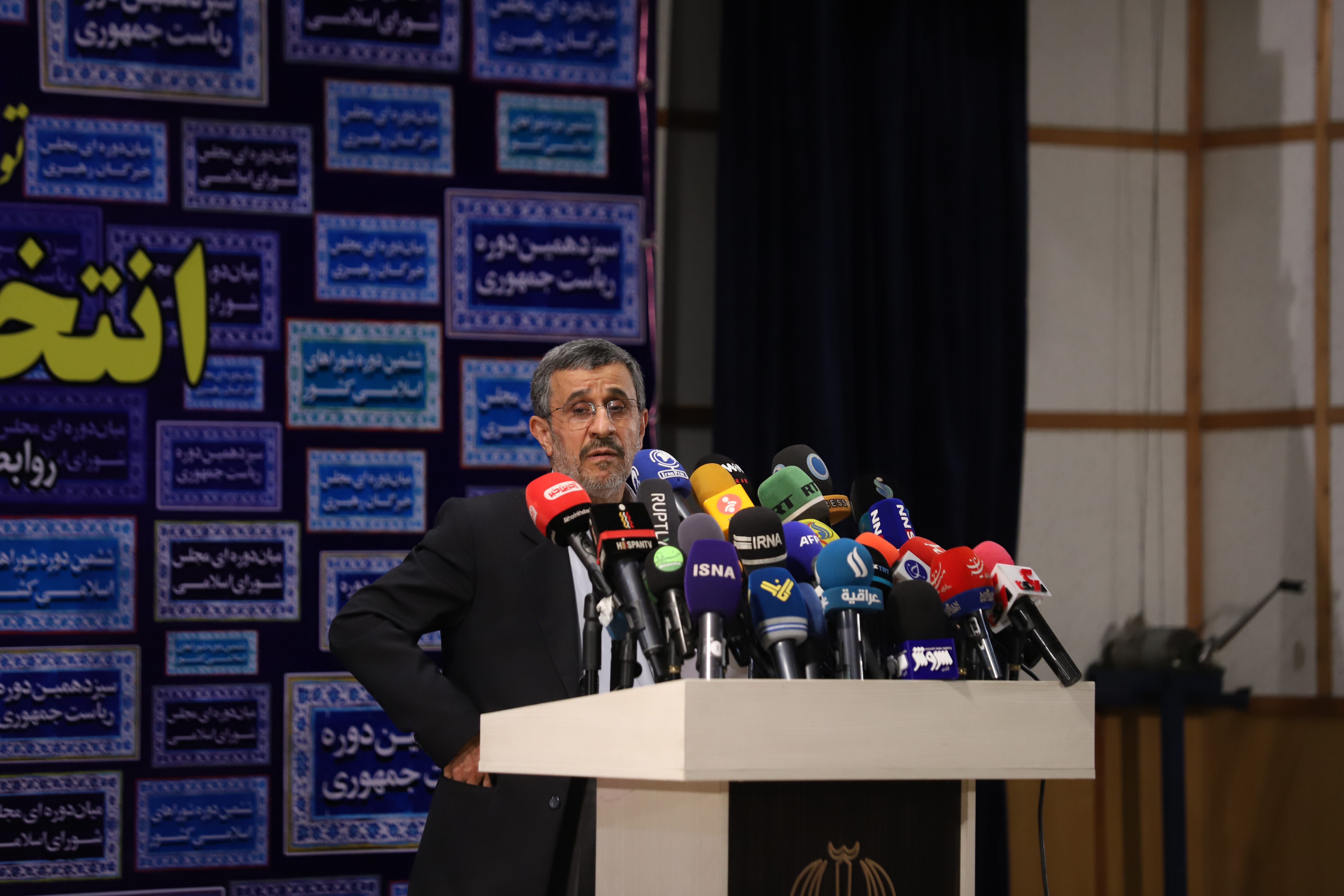
The bombshell New York Times report that the U.S. and Israel hoped to install former President Mahmoud Ahmadinejad as the leader of Iran puts the lie to so much of what hawks in the West have been trying to sell their publics about the Iran war.
Despite claims by President Donald Trump and Prime Minister Benjamin Netanyahu, the Iran war was never about freedom for the Iranian people.
That much is obvious thanks to Ahmadinejad’s role in recent Iranian history: In 2009, Iranians rose up against a stolen election in what was known as the Green Movement, which was violently crushed by Iran’s security forces to keep Ahmadinejad in power.
Though a populist, Ahmadinejad at the time dismissed the protests as nothing more than the result of “emotions after a soccer match” or, in another instance, “dirt and dust.” These are not the bona fides of a leader who will lead Iran into democracy.
Reading between the lines of history, Ahmadinejad’s position as a coup leader starts to make sense.
Instead of a campaign for Iranian freedom, this war — like much of the U.S. and Israel’s last 20 years of going after Iran — has been about catastrophically weakening Iran. Here, reading between the lines of history, Ahmadinejad’s position as an Israeli–U.S.-backed coup leader starts to make sense.
Ahmadinejad had been largely quiet until he suddenly reemerged into headlines on Tuesday with the Times report. After killing Iran’s supreme leader in the opening hour of the war, according to the Times, Israel targeted a building on Ahmadinejad’s street, ostensibly to “free” him from what was effectively either house arrest or the strict monitoring of his movements. According to some reports, the guards keeping watch on Ahmadinejad were indeed killed, but Ahmadinejad himself was injured, too.
How, if the plot had been successful, was Ahmadinejad supposed to take over? Was the assumption that by assassinating the top leadership, including Islamic Revolutionary Guard Corps generals, Ahmadinejad would be able to gain the support of the rest of the top echelon of the security forces? That would be a far-fetched notion.

While he retained his populist credentials over the years, Ahmadinejad’s clashes with Supreme Leader Ayatollah Ali Khamenei and with the “nezam,” or regime, over social and political issues lost him whatever support he still had among the military wings and the Basij militia. Those forces — though they had helped crush the 2009 protests on Ahmadinejad’s behalf — remained fiercely loyal to Khamenei and the political system of “Guardianship of the Jurist.”
For now, Ahmadinejad is nowhere to be found, raising suspicions that he is in the custody of the IRGC or dead.
Good for Israel
It’s hard to imagine the Iranian president who declared in his first few months in office that “Israel must vanish from the pages of time” and subsequently questioned the Holocaust being a good choice for Israel. History shows, though, how Ahmadinejad’s eclectic positioning has previously coincided with Israeli interests.
Coming to power after President Mohammad Khatami’s reform movement and his call for “dialog among civilizations,” Ahmadinejad’s stances damaged Iran’s reputation almost beyond repair.
And this was, somewhat ironically, a boon to Israel, whose leaders could point to the malevolent nature of the Islamic Republic. Ahmadinejad was the perfect figurehead for a bogeyman Iran that needed to be taken down a notch.
Israel and its allies in Washington made hay of Ahmadinejad’s every word — for instance, his sponsorship of a Holocaust denial cartoon contest — and succeeded in turning his remarks into the justifications for an unprecedented and devastating sanctions program. Ahmadinejad’s rule was, in so many ways, bad for Iran.

Which is why, even at the time and certainly later, there were suspicions privately aired in Tehran that he could actually be a Mossad asset — with the caveat, of course, that no hard proof ever emerged. Still, at a time when gaining the trust of the west in nuclear negotiations was paramount, Ahmadinejad was building Israeli hard-liners’ case against talks for them.
Now, of course, the allegation that Ahmadinejad was primed as a coup leader — the first report from an even remotely reliable outlet of a real link to Israel — has only added to the rumors, as have his most recent trips abroad, to Viktor Orbán’s Hungary and to Guatemala, both allies and supporters of Israel.
Trump himself admitted before this latest revelation that Israel bombed some of the people who were candidates to be an Iranian Delcy Rodríguez — the Venezuelan figure who seamlessly took control from kidnapped President Nicolás Maduro and reportedly is cooperating with the U.S. The most solid hint Trump gave was that he had someone “inside” Iran in mind, dashing the hopes of Iranian royalists.
Don’t Listen to Israel
Whether or not it is true that Ahmadinejad was an Israeli asset — whenever he may have been recruited or even just unwittingly manipulated — he would have fit Trump’s bill. What he never would have been was a beacon of freedom for the Iranian people. Insofar as the broad contours of the Times report are accurate, we can now be assured that the well-being of the Iranian people has not really ever been at the top of either Trump or Netanyahu’s minds.

The U.S. and Israel may have some commonality in what they’d like to see with Iran, but not entirely. Israel’s interests lie mostly in defanging Iran, even seeing it descend into a failed state that can neither threaten Israel nor challenge its hegemony in the region. The U.S., on the other hand, has consistently focused on Iran’s nuclear potential.
Both Democratic and Republican administrations have indicated that if the nuclear issue was resolved to the satisfaction of the U.S., Iran could potentially be rehabilitated and rejoin the international community. That would have left Iran with the potential to grow into a regional powerhouse and global force — something Israel has long opposed, which is why it tried so hard to derail the 2015 nuclear agreement.
Whatever happens, Ahmadinejad will never be a factor in Iranian politics, even if in the unlikely event that he one day resurfaces alive and free. The Venezuela option for Iran now seems silly, a chimera that should have never been considered.
If the White House had listened to a handful of Iranians or those who know Iran well, rather than Netanyahu and war hawks in Congress, perhaps 175 school children and their teachers would be alive today. The Strait of Hormuz might be open and free. And a nuclear deal could have already been signed.
Instead, there has been war and destruction, wasted lives and wasted treasure, chaos in the region, and the global economy wobbling. Ahmadinejad has once again been bad for Iranians — and now everyone else, too.
The post Ahmadinejad Is Still Bad for Iranians — and Still Great for Israel appeared first on The Intercept.