 BURST
BURST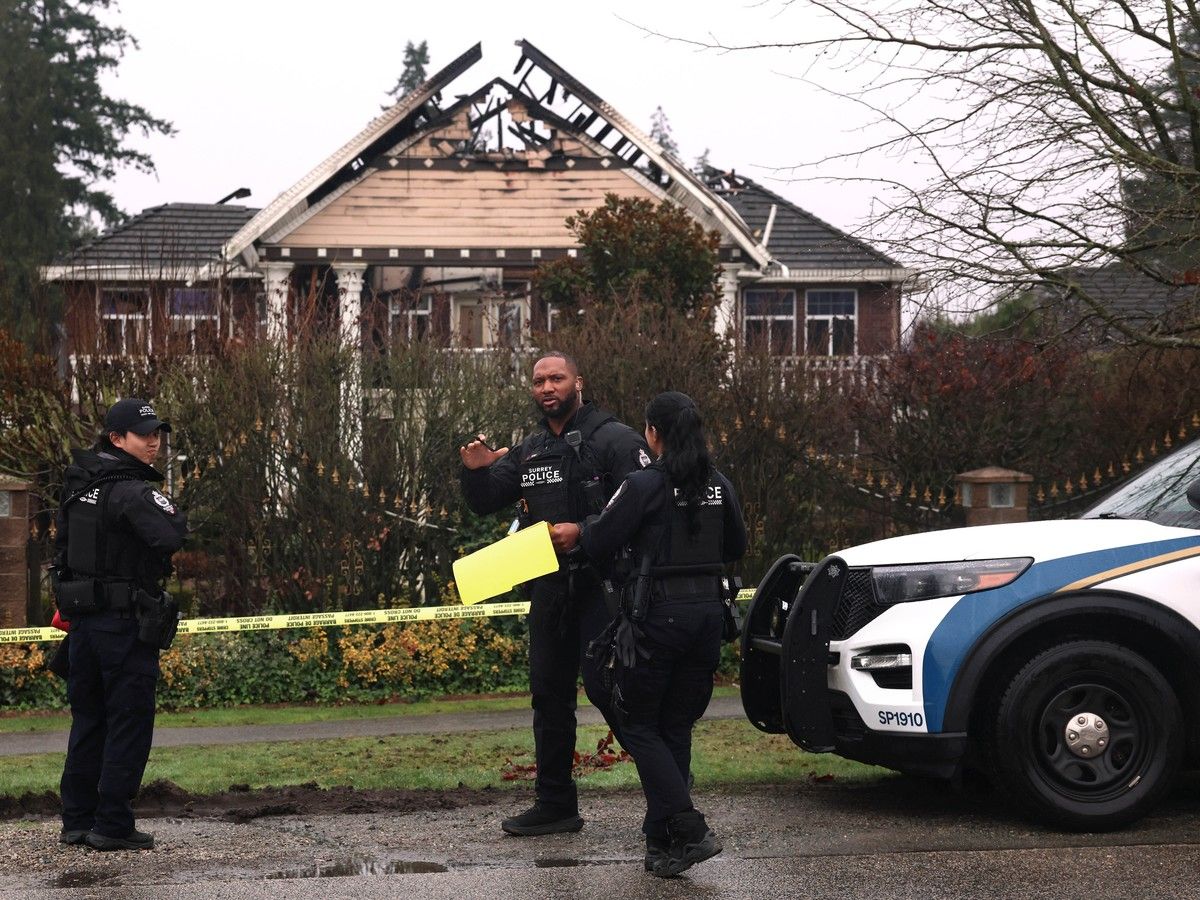
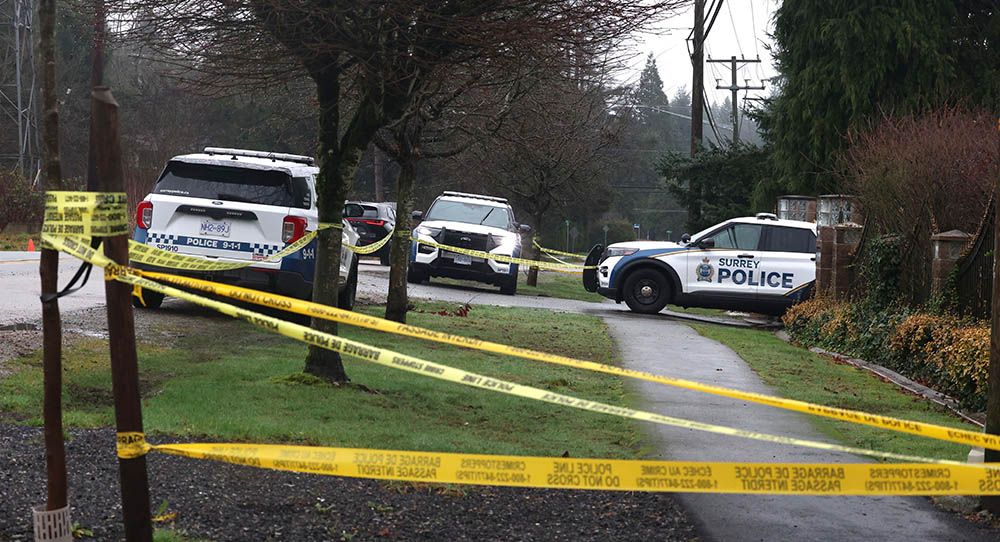
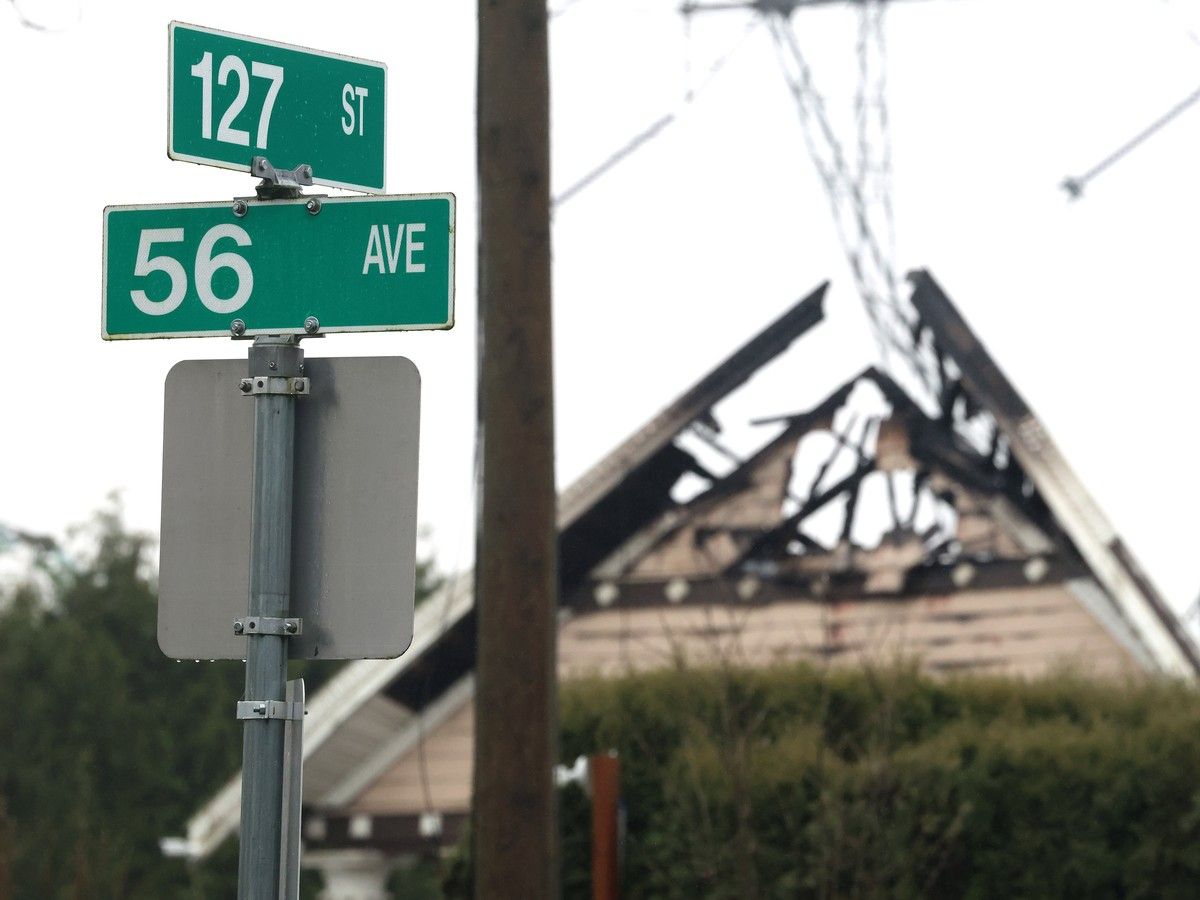
Five months after a notorious Brothers Keeper gangster and alleged hitman was found shot to death in a burning Surrey house, the charred wood, damaged roof and broken windows appear untouched.
When firefighters and police arrived just after 7 a.m. on Jan. 12, they found Naseem Ali Mohammed, 27, on a black leather couch on the main floor of the rented $3-million Panorama Ridge house.
His head tilted backwards, he looked almost peaceful in a macabre photograph that circulated hours after his death. Except for the blood visible above his left eye and on his right ear, he could have been sleeping, dressed all in black with a band holding his hair off his face.
A source told Postmedia News that a side door in the eight-bedroom, six bathroom house at 12732-56th Ave. had been left unlocked, meaning easy access for Mohammed’s killer or killers.
They followed the method perfected by Brothers Keepers hit men, escaping in a getaway vehicle that was set on fire later that day in Redwood Park, about 18 kilometres southeast of the murder scene.
The Integrated Homicide Investigation Team’s Sgt. Freda Fong said this week that officers have identified “at least four individuals believed to be involved” in Mohammed’s murder.
“We hope to provide the public with significant updates as they become available,” she said, confirming what IHIT said at the start of the investigation, that “this was a targeted hit related to organized crime.”
Police said at the time that Mohammed’s violent demise was “associated to the B.C. gang conflict” and that the “investigation is active and ongoing.”
Several tit-for-tat murders in Surrey and beyond are believed to have flowed from Mohammed’s slaying in a cycle of violence that dates to 2015, when the Brothers Keepers was founded by Mohammed’s mentor, Gavinder Grewal.
Mohammed was believed to be at the centre of the violence: Canadian authorities told their U.S. counterparts in January 2021 that the young Surrey gangster and rapper was a “suspect in multiple homicides spanning two provinces.”
Despite that startling information, Mohammed was never charged in connection with any murder in Canada. Nor was there ever a public warning issued about his alleged violence and the risk he posed on B.C. streets.
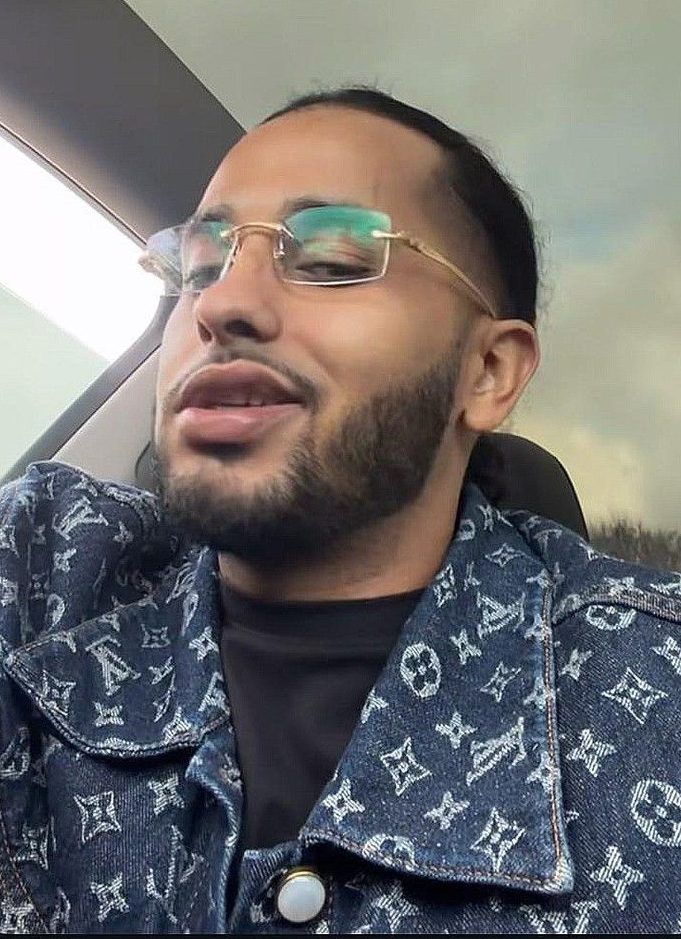
Postmedia has investigated Mohammed’s history — from his boyhood in Surrey to his gang involvement with two older brothers, the murder allegations, his rap career and social media taunting, and his ultimate end.
Alleged hitman
Police sources told Postmedia he was a suspect in between eight and 12 murders in B.C. and Ontario. Some underworld sources claim that’s exaggerated and believe he’s likely responsible for fewer hits. Others say there are even more bodies.
His name surfaced as a suspect in the shocking murders of Surrey teens Jason Jhutty and Jassi Bhangal on June 4, 2018. They were last seen alive playing basketball at a Surrey elementary school on 142nd Street at about 7 p.m. Less than four hours later, their bodies were found in the 18700-block of 40th Avenue.
Jhutty, 16, had no gang involvement, while his friend Bhangal, 17, had a connection to the Kang brothers — rivals of the Brothers Keepers after splitting from the BK a year earlier.
Mohammed was also identified as a suspect in the Jan. 19, 2020, murder of Julian Johnson, who was shot to death at a gas station on Canada Way in Burnaby.
Perhaps the most horrific murder linked to the alleged hitman came on Dec. 28, 2020, after Burnaby teen Tequel Willis, 14, caught a cab to Surrey to drop off some keys. He never made it back home. Willis, a troubled kid who was already on police radar, was shot as he got out of the taxi in Guildford.
He’s believed to be the youngest victim of B.C.’s gang conflict.

Nine days later, Mohammed was identified as a suspect in the South Surrey murder of Gary Kang, whose group was then known as BIBO and was associated with the Red Scorpions.
Kang, who was out on bail after pleading guilty to a series of gang-related charges, was staying with his parents at a rental home on a quiet cul-de-sac in the 16000-block of 30th Avenue. The killers pretended to be police doing a curfew check at 5 a.m. as they forced their way inside.
Mohammed practically admitted online to having a role in Kang’s slaying when he made a comment to a pro-Kang rapper that his “og jus got slumped lil kid.” He also posted a photograph of Grewal, his murdered mentor, bragging: “We cut the head off the snake.”
No one has been charged in any of the murders linked to Mohammed. In each, burning vehicles were found after the killings in what became a hallmark of Brothers Keepers hit men.
Fong confirmed this week that Mohammed “was identified as a person of interest” in the Johnson murder, which remains an open investigation.
“It is important to mention that at the outset, investigators identified more than one individual involved; hence it is not over despite his death,” Fong said.
The other four murders are also being investigated by IHIT’s Integrated Gang Homicide Team, Fong said.
“These are open investigations, and we continue to welcome any information that anyone has about them despite the years that have passed,” she said. “Each of these are complex homicide investigations involving multiple individuals; hence they remain open and ongoing despite his death.”
Mohammed the kid
Born in war-torn Somalia on May 3, 1998, Mohammed was surrounded by conflict from the start of his life. He came to Canada with his family, which included older brothers Sameh, born in 1994, and Saleh, born in 1993.
Several people who knew Mohammed growing up told Postmedia the family lived in a second-floor apartment on 72nd Avenue near 128th Street. They attended the nearby mosque on 124th. The kids were polite. The older two loved basketball.
Paul Dadwal, a former senior Mountie who was a key investigator in the Surrey Six murder case, has studied the mindset of B.C. gangsters like Mohammed. He learned that even in elementary school, Mohammed was coming to class with large amounts of cash that he would show off to other students.
“When you think about a kid having money and actually bringing it to school and sharing it — he just wanted to show people that he had it,” Dadwal said. “He, at a very early age, was always wanting status.”
Mohammed didn’t have many friends in class. He wasn’t disruptive, but he didn’t do any of the classwork, Dadwal said.
“He always wanted to be out with the older kids, who were his brothers’ friends. He wouldn’t laugh. He would never try his best,” said Dadwal, the current head of the community advisory group on extortion. “His mom and him were close, but he wouldn’t listen to his mom.”
Even as a preteen, Mohammed would skip school “because he thought it was good and cool to go hang out with his older brothers and their friends.”
Dadwal said that as a young kid, Mohammed seemed determined to “prove himself to people that he could do something different outside of school.”
An educator who knew Mohammed and his brothers when they were students in Surrey said that the oldest, Saleh, was “in high school known as a good kid, though somewhat rough around the edges.” He was a natural leader with “good manners toward his elders.”
The educator, who asked not to be identified because they weren’t authorized to speak, said Saleh’s path changed after he graduated.
“He became involved in criminal activities,” the educator said. “Growing up in a low-income immigrant community with limited opportunities likely played a role in shaping those choices.”
Saleh has a string of criminal convictions, including for assault, uttering threats, trafficking and firearms, according to B.C.’s online court database.
The middle brother, Sameh, who was shot to death in Ontario in September 2022, was “charismatic, humorous and full of energy … he had a way of making people feel comfortable and welcome, even in unfamiliar settings,” said the educator.
But Sameh followed his older brother down the criminal path — “his life gradually shifted in a direction that contrasted sharply with his earlier promise.”
Naseem, on the other hand, “showed signs of rebellion from an early age. He was involved in a serious incident where he fired shots at a fellow student’s home — fortunately, no one was harmed.
“He developed a reputation for being unpredictable and dangerous. Even his brother Sameh would describe him as ‘crazy,’ ” the educator said.

The path
A one-time friend of the Mohammed brothers told Postmedia that Naseem, by then known as Little Man or Lil Man for his diminutive stature, began working with his brother Sameh on a drug line operating out of a strip mall near their Newton home.
“It’s really hard not to get caught up in that. He had buddies who worked lines out of town and they would come back with five to seven grand,” said the friend, who asked that his name not be used. “There was a line they all worked and that was a BK line.”
It was 2015 and a volatile time in Surrey with young want-to-be gangsters blasting each other, getting shot and then refusing to co-operate with the police. Things got so tense that then-Surrey RCMP Chief Supt. Bill Fordy called a news conference that spring to release photographs and names of the unco-operative suspects. He told reporters that one shooting victim claimed “the bullets fell from the sky.” Among those whose picture was made public was Sameh Mohammed.
That same year, Abbotsford gangster Gavinder Grewal formed the Brothers Keepers gang and recruited Naseem and others working on the Newton drug lines. Others, like Mohammed’s archrival Amarpreet (Chucky) Samra, joined the UN gang.
“Lil Man linked with those guys and was well-respected at a young age,” the friend said. “I remember him pulling up on me at like 16 and he pulled a .45 out from under the seat — probably had a learner’s permit at best.”
A police source said that while Naseem Mohammed was suspected of being a BK hitman, he wasn’t the only one . Gangmate Tyrel Nguyen killed for the gang. In fact, he was convicted in late 2023 of two counts of first-degree murder for killing Gary Kang’s brother Randy in October 2017, right after the Kangs split from the BK. Nguyen also killed university student Jagvir Malhi while hunting for someone else.
“When Tyrel went away, it was on Little Man — he has several bodies to his name,” the source alleged, adding that the violence ramped up after BK founder Grewal was murdered on Dec. 22, 2017, in a North Vancouver luxury condo he rented.
Criminologist Yvon Dandurand, professor emeritus at the University of the Fraser Valley, said the young brazen gang hit men are a different breed from the more discreet contract killers used by organized crime in the past.
“When you’re talking about murders that take place as part of gang wars or gang rivalries, it’s a different kind,” he said. “Those that we know about tend to be younger and careless … those who hire those killers are looking for dispensable people.”
Without other skills in life “it’s access to a lifestyle and money that they would not otherwise have,” he said. “They think they’ll get away with it … Obviously you cannot be caring too much about other human beings, if your job is to go around killing them.”
On the run
Despite Mohammed’s bravado and constant social media presence, he would disappear when things got hot. He spent long stretches in Ontario with his associates in the Driftwood Crips, as well as his fellow rappers. He was extremely close to the musician Pressa, with whom he travelled to Russia in 2019.
Mohammed was arrested in West Vancouver on Jan. 28, 2020, on a series of charges out of Ontario. He was released on bail and ordered to live in his family’s Newton home, a few blocks from the apartment where he grew up.
When police stopped by on March 2 for a curfew check, Mohammed snuck out the back door and went on the run. A warrant was issued for his arrest.
But he still posted provocative videos on Instagram. In one, he flashed a firearm and said he would “smoke” his BIBO enemies. In another, he bragged: “I never wish death on anyone I bring death to anyone.”
Weeks after the Gary Kang murder, Mohammed snuck across the U.S. border. He was stopped, but lied about his identity, purporting to be an American born in Seattle. Border agents let him go after getting no hit on his fingerprints in their database. They only learned afterwards that he was a well-known gangster in Canada and a suspected hitman.
After an armed robbery in November 2021 at a Seattle-area hookah lounge, Mohammed was finally arrested. He pleaded guilty and was sentenced in April 2022 to 41 months in jail.
By the time he was released in August 2024, his brother Sameh had been murdered and some of his gangmates had gone to jail for their crimes. But that didn’t deter the gangster-rapper-hitman from getting back into the life, including the quest for revenge.
He left Canada again for several months in 2025, returning to the Lower Mainland from the Middle East in November and announcing his arrival on his Instagram.
In early January, the home where Mohammed would die was rented by a real estate agent from its owner for $10,000 a month. Sources said few people knew he was there and that he may have been betrayed by someone on his side.
Dadwal said his life and death is a cautionary tale of the destructive path that so many young B.C. gangsters choose.
“It’s really hard to undo that when that’s your circle, when that’s your environment, that’s your identity, that’s your ego, that’s your purpose. We see it time and time and time again,” he said.
“Naseem was obviously street-smart, but he knew it’s your friends that kill you, that you can’t trust certain people, and that someone will turn on you.”