 BURST
BURST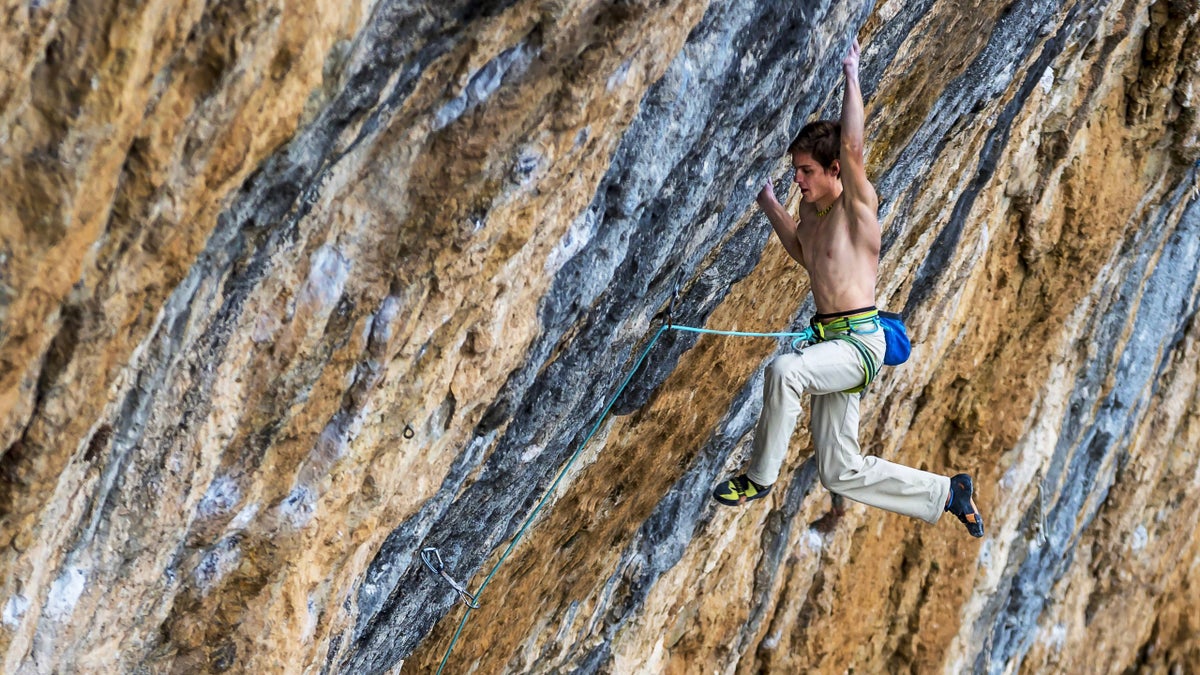
On December 16, the Department of Culture of Catalonia quietly announced new access restrictions for the Rumbau cliff at Oliana, one of the world’s most renowned and historic crags for hard sport climbing. “Sporting activities involving climbing, camping and lighting fires are prohibited in the archaeological zone,” read the text of the new rule, which took effect on December 18.
According to the announcement, “no objections” were submitted during the process, which did not involve local authorities or any climbing organizations.
On Saturday, climbers across the world reeled upon learning about this immediate threat to some of the world’s best sport climbing. “This does not only mean the loss of another climbing site, but a loss of climbing history,” said Chris Frick, a Swiss climber who spent his winter of 2023 helping restore Oliana’s beloved routes from a brutal wildfire. “Imagine that the Louvre museum in Paris got banned. You would still have the historical paintings like the Mona Lisa as photos. But having these climbs only documented in history books doesn’t help.”
But according to climbers in Oliana, locals deny that the Department of Culture’s new rule means any change in climbing access. The confusion stems from ambiguity over the boundaries of the “protection zone” versus the “archaeological zone,” as well as which zone prohibits rock climbing.
“The text is obviously a complete shock and surprise for us, as it came out of nowhere,” said Nicolas Durand, a climbing guide based in Catalonia, on Sunday. His outlook is optimistic. “We spoke with rural agents, and they’re not mandated to apply this ban. They’re also not sure how to interpret the decree…We don’t believe it will be enforced for quite some time, if at all.”
Local authorities in Peramola, which oversees the area known internationally as Oliana, have until February 18 to file an appeal. Several climbers in Peramola have told Climbing that they anticipate the city council and mayor will soon take action to protect climbing access.
For now, local authorities, including the police, continue to allow climbers to access the Rumbau cliff, known officially as Roc de Rumbau.

Climbers blamed for fire damage?
For decades, the main Rumbau buttress, which hosts at least 100 bolted routes, has been host to historic climbing achievements. This includes the 2009-2013 struggle between Adam Ondra and Chris Sharma to send La Dura Dura (5.15c), then the hardest sport climb in the world. Four years ago, Janja Garnbret made history in Peramola by becoming the first woman to onsight 5.14b, doing it twice on both Fish Eye and American Hustle. This past July, Veronica Chik became the youngest person in history to send 5.14b at age nine, also on Fish Eye.
In 2022, a 300-acre wildfire broke out from a harvesting machine in a nearby grain field. Flames burned the left side of the cliff, wrecking several holds, bolts, and perma-draws. A GoFundMe launched by French-Icelandic climber Svana Bjarnason raised more than $5,000 to restore the damaged lines.
According to Durand, representatives of the Department of Culture visited the rock art sites to observe the damage in late October 2023, more than a year and a half after the fire.
“Climbers were initially blamed, incorrectly, even though the damage was in fact the direct result of the fire and a lack of maintenance by the responsible authorities,” Durand wrote on his Instagram. He added that the agents also objected to a path created by a local landlord to help remove burnt trees and a dry compost toilet left by volunteers. The toilet was removed, he says, and natural regrowth has since covered the track.
“There have been no degradation of the paintings caused by climbing,” he insisted. “No allegations have been made against climbers.” Climbing was unable to verify these claims.
Until now, an invisible threat
Since 1993, the government of Catalonia has classified all sites containing rock paintings as Cultural Asset of National Interest, including the Roc del Rumbau. In 1998, UNESCO additionally classified the Roc del Rumbau cave paintings, among 700 other examples of rock art on the Ibrerian peninsula, as World Heritage Sites.
But until last year, no documented push existed to restrict public access to the climbing routes along the cliffs. Durand, for one, says that climbers have coexisted with the prehistoric art for decades. In a December 20 Instagram post, he wrote that back in 2014, climbers even removed the start of certain routes and government officials installed a 6×6-meter protective cage around the rock paintings. “From that point onward, and until recently, no known conflict existed between climbing activity and the preservation of the rock art,” he says.
On March 12, 2024, four months after its representatives observed the fire damage at Rumbau, the General Directorate of Cultural Heritage for Catalonia recommended establishing a new protection zone around the rock at the Rumbau cliff. It is unknown whether this recommendation was made public or delivered as a private correspondence to Natàlia Garriga, then the Minister for Culture of Catalonia. But in any sense, the climbing community had no idea.
On July 17, 2025, the new Minister for Culture, led by Sònia Hernàndez Almodóvar, published an announcement that they would begin the process of closing off public access to Rumbau. According to the memo, the Peramola City Council, which oversees Oliana, received notice that any construction or demolition permits within the affected site would be suspended starting on September 30. Climbing was unable to confirm whether the City Council received this notification, and if so, whether they were aware of a forthcoming ban on all access, not just construction projects. But the public electronic bulletin for Peramola contained no reference to the upcoming climbing ban.
If climbers had known about the threat to Oliana climbing, whether through Peramola’s local government or by finding it on the Catalonian government notice board, they might have been able to prevent this new policy from moving forward. Almodóvar’s July 17 announcement opened a one-month period of public consultation, during which climbers could have made in-person appointments at the Barcelona-based Department of Cultural Heritage or the regional Department of Culture in Lleida to advocate against the ban.
This is a developing story and will be updated as more information becomes available.
The post Did Climbing Just Get Banned at Oliana? Here’s What We Know. appeared first on Climbing.