 BURST
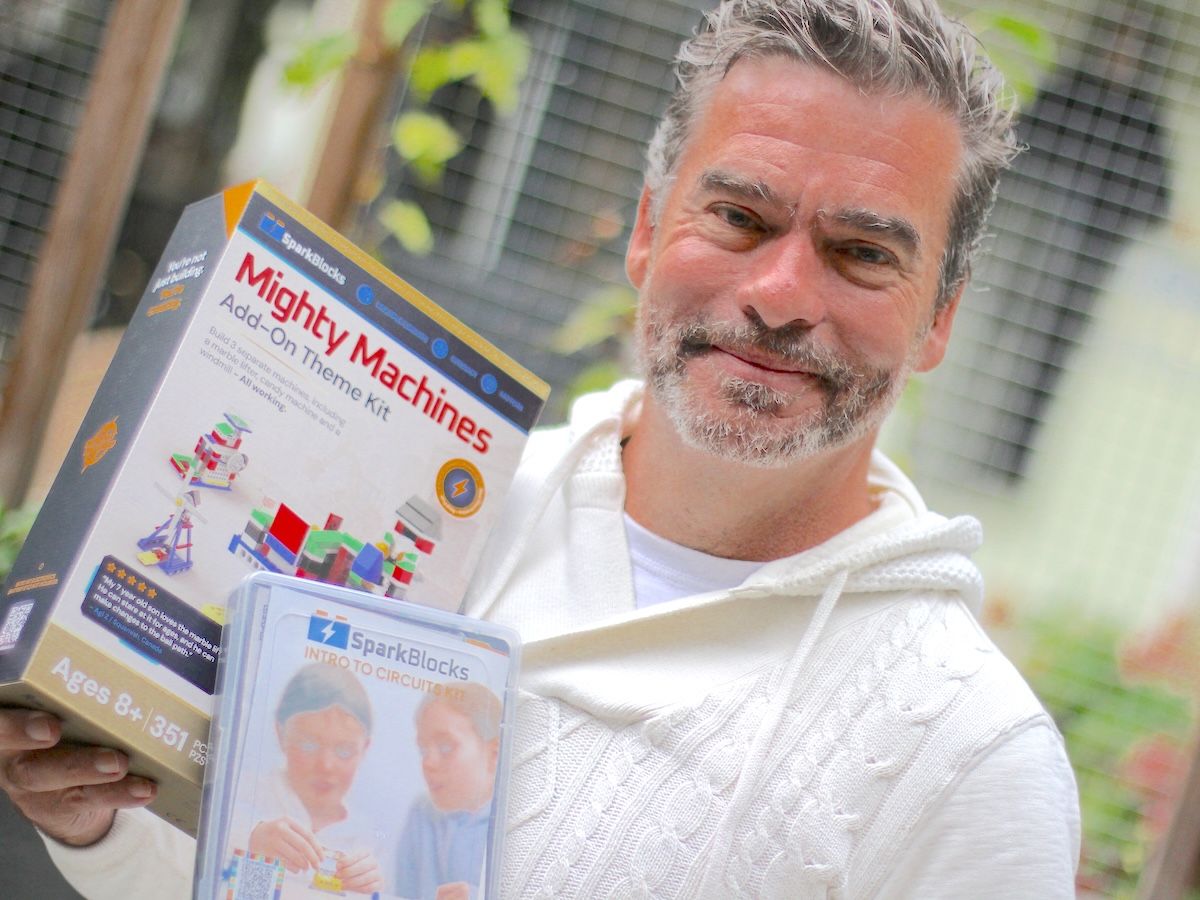
It took 11 minutes for Mark Vaughn and Holden Bonwit to realize their faith in themselves was matched by the world.
With the early morning sunshine streaming into Bonwit’s Squamish living room this past May, they pressed the publish button on their Kickstarter, turning their years-long project from a prototyped concept to reality. Or at least the promise of reality.
They watched as their brick baby — SparkBlocks, a Lego-compatible electronic building system — reached its funding goal in under 11 minutes. By the time the ticker stopped counting, they had gained 2,000-plus backers and raised nearly $660,000.
“We had some idea that like people would be interested and that they would open their wallets for this, but we didn’t know the degree of it,” said Bonwit. “When we hit the go button, it was awesome. It was like, ‘Oh my goodness!’
“You learn really early in entrepreneurship … it doesn’t matter what you believe, as crushing as that is. The only thing that matters is whether the community or the market also can like believe your vision.”
The vision began with Vaughn during the waning months of COVID-19, when he came up with the idea of electricity-conducting bricks that could work with people’s existing Lego sets.
He remembered lusting after Mindstorms, the Lego robotics system that was available from 1998 to 2022, but was — like any parent familiar with Lego — almost prohibitively expensive.
“Originally, but it was like 1,800 bucks back when I was a kid, and I remember wanting it and thinking, ‘Oh my God, robotics might be the thing for me,’ ” he said.
“But my parents didn’t love me $1,800 worth,” he said with a laugh.
But his idea was different than all the powered or motorized systems that Lego had invented over the years. He didn’t want just sealed, preprogrammed, kit-specific components — he wanted builders to be able to use their imagination and create proper circuits. He spent the latter half of COVID ordering copper, printed circuit boards, plastic and Lego from AliExpress, then hacking them up with a Dremel, drills and a mini-table saw.
“I started thinking: ‘How can we get electricity to travel through this plastic in a way that is actually intuitive and Lego-like?’ ” He said. “Melting the copper that didn’t go well. I tried conductive inks that didn’t go well, but after working on it for quite a while, and looking into the patents, etc., I developed this system.”
He had blocks that had internal wires and gold-plated contacts on the top and bottom. Rechargeable battery packs. Motors built for speed, others for torque. Light-up LEDs. Speakers. Photocells. Transistors. Blocks with buttons, switches or potentiometers (dials).
The underlying edification: learning how electrons flow, and how to manipulate them. All of the parts are labelled with the proper universal electrical symbols, so when properly assembled, a completed circuit will read as a correct wiring diagram.
“And that’s the language of electrical engineering,” said Vaughn. “So the kids, as they advance in their knowledge, can move right into the technology they’ll be using in the real world.”
A working prototype in hand, Vaughn attended the Angel Forum Mountain Summit — an annual networking and pitch event held at the Sea to Sky Gondola in Squamish — where he first connected with Bonwit. The University of Oxford business school grad, who had spent years helping startups around the globe, was looking for something “to sink his teeth into.”
Vaughn was no business newbie, having run a landscape architecture business with his brother Jeff in West Vancouver for nearly three decades, but Bonwit brought knowledge and understanding of global supply chains and production practices.
The 45-year-old Bonwit was put to the test almost immediately after the Kickstarter success. While the majority of their backers were from the U.S. and Canada, they had orders for kits from 48 other countries. They began the complicated process of setting up regional warehouses in four different countries as shipping hubs, and began filling customer orders.
Then the bombs started falling.
Just as all of their European-bound inventory touched down on a tarmac in Sharjah, in the U.A.E., the skies over the Middle East were filled with hundreds of missiles and aircraft launched by the U.S. and Israel, grounding all air traffic in the area. Their product sat on the ground, just a few hundred kilometres south of the Strait of Hormuz, as the conflict widened.
“I was like, ‘I did not have this on my bingo card,’ ” Bonwit said. “And so for the next six weeks, I honestly lost a lot of sleep. Insurance doesn’t cover wars, right? I didn’t know if like (our shipment) was just in a hangar somewhere, safe. I didn’t know if it was blown to smithereens.
“And even if I had the money, it’s not like I’m Walmart. I don’t have like inventory sitting in a warehouse that I can reroute to these people who have already paid for this. I was really nervous.”
It turned out to be just one hurdle in the headlong steeplechase dash SparkBlocks has been on since its launch, a race that’s already garnered one victory ribbon.
They had crowds of people at their booth at the San Francisco Maker Faire and ran out of their product in the first day. It’s designed for children eight to 12, but builders as young as five and adults couldn’t resist joining the fun. It was their first Faire, and earned the Editors Choice Award .
They’re now shortlisted for a GESS Education Award , which will be presented in November in Dubai, alongside industry and technology giants like Sony.
The kits start with the essential Intro to Circuits kit ($189), and from there, there are expansion kits like the Walking Ant ($95), Mighty Machines ($119) and Fire truck ($109), and range all the way up to the Mega Builder Bundle, which will set you back $945.
“We had a person who was ready to explain to all the kids how to put them together and how they worked. The kids would, almost to a person, push you away and play,” Vaughn said of the Maker Faire . “They wanted to own the learning because they understood the Lego. It was the coolest thing I ever saw.”
“They’d toss our little experiment learning guide to the side, and they’re just like, ‘I want to build,’ ” added Bonwit, a Denver-born naturalized Canadian. “ ‘There’s lights. There’s motors. There’s sound. There’s bricks. I already know how to use these. Let me go wild.’ Those moments gave me such a boost.”
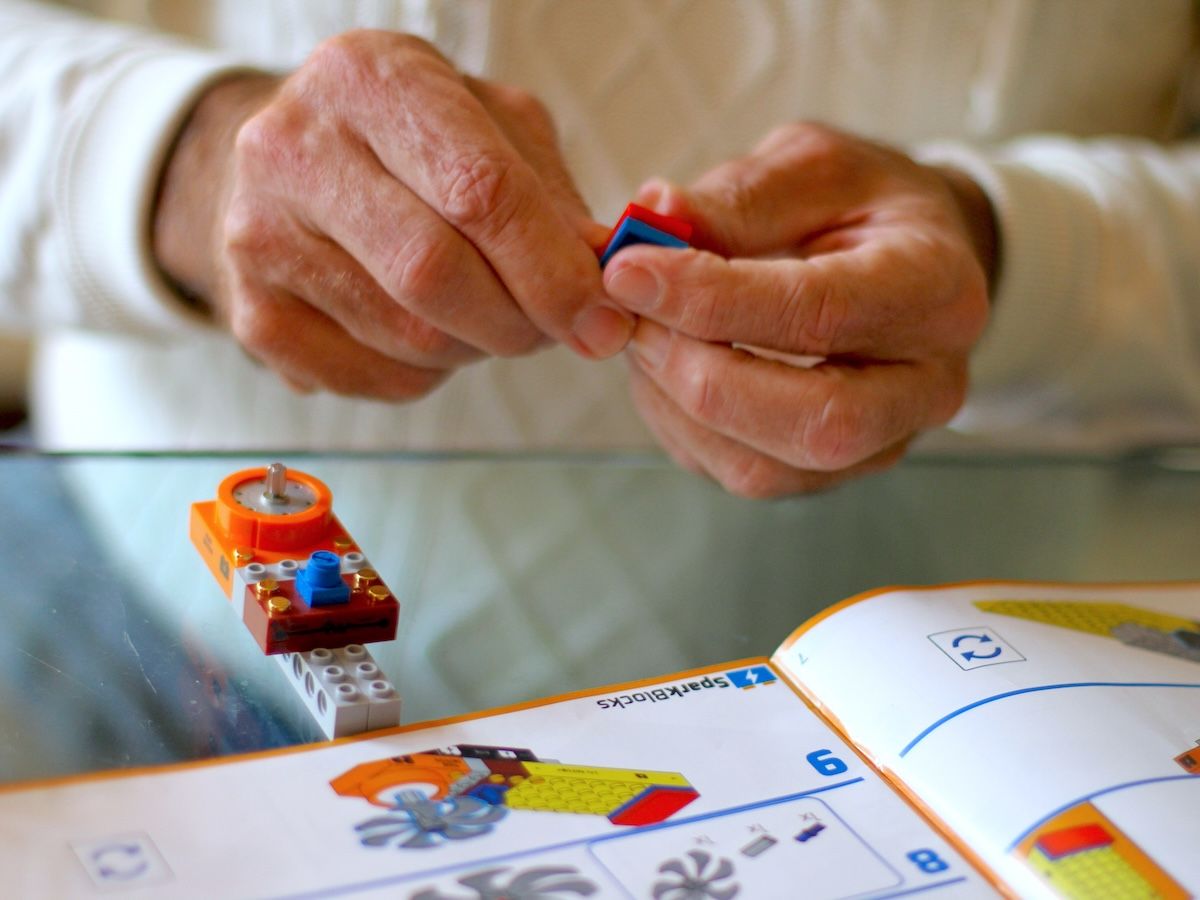
The team has grown to seven employees, along with freelance contractors and designers all across the globe. They head into the holiday season with 14 factories producing 200 separate custom parts, and are putting the finishing touches on new expansion kits.
There are expansion plans for more complex sets including robotics and computer programming, but they’re letting things develop at an organic pace as they develop a market left empty of any related competitors since Lego has long since discontinued its Mindstorm, Light and Sound, and Spike robotics systems.
Vaughn was in Victoria last week presenting to the B.C. Technological Educators Union’s annual conference, as SparkBlocks is planning to make the move into the educational sector as well, and has created an online curriculum for educators to follow.
“People don’t need more toys. They need a universe that you add on to,” he said, citing the words of Lego’s founder.
“And that was Lego’s genius. And that’s what we’re doing here: is we’re taking that universe and extending it another dimension. We’re extending it into the building, creating electronics, a motorized, light-up sound world that was never there.”