 BURST
BURST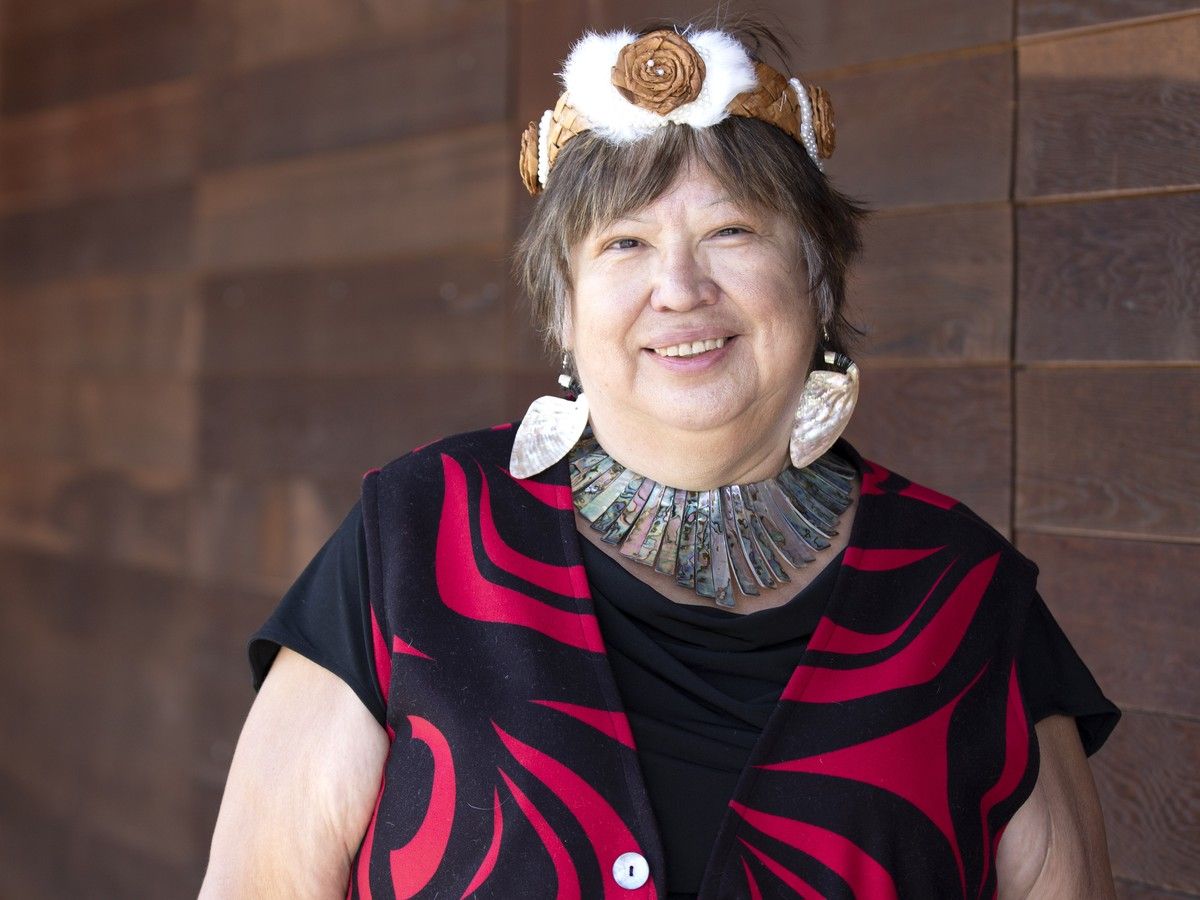
The B.C. First Nations Justice Council has started a “police accountability” unit, a rare Indigenous-led service to assist community members affected by police violence, misconduct or negligence.
Started as a pilot project in 2024, the unit has already handled 220 files, including police use of force, potentially illegal arrest and detention, potentially illegal search and seizure, and wellness checks potentially involving misconduct.
“This has just been informally by word of mouth,” said Judith Sayers, a B.C. First Nations Justice Council director and president of the Nuu-chah-nulth Tribal Council. “We haven’t done anything to go out and try and find these cases, so obviously the need is there.
Among the 83 cases the unit is now looking at, 33 per cent involve municipal police forces and 67 per cent the RCMP.
“When one of our community members or our children experiences police violence, we all feel it, and that doesn’t go away. The statistics are there and the pattern of violence and death has been documented time and again. The (police accountability unit) is a step toward taking police oversight into our own hands on a provincial level,” said Sayers.
She said the unit provides a place to turn where First Nations people know they will be heard.
The council said the unit’s staff lawyers are providing legal services that include hearing complaints, providing high-level opinions and suggesting next steps. The lawyers will also help file police complaints, pursue civil actions in court, and file complaints before bodies like the B.C. Human Rights Tribunal.
The unit will take on cases involving B.C.’s 11 municipal police forces, the members, municipal bylaw officers and individuals in other law enforcement roles.
Alexander Kirby, acting managing lawyer for the unit, said the service wasn’t based on any existing model, and he isn’t aware of anything similar in Canada.
There are two lawyers working for the unit but the council is thinking of hiring a third and expects the demand is going to increase now that they have gone public, said Kirby.
The unit is funded by a grant from the B.C. Law Foundation , a non-profit organization financed by the interest earned on lawyers’ pooled trust accounts held at B.C. banks and credit unions.
Kirby said they would like to highlight some of the files at some point with the permission of the people involved — but don’t have any to make public yet.
“These processes take time to come to a conclusion,” noted Kirby.
The unit has helped file complaints with all police oversight bodies, he noted, such as the Civilian Review and Complaints Commission for the RCMP and the Office of the Police Complaint Commissioner in B.C., which handles municipal police force complaints.
It has also referred cases to the Independent Investigations Office, a civilian-led agency that probes all deaths or incidents of serious harm involving RCMP and municipal police in B.C.
In the province, First Nations and human rights and public advocacy groups — including the Union of B.C. Indian Chiefs, the B.C. Civil Liberties Association, and Pivot Legal — have decried the treatment of Indigenous people by police for years, including interactions with officers that resulted in death.
While Indigenous Peoples make up 5.1 per cent of the population in Canada, they represent 16.2 per cent of the total number of people in police-involved deaths, according to studies.
At the end of 2024, Canada’s Assembly of First Nations called for a national inquiry into systemic racism in policing after a mounting death toll in interactions with police in the previous decade, including high-profile cases in B.C.
In 2021, Jared Lowndes, 38, from the Wet’suwe’ten First Nation in northwest B.C., was shot dead by RCMP at a Tim Hortons in Campbell River. In 2017, Dale Culver, 35, of the Wet’suwet’en and Gitxsan Nations, died in police custody after being arrested by Mounties in Prince George.
Everett Patrick, 42, from the Lake Babine Nation, was arrested after a break-and-enter at a sporting good store in April 2020 in Prince George. He was medically cleared at a hospital, before being brought to jail cells in Prince George where he was later found in medical distress and died in hospital.
The B.C. Prosecution Service didn’t file charges in the Lowndes and Patrick cases, and stayed almost all charges in the Culver case. That was after B.C.’s Independent Investigation Office had found that there were grounds to believe an officer may have committed an offence and sent reports to the prosecution service.
And in 2023, B.C. Public Safety Minister Mike Farnworth announced Alberta’s Serious Incident Response Team would investigate allegations that some Prince George RCMP officers sexually abused Indigenous women from 1992 to 2004.
The B.C. Public Safety Ministry said this week its director of police and law enforcement services will be meeting with the Alberta unit soon to review its final report. The Alberta agency will determine the timing of the public release of the report, said public safety ministry officials.
There was also a high-profile incident in 2019 at a Bank of Montreal where Vancouver police handcuffed an Indigenous grandfather and his 12-year-old granddaughter after they tried to open a bank account for the girl.
The original discipline proceeding into the arrests found that the officers committed misconduct by “recklessly arresting and handcuffing” the pair without due cause, but the province’s office of the police complaints commissioner is going to revisit the case.
The B.C. First Nations Justice Council is a non-profit group that is funded by the provincial and federal governments, and runs 15 government-funded Indigenous justice centres throughout B.C. including in Vancouver, Surrey, Chilliwack, Victoria, Kelowna and Prince George.
Headquartered in Westbank in the B.C. Interior, the council budget has increased significantly in the past five years, to $28 million in 2025 from $2 million in 2021.