 BURST
BURSTLast August, the storied century old pharmacy chain store Walgreens admitted it was in trouble. After years of shutting stores and firing employees, it finally sold itself to private equity firm Sycamore Partners for a fraction of what it had been worth just a few years earlier. The PE giant has continued the blood letting.
The reason was not some sort of internet-disruption, since it’s a regulated business with clear competitive barriers. And it wasn’t bad management, as independent pharmacies have been on the same trajectory of worsening profits and closures. It was that Walgreens, like most pharmacies, was on the wrong side of a set of monopolists known as pharmacy benefit managers, or PBMs.
PBMs are a bogeyman in modern American medicine, blamed for everything from driving up drug prices to denying people vital medicine to destroying access to pharmacies. They are a bad joke among doctors, running a process called ‘prior authorization’ to prevent physicians from giving people the care they need.
And yesterday, Congress finally decided to act. For real.
To understand what Congress did, we have to start with the business of prescribing and dispensing drugs. Managing this area is a complex endeavor. There are lots of drugs that do different things, each is made by someone with various dosages and prices. There are hundreds of thousands of doctors and more than ten thousand pharmacies that handle prescriptions.
A PBM sells the service of connecting all of these elements together. They are middlemen who organize how insurance companies handle drug spending. They negotiate which drugs insurers make available and their prices. They also assemble networks of pharmacies that customers of insurance companies can use, as well as managing reimbursements to those pharmacies. In other words, PBMs are payment networks that match pharmacies and insurers, while also handling negotiations among the different parties.
There’s nothing intrinsically wrong with a payment network, but PBMs are much much more profitable than networks running commodities should be. And the reason is that they have become monopolies with the ability to divert revenue that is supposed to travel over their networks to themselves. First let’s take the monopolization - it’s a heavily consolidated space after a spate of acquisitions in the 2000s and 2010s. Three PBMs - Caremark, OptumRx, and Express Scripts - control 80% of the market. It’s a vertically integrated industry; the big three are owned by the biggest insurance companies, CVS, UnitedHealth, and Cigna. It’s also not regulated to prohibit conflicts of interest, the PBMs are allowed to price discriminate among the firms that must use their networks.
These dynamics foster a number of problems. First, PBMs are supposed to use their size and bargaining power to negotiate for lower drug prices, but they often do the opposite. The allegation is they negotiate “discounts” from drug companies in the form of rebates, which they then effectively keep by charging various fees and by manipulating the copays that patients have to pay. Since a PBM gets a bigger rebate on a more expensive drug, these middlemen have the incentive to push pricier drugs or higher prices, rather than lower ones. Some generic drugs that go for $97 at Costco can cost $19,200 at a specialty mail order pharmacy run by a PBM.
And that gets to the other problems. The big insurers own pharmacies, and their PBM arm often pays better rates to their own pharmacies than to those of their rivals. This dynamic kills independent pharmacies and consolidates the market. Various studies show that these middlemen charge very different prices for the same medicine, and steer patients to the highest cost version in pharmacies they own or control.
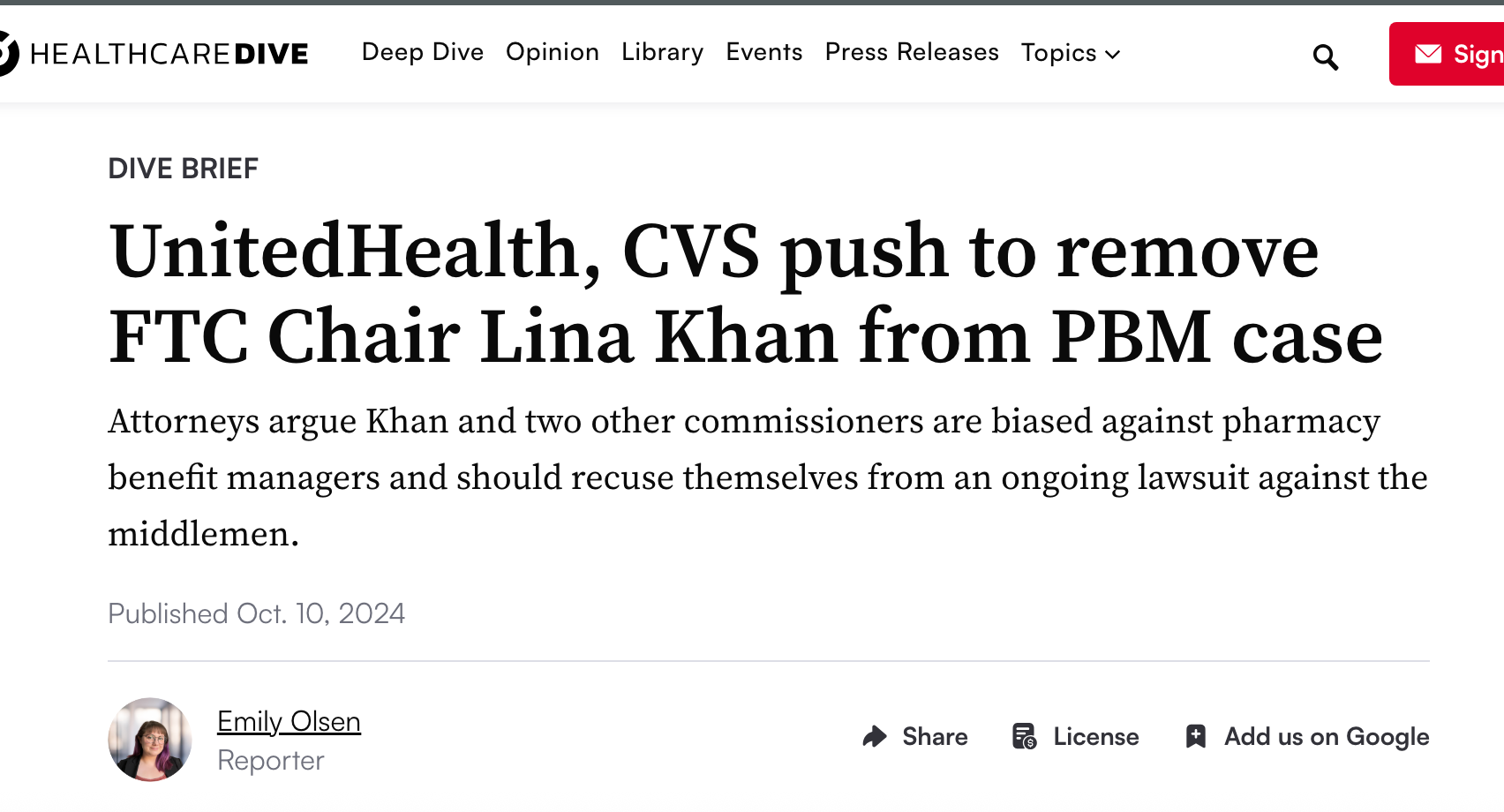
Wrestling with PBMs was one of former Federal Trade Commission Chair Lina Khan’s priorities, with the FTC releasing a series of devastating reports on their practices, and filing a critical antitrust case against them for inflating insulin prices.
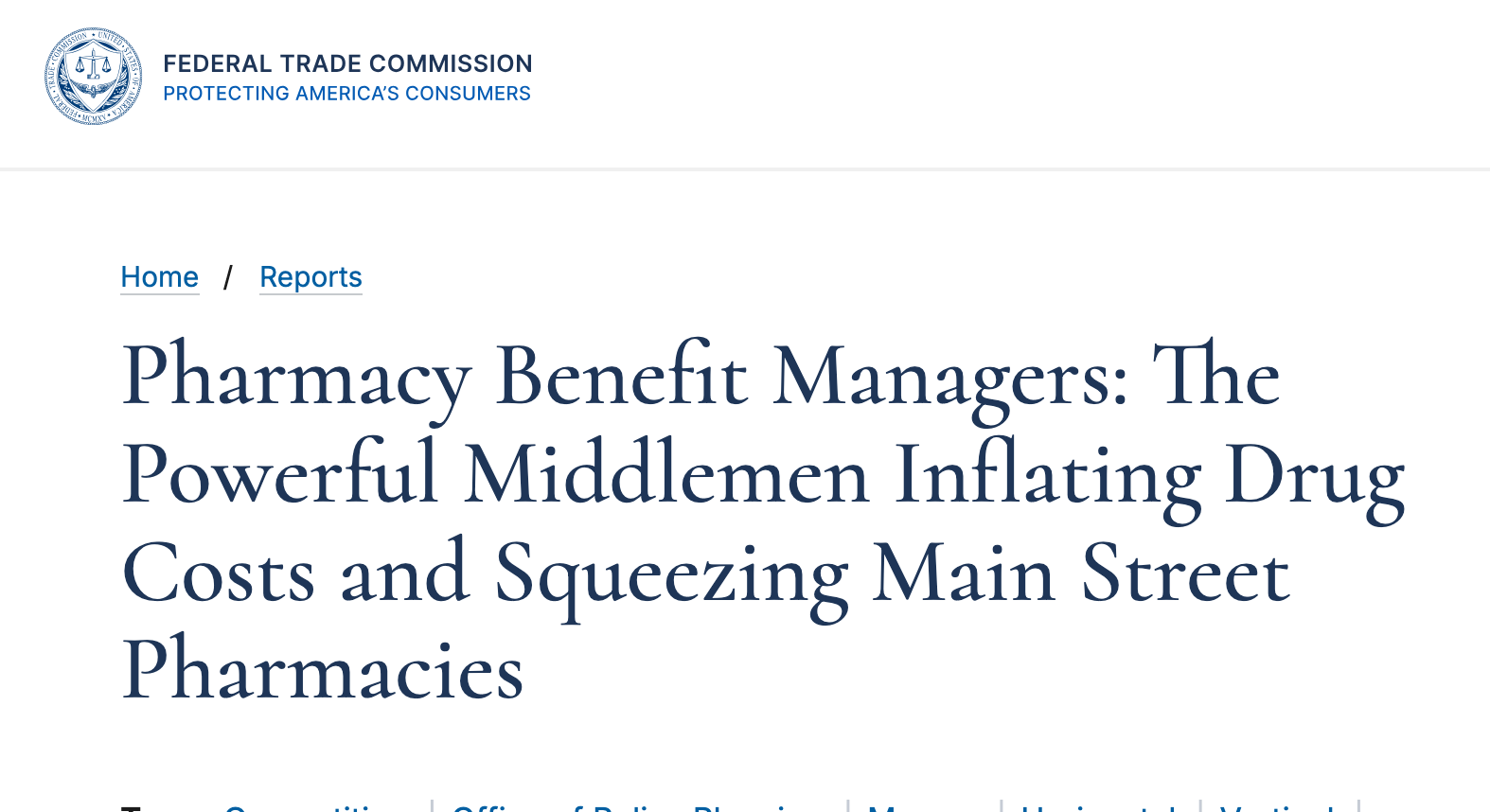
That case will go to trial this summer, but to get it that far required significant efforts to push back against the aggressive legal tactics of this well-heeled industry. It’s a politically powerful set of firms that use typically aggressive tactics against anyone in their way.
We know how problematic these corporate PBMs are because when they get replaced by public versions in state Medicaid programs, the results have been terrific. In Kentucky and Ohio, there were dramatic savings for patients and taxpayers, higher revenue for independent pharmacies, and an expansion of the pharmacy network available to patients. But state-level reform only affects Medicaid, a program for low income residents. The health care programs most Americans use are Federally regulated.
That’s why it matters so much that the House and Senate Appropriations Committees announced they negotiated legislative text in this space. The legislative texxt is based on the work of Senators Ron Wyden and Mike Crapo, and has been added to “must-pass” bills to keep the government open, so barring something extremely unusual, it’ll be signed into law.
So what does the legislation actually do? Well, the simple answer is that it treats pharmacy benefit managers like public utilities. As I noted before, PBMs run payment networks that connect insurers, doctors, pharmaceutical companies, and employers. Congress is now saying they have to start treating those networks like public highways.
I’ll highlight a few provisions. First, the legislation provides that PBMs can no longer kick pharmacies out of their networks or squeeze them unfairly. Any pharmacy seeking to be in a pharmacy benefit manager network can do so, as long as it can meet “reasonable and relevant” standard contractual terms of that PBM. Importantly, the government will get the authority to regulate those contracts.
Second, it prohibits PBMs from keeping any part of the rebates they extract from insurance companies, except for fees charged for real services. Over the years, billions or even tens of billions of supposed savings to patients have instead dropped to the bottom line of insurance companies. This provision is designed to eliminate that unfair transfer of wealth.
Finally, the legislation says that PBMs have to give their customers full pricing information, so employers know what they are paying for and getting. These provisions all kick in circa 2028 and 2029 and are reliant on the Secretary of HHS to enact regulations.
Broadly speaking, the goal here is to stop PBMs from blocking legitimate traffic from using their networks, from treating pharmacies reliant on their networks unfairly, and from taking kickbacks from drug companies that want preferred access to customers. (There’s another provision I appreciated, but one that isn’t that important - insurers have to make sure their lists of in-network providers are accurate.)
To understand why this new public utility regulation matters, we have to go back to the collapse of Walgreens. Walgreens may look like a normal retailer, with storefronts and cash registers, but it is not. It is part of a heavily regulated health care system. Walgreens doesn’t market and sell products bought by consumers, it dispenses medication to consumers that third party doctors prescribe and that is paid for by third party insurers through reimbursements.
It’s a heavily defensible business model, because pharmacists are medically trained specialists, not retailers. And as late as 2015, Walgreens was doing fine, worth $100 billion and beloved by Wall Street for its reliable revenue stream. But from that year onward, Walgreens executives started telling Wall Street about a new risk - consolidation of the entities that provided its reimbursements. Here’s what the company said in its annual report.
Many organizations in the healthcare industry, including PBM companies and health insurance companies, have consolidated in recent years to create larger healthcare enterprises with greater bargaining power, which has resulted in greater pricing pressures. For example, in July 2015, OptumRx, UnitedHealth Group’s pharmacy care services business, completed its combination with Catamaran Corporation, with the combined businesses expected to fulfill over one billion prescriptions in 2015 and be the third largest PBM company in the United States…. If this consolidation trend continues, it could give the resulting enterprises even greater bargaining power, which may lead to further pressure on the prices for our products and services.
Every single year until its sale to Sycamore in 2025, Walgreens told investors that its reimbursement rates were collapsing. The company tried to mitigate the loss, but to no avail. Enough though it has closed 1,000 stores since 2018 and initiated layoffs, and its revenue increased, the chain fell apart. Margins dropped as it was increasingly losing money on prescriptions it filled.
This story isn’t just about Walgreens. PBMs are forcing the closure of independent and rural pharmacies all over the country. From the beginning of 2024 to early 2025, almost 3,200 pharmacies, or 5% of the pharmacies in America, closed their doors. Increasingly patients are forced to rely on mail-order pharmacies, where the quality of the service is poor and unreliable.
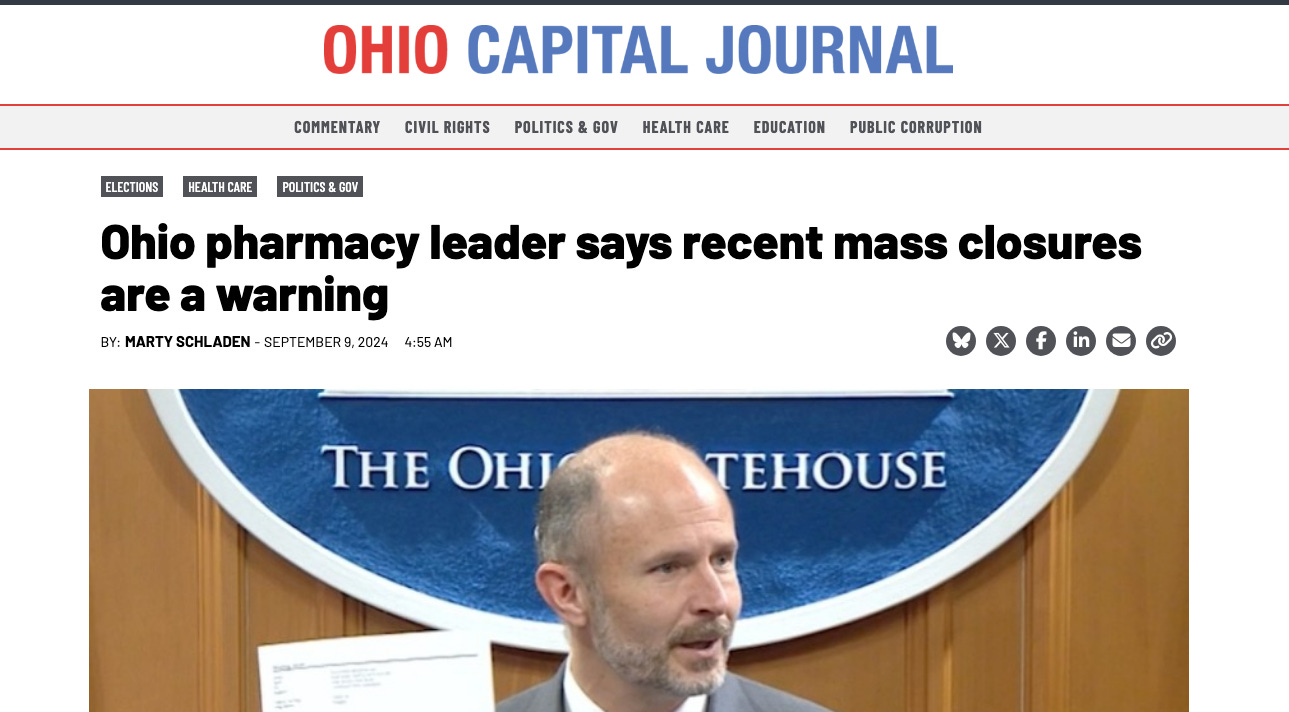
Unlike a lot of constituency groups, pharmacists are not powerless. A local pharmacy owner has historically done pretty well, and often these people own a small chain, operating with the political power of a local auto dealer or banker. It’s an organized group, and has been since the 19th century; Wright Patman worked with pharmacists on the Robinson-Patman Act law against price discrimination. Kentucky, Ohio, New York, and Virginia among others have passed legislation to reform PBMs in state level programs.
So Congress is well-aware of the PBM problem, holding dozens of hearings over the last five years. And the momentum isn’t going to stop; the five insurance company CEOs are going to be grilled in a hearing on Thursday. Still, it’s been a difficult road. Congress was about to pass some modest reforms in late 2024, ones with bipartisan support that were all set to pass as part of a funding bill just before Trump took office. But something very weird happened; Elon Musk claimed, and I’m not kidding, that the proposed legislation had too many pages. And so it was slimmed down, with the PBM provisions on the cutting room floor. In the three months following the failure of the reform effort, at least 326 pharmacies closed, with 73% of them being independents.
Since then, pharmacies have continued to wither. No one knew if Congress would resurrect PBM reform. But they did, and Congress is moving what they should have passed 13 months ago. There are significant gaps with this proposal. The legislation doesn’t kick in until 2028 or 2029, the penalties aren’t sufficient, and insurers can still own PBM subsidiaries, meaning the conflicts of interest and attempts to work around rules are still there. It’s dependent on regulators, with the likely ability of PBMs to lobby and game the system. I doubt this legislation takes care of the price discrimination at the heart of the PBM problem, because it doesn’t ban rebates.
However, it’s rare enough to have Congress pass anything good these days, let alone something that addresses flagrant monopoly power and lowers health care costs. So I’ll take it. Three cheers for our elected leaders. Or, if you’re feeling cynical, a sincere slow clap.
Thanks for reading! Your tips make this newsletter what it is, so please send me tips on weird monopolies, stories I’ve missed, or other thoughts. And if you liked this issue of BIG, you can sign up here for more issues, a newsletter on how to restore fair commerce, innovation, and democracy. Consider becoming a paying subscriber to support this work, or if you are a paying subscriber, giving a gift subscription to a friend, colleague, or family member. If you really liked it, read my book, Goliath: The 100-Year War Between Monopoly Power and Democracy.
cheers,
Matt Stoller