 BURST
BURST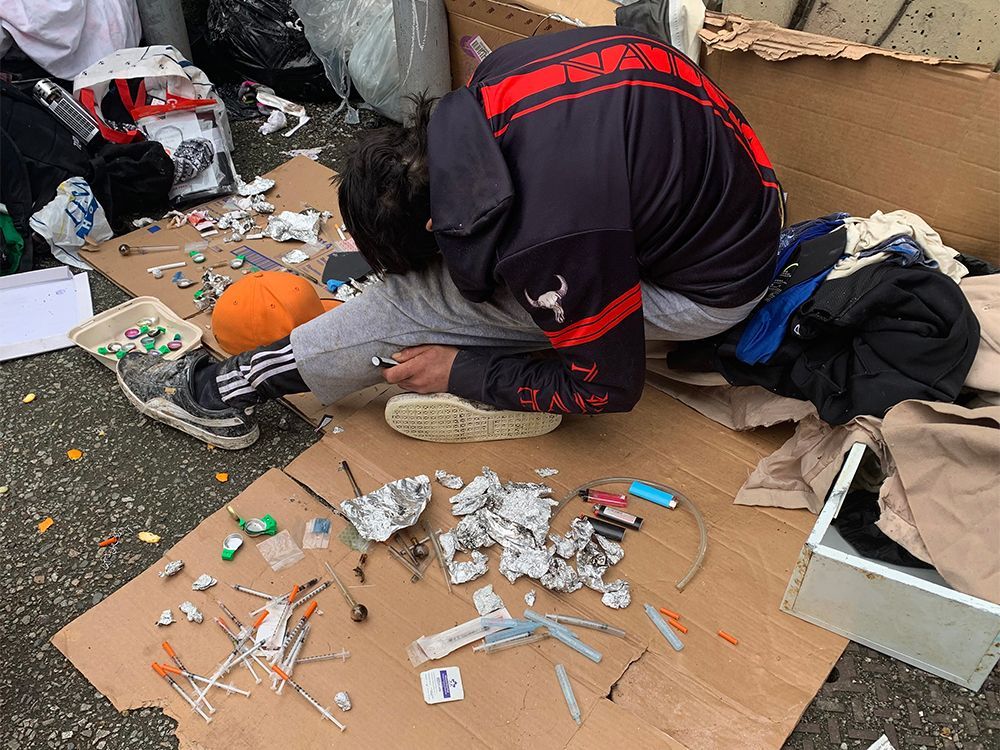
B.C.’s health minister announced Wednesday that the province’s decriminalization pilot project will come to an end, three years after it was introduced with much fanfare as a measure meant to reduce stigma toward drug users and keep them alive until they could receive treatment.
The pilot had been put in place in January 2023 following an exemption issued by Health Canada and it is due to expire on Jan. 31 of this year.
Josie Osborne told reporters in Victoria that it is clear the pilot project — which allowed drug users to carry up to 2.5 grams of substances such as cocaine and heroin without having it confiscated by police — wasn’t working, and that the province is shifting its focus toward building up voluntary and involuntary treatment options.
“Despite the hard work and good intentions behind the pilot, it has not delivered the results we hoped for,” said Osborne. “For that reason, we will not be asking the federal government to renew the exemption.
“Our priority is, and always has been, to make sure people can get help when and where they need it. We continue to believe that addiction is a health issue, not a criminal justice issue.”
At the time of its announcement, then mental health and addictions minister Jennifer Whiteside said that “by decriminalizing people who use drugs, we will break down the stigma that stops people from accessing life-saving support and services.”
Shortly after it started, however, anecdotes began to emerge of used needles being found in places like school playgrounds and public beaches.
Advocates argued that the program was effective in reducing police interactions with drug users, but a growing perception of increased drug use in public spaces as well as public disorder impacting businesses around the province led to the government restricting the pilot to homes and overdose prevention sites in May 2024.
Since then, drug seizures have crept back up to an average of 403 a month from 165 per month immediately after decriminalization was put in place. Prior to the pilot, the average number of drug seizures was 509 per month.
Since the toxic drug crisis was declared a public health emergency in 2016, over 16,000 British Columbians have died from an overdose or drug poisoning, although that number has been trending downwards with B.C. experiencing a 23 per cent drop in deaths between January and October 2025 compared to the same period in 2024.