 BURST
BURST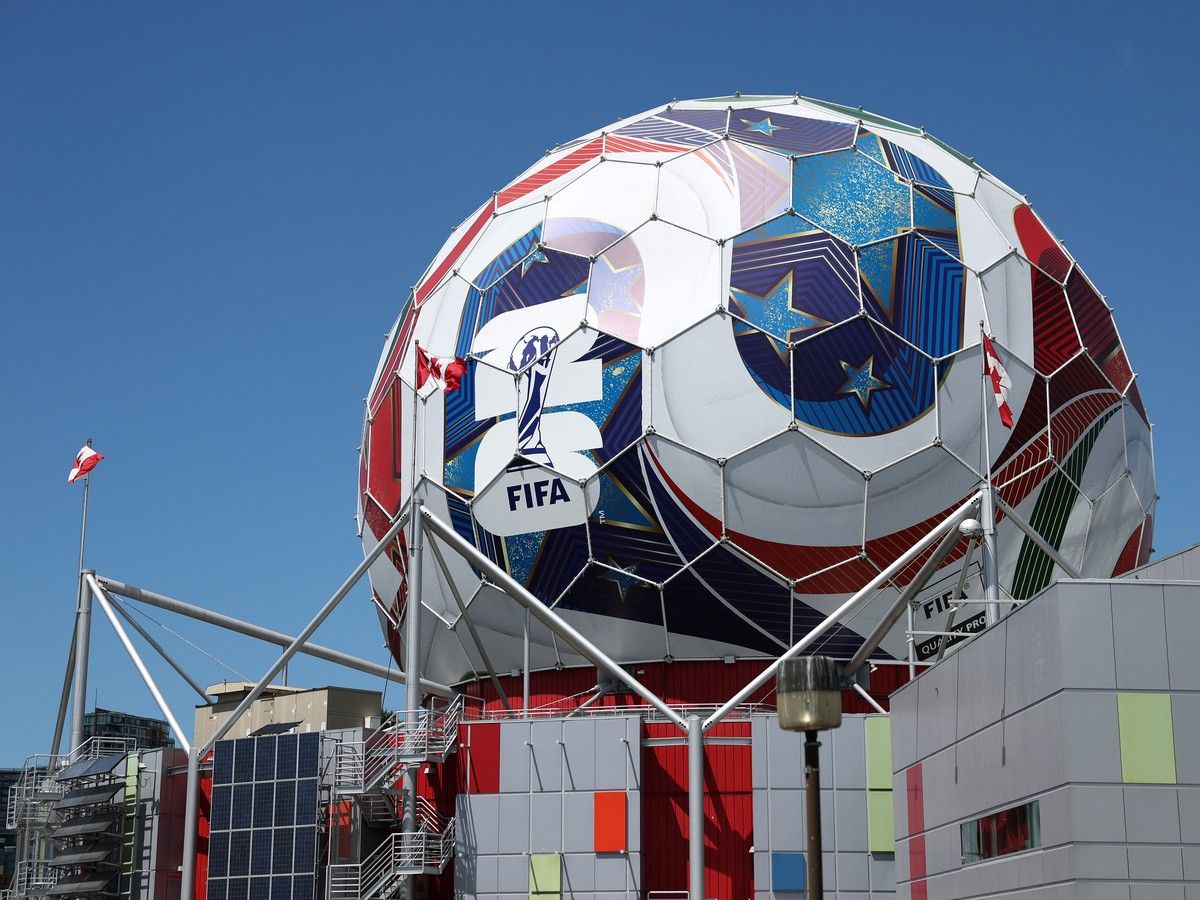
Jessie Adcock went to bed on June 10, a tense, restless night ahead of her. Years of work were going to be unveiled and judged in the morning, and small splinters of doubt still pierced her confidence.
As the head of the Vancouver FIFA Host Committee rolled up on the PNE the next day, a sea of green jerseys awaited her, ready to pack the grounds to watch the first game of the World Cup on the big screens at Fan Fest.
“Oh my God, the gratitude I had for the Mexican fans that morning, I can’t even explain,” Adcock said. “You go to bed at night not knowing how it’s going to turn out. It’s not even time for the match yet — I still choke up thinking about it — all the people in Mexican jerseys lining Renfrew and Hastings, and in that moment, just all of it coming together. I’m sorry, I’m totally emotional thinking about it.”
More than 6,000 emerald-green-clad fans poured into the PNE in the first 90 minutes , kicking off a vibrant Cup party that shook the city for weeks. While the seven games at B.C. Place are long over, the final Sunday at noon between Argentina and Spain is still to be celebrated at Fan Fest.
But the football fête is all but finished. The time for reflection on the biggest mass gathering since Vancouver hosted Expo 86 40 years ago has begun.
Will the legacy be a $578 million budget hangover? Or will the good vibes and global visibility spark the same economic gold rush that reshaped the city and its downtown waterfront?
Every game at B.C. Place was an announced sellout. The streets were packed with fans who joined locals from across Canada, international visitors or U.S. cities.
While the city has rarely seemed so alive, local hotel bookings didn’t reach summer 2025 levels. Toronto’s revenue expectations fell short, and while data hasn’t been released yet, Vancouver’s likely did too.
And while Expo 86 took an oil-stained, industrial tract of land and left us with a revitalized swath of real estate now known as Yaletown — not to mention B.C. Place, the convention centre and an iconic McBarge — there will be no physical remnants of the Cup. Nothing permanent was built: the tournament signage disappeared almost overnight and the grass inside B.C. Place has been torn up by both organic and plastic roots. The Killarney practice facility will keep its grass and lights for a year, but will revert to an artificial surface after that.
“What we have demonstrated is our city, our region, our province, our country, we are a place that can host the world and large world events,” said Adcock. “Even though we don’t have all those visible, physical legacies, we have now shown that we have the people, the talent, the companies, the creativity, the ability to meet worldwide expectations.
“They’re invisible legacies, but we’ve really demonstrated that we were able to meet this moment and that we have the capacity to deliver so much.”
The Trionda-clad Science World soccer ball will also fade soon but remains one of the iconic images of the entire tournament. A close second, the aerial views of the gladiatorial gem that is B.C. Place.
The stadium was well-received by every team that came through, both the players on the pitch and supporters in the stands. While the roof remained mysteriously and stiflingly closed for the duration of the tournament, the acoustics it provided made for a resonantly wonderful atmosphere.
“I’m so proud,” said stadium manager Chris May. “Just to see the looks on our team’s faces when they had something pop up on social media through an algorithm that just talked about B.C. Place being amazing or the continual positive news stories. To see their faces, to hear people walking around going, ‘Did you see the videos of the fan march? Did you see that Sports Illustrated rated us No. 1? Did you see the press this morning?’ It’s just so amazing to see your team get the recognition that they deserve for the work they’ve put in.
“It doesn’t have, as some of the press mentioned, all of the latest bells and whistles that an American stadium or an NFL stadium may have. But what they don’t have that we do is that location, that vibe. Hearing some of the players talk about how this felt like an old-school football stadium.”
As a city, Vancouver was rated as one of the best because of the city scenes, the scenery and the central location.
“With respect, we’re not competing with McMahon Stadium in Calgary or Mosaic in Regina. Our competitors and where we want to be mentioned against is against the Azteca (in Mexico City), is against Wembley in London, is against SoFi in L.A., Hard Rock in Miami, Kai Tak Sports Park in Hong Kong,” said May. “B.C. Place should be getting mentioned along with the world’s best stadiums, not Canada’s best stadiums.”
Vancouver is in the running to be a host city for the 2031 and 2033 rugby Cups — the men first, then the women.
There are also all the new smaller convention and hosting spaces in the stadium that were part of the renovations to get B.C. Place ready for the soccer Cup that will benefit from the recent exposure.
“Now it’s also on the event sales team to get out there and fill those spaces with other types of events to ensure that ‘legacy’ isn’t just a word that’s said, but we can show in a couple of years actually that legacy is quantifiable,” said May.
Adcock spent most of the game days like FIFA president Gianni Infantino on a micro-scale, flitting from fan fests, to game marches, to watch parties, to the pedestrian-only Granville Street. Like many locals, she went from a casual to being fully invested in games and player background. She calls it football now, can mention Belgium’s star Kevin De Bruyne without mangling the pronunciation and understand’s her mom’s new obsession with the tournament’s youngest new star, Spain’s Lamine Yamal.
With the tournament now all but resigned to memories and souvenirs like those collectible Panini sticker books, Adcock was asked was it worth it.
“Like many taxpayers, we all have our viewpoint on how the economy runs and how it … is best stimulated,” she said. “Personally … both as the leader of the host committee and as a taxpayer, is unequivocally yes, it was worth it. From my perspective, we kept the economic engine of the city running and revving at high all summer, with residuals that will last over the course of the future as well.”