 BURST
BURST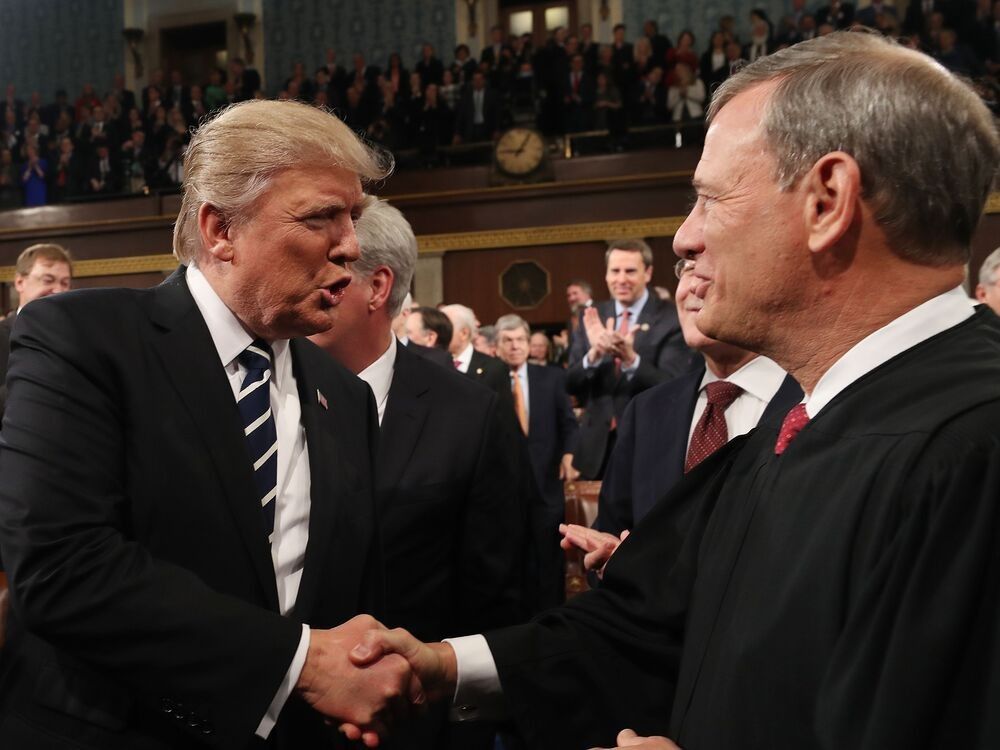
OTTAWA AND WASHINGTON, D.C. — The U.S. Supreme Court ruled on Friday that the emergency authority that U.S. President Donald Trump relied on to impose sweeping tariffs on Canada “falls short” and said the president violated federal law when he imposed the trade barriers.
The decision, which was written by U.S. Supreme Court Chief Justice John Roberts, was a 6-3 ruling.
Last year, Trump imposed tariffs on countries around the world using a law meant for national emergencies called the International Emergency Economic Powers Act or IEEPA for short. The justices upheld a lower court’s ruling that the use of the Act exceeded his authority.
Friday’s ruling does not impact the Section 232 tariffs that the president has imposed on Canadian steel, aluminum, lumber and the auto sector.
In a statement on Friday, Canada-U.S. Trade Minister Dominic LeBlanc welcomed the decision.
“The decision of the Supreme Court of the United States strengthens Canada’s position that the tariffs imposed by the United States under the IEEPA are unjustified,” he said, in a post on X.
“Although Canada has concluded the best trade agreement with the United States among all its trading partners, we recognize that there is still much to be done to support Canadian businesses and workers who continue to be affected by the tariffs imposed under Section 232 on the steel, aluminum, and automotive sectors,” he added.
LeBlanc referenced the upcoming scheduled review of the Canada-United-States-Mexico-Agreement (CUSMA) at the end of his statement, which is scheduled for July of this year.
It could be a game-changer that determines Canada’s position heading into the review of the CUSMA, said Avery Shenfeld, managing director and chief economist of CIBC Capital Markets, before the ruling was released.
“What it does is eliminate the threat that Trump would impose that fentanyl [IEEPA] tariff on all the rest of our exports,” he said.
If the court had ruled in favour of the president, it would have been “the adverse outcome that Canada fears the most,” giving the U.S. even more leverage in talks over CUSMA.
Currently, Canada’s exports to the U.S. are subject to a 25 per-cent tariff, but nearly 90 per cent of those goods are exempted because they are compliant under CUSMA.
The case was originally brought forward by several businesses affected by Trump’s tariffs and a dozen U.S. states.
In his ruling, Justice Roberts said IEEPA contains no reference to tariffs or duties.
“The Government points to no statute in which Congress used the word “regulate” to authorize taxation,” the ruling said. “And until now no President has read IEEPA to confer such power.”
The three dissenting justices were conservatives Clarence Thomas, Samuel Alito and Brett Kavanaugh.
To date, the U.S. Treasury has collected US$124 billion in tariff revenue. In his dissenting opinion, Justice Kavanaugh brought up the issue of refunds on tariffs that have already been collected.
“Refunds of billions of dollars would have significant consequences for the U. S. Treasury,” he said in the ruling. “The Court says nothing today about whether, and if so how, the Government should go about returning the billions of dollars that it has collected from importers.”
More to come.
National Post
Our website is the place for the latest breaking news, exclusive scoops, longreads and provocative commentary. Please bookmark nationalpost.com and sign up for our daily newsletter, Posted, here.